
SAN FRANCISCO, May 8, 2026, 14:02 PDT
Anthropic is tapping SpaceX for a major AI hardware boost, locking up the entire Colossus 1 data center in Memphis as it hunts for more capacity. The Claude developer is aiming to relieve usage caps that have irked its paying customers and developers.
The urgency around the deal stems from runaway demand for Claude—Anthropic’s Claude Code programming tool in particular. Chief Executive Dario Amodei said they’d braced for 10x expansion, but the first quarter blew past that, with revenue and usage rocketing up 80-fold annualized. Amodei described the spike as “just crazy” and “too hard to handle.” Fortune
Compute—the horsepower behind AI training and inference—remains one of the sector’s biggest bottlenecks. Anthropic now says its deal with SpaceX will unlock over 300 megawatts of fresh capacity and provide access to upwards of 220,000 Nvidia GPUs within a month. Those chips are the workhorses for building and running big AI models.
SpaceXAI claims Colossus 1 packs Nvidia H100, H200, and GB200 accelerators, giving it muscle for model training, fine-tuning, and inference—the latter meaning it can run finished models for users. Anthropic points to the extra capacity as an immediate boost for Claude Pro and Claude Max subscribers.
Anthropic wasted little time rolling out updates tied to the deal. The company announced a twofold increase in Claude Code’s five-hour rate cap for Pro, Max, Team, and seat-based Enterprise plans. Pro and Max users lose the peak-hour clampdown. API limits on Claude Opus models also go up. Rate limits, for reference, are just the ceiling on user or developer requests per time window.
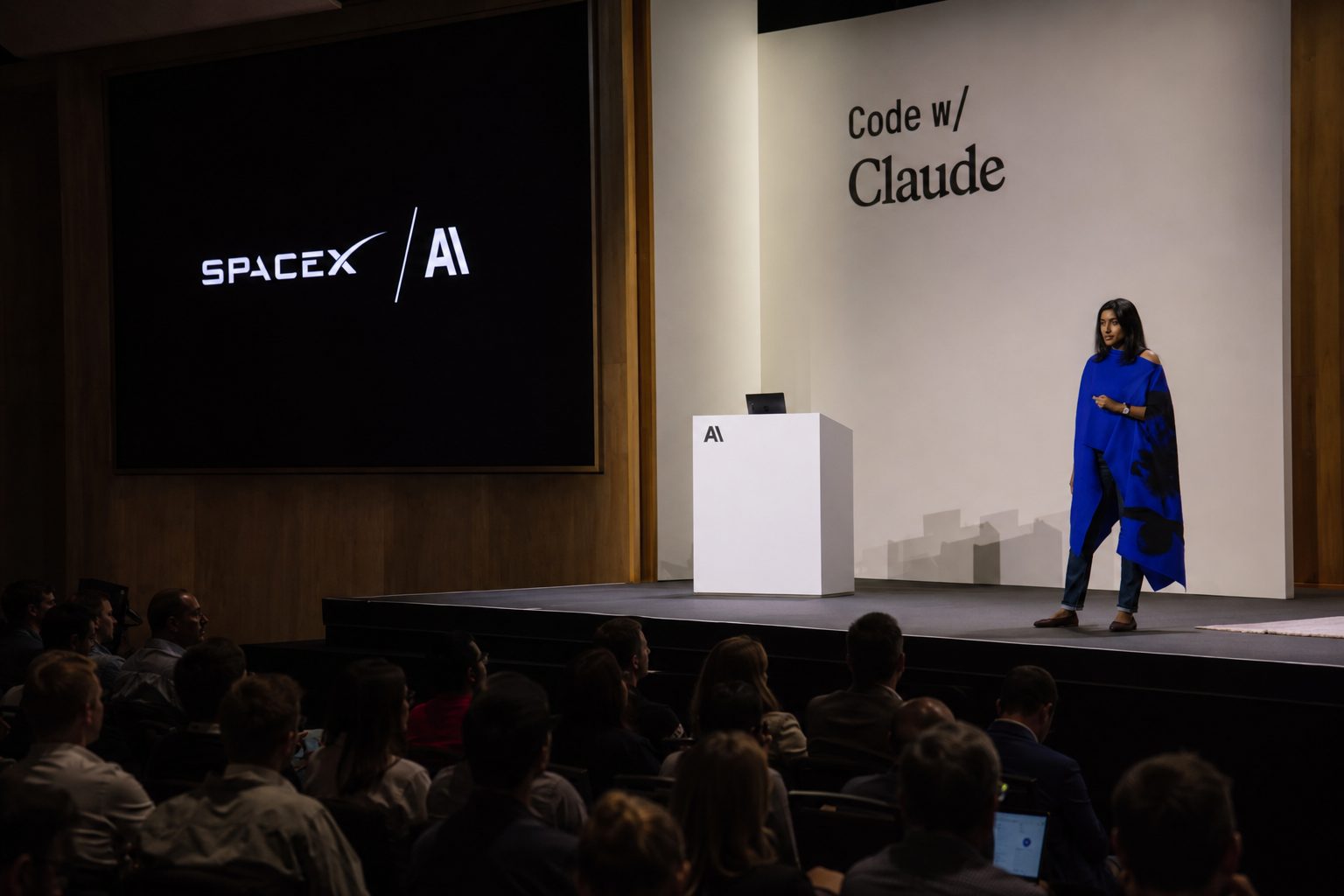
“We’ve had difficulties with compute,” Amodei told the crowd at Anthropic’s developer conference, Business Insider reported. “We’re sorry if sometimes it takes some time, but we’re gonna keep going to acquire as much as we can.” According to the report, Anthropic has faced outages and set usage limits over the past few months. Some developers have moved projects over to OpenAI’s Codex, citing OpenAI’s edge in locking down more capacity earlier. Business Insider
Reuters says the deal lands SpaceX an AI-focused client just as the company eyes an IPO, hoping to convince investors it can play a bigger part in AI infrastructure. Musk, posting on X, said he greenlit the lease following a meeting with Anthropic’s leadership, adding that “No one set off my evil detector”—a sharp departure from his previous public critiques of the firm. Reuters
Anthropic linking up here stands out, given it’s going toe-to-toe with Musk’s own xAI—the very group Colossus was designed for, back when Grok was being spun up. Now Anthropic finds itself elbowing alongside OpenAI and Google, hunting for chips, power, and data center racks, as the battle shifts from flashy model debuts to simply keeping enough machines humming.
At the San Francisco event, Anthropic pushed its ambitions beyond just scaling up. The company rolled out a new “dreaming” tool for its Claude Managed Agents—AI designed to execute tasks with minimal human oversight. This addition allows the agents to revisit previous work between sessions, sift for patterns, and refresh memory files that track user preferences and context. Business Insider
Boris Cherny, who runs the Claude Code team at Anthropic, described the change as pushing software development toward greater automation. “The default isn’t, ‘I’m going to prompt Claude Code.’ The default is now, ‘I will have Claude prompt Claude Code,’” he said during the event, Reuters reported. Reuters
Anthropic is leaning hard into infrastructure, cutting deals with a handful of major suppliers. The company pointed to arrangements with Amazon for as much as 5 gigawatts of capacity. Google and Broadcom are in for another 5 gigawatts starting in 2027. Microsoft and Nvidia have signed on for $30 billion worth of Azure capacity, while Fluidstack is tied to a $50 billion U.S. AI infrastructure plan.
But the risks are clear enough. Reuters flagged that building AI data centers in orbit would require heavy investment and present serious technical hurdles. Data Center Dynamics, for its part, pointed out that the Colossus site has faced pushback from civil-rights organizations concerned about its use of natural-gas turbines. Should demand continue to outrun new capacity, Anthropic could end up right back where it started: more users than it has compute to offer.