
WASHINGTON, Jan 22, 2026, 12:09 (EST)
- Blue Origin plans to start rolling out its TeraWave satellite constellation by late 2027
- Network is aimed at enterprise, data center, and government clients—not individual consumers
- Plan introduces a second Bezos-backed satellite constellation alongside Amazon’s Kuiper and Leo projects, targeting a market dominated by SpaceX’s Starlink
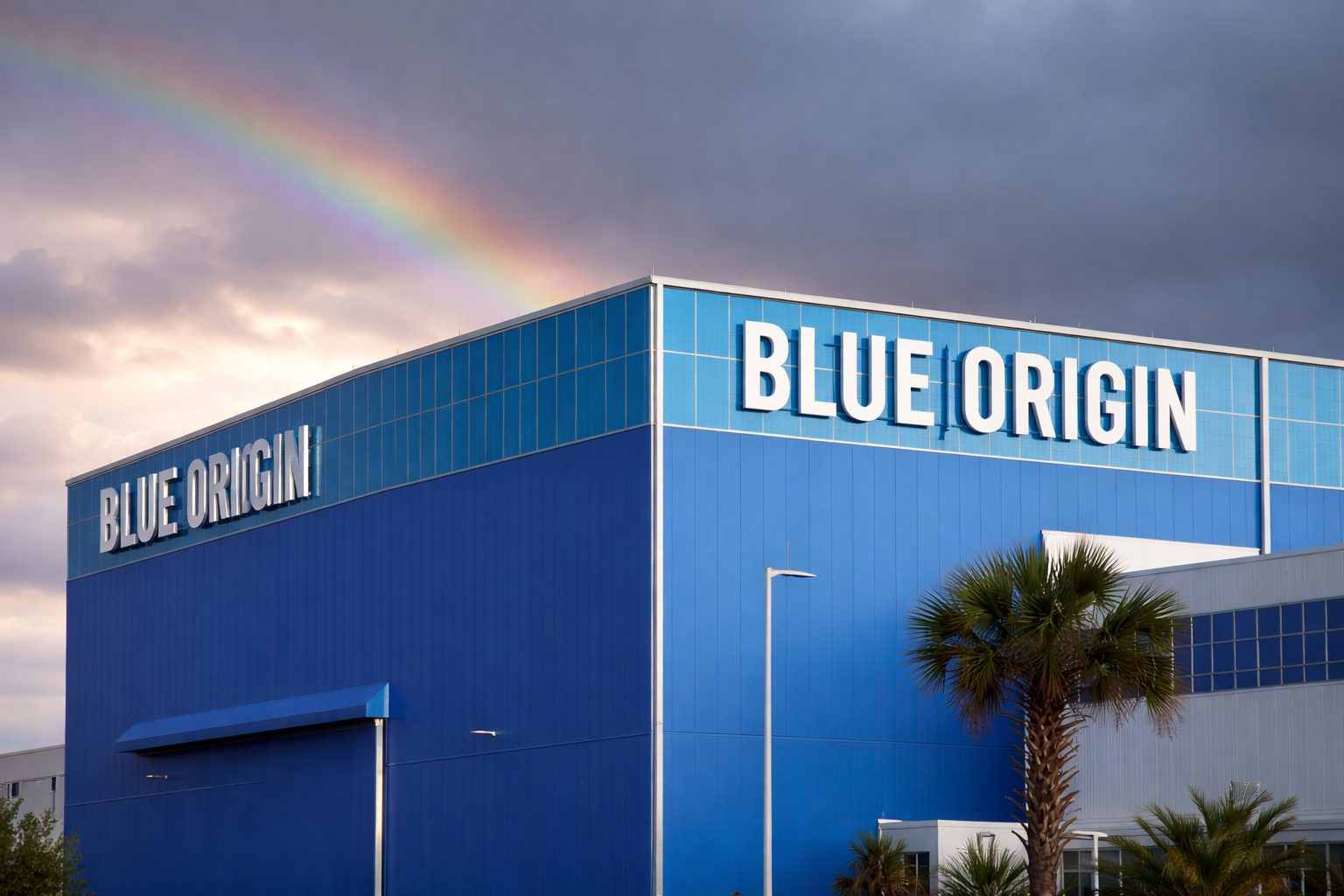
On Wednesday, Blue Origin unveiled TeraWave, a satellite network promising symmetrical data speeds reaching 6 terabits per second (Tbps). The service aims to support tens of thousands of enterprise, data center, and government customers. The company plans to start deploying the constellation of 5,408 satellites in the fourth quarter of 2027.
The bet arrives as cloud computing relentlessly devours bandwidth, pushing customers with vast networks to seek backup routes beyond just fiber. Major outages tend to flip redundancy from a “nice to have” into an urgent buy.
With around 10,000 satellites in orbit, SpaceX’s Starlink has set the standard, now boasting over six million users across at least 140 countries, including government clients via its Starshield division. This announcement surfaces amid industry buzz around launching data centers in space to support AI’s massive power demands. Meanwhile, Amazon—another Bezos venture—is rolling out Amazon Leo, targeting 3,200 satellites with 180 already launched, while Chinese firms are also fielding competing constellations. Blue Origin, however, takes a different route. CEO Dave Limp wrote on X: “What makes TeraWave different? It is purpose-built for enterprise customers,” signaling no consumer push like Starlink’s. Reuters
Blue Origin outlined its TeraWave system in recent filings, revealing a hybrid satellite network that mixes low Earth orbit (LEO) satellites with medium Earth orbit (MEO) craft, all connected through laser-based optical communications. The constellation will include 5,280 satellites in LEO alongside 128 in MEO, operating on Q/V-band and E-band frequencies. Radio links can deliver up to 144 gigabits per second, while optical connections push speeds as high as 6 terabits per second, with upload and download rates symmetrical. The company told regulators it aims to serve roughly 100,000 customers, naming Lindo St. Angel as the project lead.
Blue Origin is pushing TeraWave as a backup option for clients who can’t risk any downtime, presenting it as additional capacity to rely on during fiber outages, natural disasters, cyber attacks, or maintenance periods.
Blue Origin hasn’t shared pricing details or revenue goals yet, nor has it indicated how fast it expects to gain customers. The company positions the network as a supplement to existing terrestrial and subsea routes, not as a substitute.
The move has sparked questions about potential overlap with Amazon Leo, which is going after the same government and enterprise clients. “There is certainly overlap with Amazon’s target customers in the government and enterprise sectors,” noted Tim Farrar, founder of satellite consultancy TMF Associates, describing it as another case of “vertical integration” — controlling both the rockets and the satellite network they support. GeekWire
For Blue Origin, this means diving into the complex, ongoing challenge of managing a space network—not just sending hardware into orbit. SpaceX has proven the market’s potential but also highlighted how tough it is to grow at scale.
But the risks are well-known. The plan hinges on securing regulatory approvals, timely construction and launch of thousands of satellites, and steering clear of the spectrum and orbital congestion that has plagued other non-geostationary constellations.
TeraWave plans to launch its first satellites by late 2027. Blue Origin is placing its bets on the next major space communications battle focusing on data-center traffic and government connections, rather than everyday household Wi‑Fi.