
WASHINGTON, Jan 20, 2026, 08:01 (EST)
- NOAA said severe G4 geomagnetic storm levels were reached early Tuesday after a CME hit Earth
- A separate severe solar radiation storm was also reported, with risks for polar aviation and satellites
- Space weather agencies in the U.K. and Australia issued similar warnings as aurora chances spread
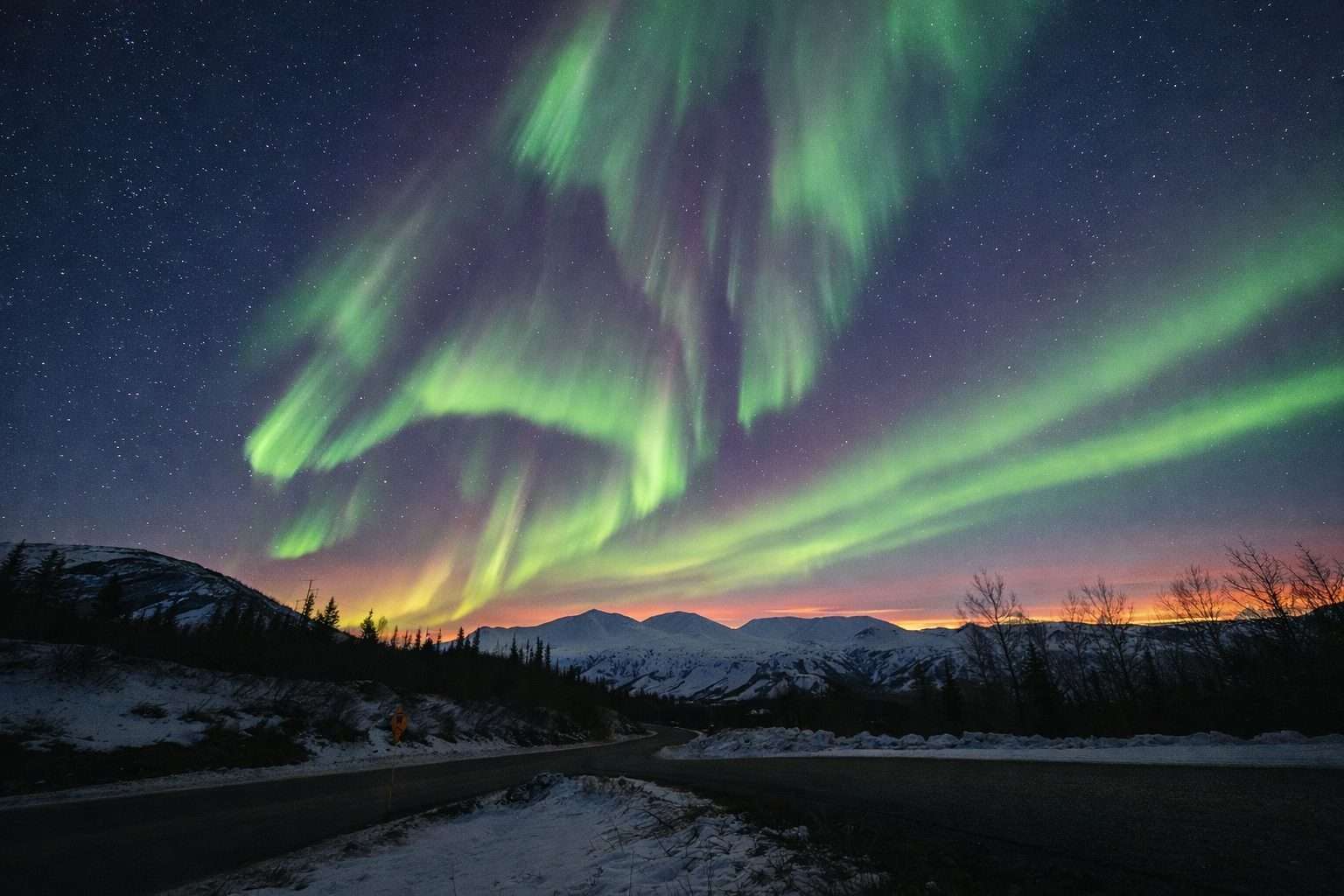
U.S. space weather forecasters said severe geomagnetic storm levels were reached early Tuesday, raising the odds that the northern lights will be visible far beyond their usual Arctic zone on the night sky of Jan. 20. NOAA’s Space Weather Prediction Center said G4 levels were observed again at 3:23 a.m. and 5:21 a.m. EST after first hitting that threshold on Monday afternoon.
The storm matters for more than skywatchers. NOAA said a severe solar radiation storm was also in progress, a rare event that can raise radiation exposure risks for astronauts and flights on polar routes, and increase threats to satellites and space launch systems. The agency said it had notified airlines, the FAA, NASA, FEMA and the North American Electric Reliability Corporation, among others, as conditions evolved.
NOAA issued a G4 watch for the Jan. 20 UTC day after a coronal mass ejection, or CME, blasted from the Sun on Jan. 18 alongside an R3 “strong” solar flare. Forecasters said the storm could swing from minor to severe as the CME arrived late Monday into early Tuesday, and they expected conditions to weaken later in the day, with residual effects still possible on Wednesday. NOAA Space Weather Prediction Center
The flare activity came from sunspot region 4341, which NOAA said produced an X1.9 flare on Jan. 18. X-class flares are the strongest category of solar flare, and they can coincide with eruptions that drive geomagnetic storms when their material reaches Earth.
Britain’s Met Office issued its own geomagnetic storm watch through Wednesday, saying the CME reached Earth earlier than anticipated and drove geomagnetic activity to severe levels. It said conditions on Tuesday were expected to sit in the strong-to-severe range, with a small chance of an extreme G5 interval, while cloud could limit aurora sightings in parts of the U.K.
In Australia, the Bureau of Meteorology’s space weather center said G4 conditions were observed across the region after the CME arrival and warned of a chance of G5. It said shortwave radio conditions were expected to be poor and that maximum usable frequencies could be depressed by 25% to 50%.
“A solar storm is a sudden event on the surface of the sun,” Australian astrophysicist and science communicator Sara Webb told The Guardian, describing bursts of particles and plasma that can end up interacting with Earth’s magnetic field. That interaction can pump energy into the upper atmosphere and trigger aurora, the coloured glow seen as the aurora borealis in the north and aurora australis in the south. The Guardian
“The intensity of this storm has not been seen in more than two decades,” Shawn Dahl, service coordinator at NOAA’s space weather center, said. The Guardian
But forecasters cautioned that visibility from mid-latitudes depends on how the CME’s magnetic field arrives and on local cloud cover. ABC News reported that auroras could extend as far south as Alabama and northern California, with viewing typically best between 10 p.m. and 4 a.m. local time and away from city lights.
Space weather can change quickly, and agencies urged the public and operators of sensitive systems to keep checking updated forecasts as the CME passes and conditions shift hour by hour.