
HOUSTON, Jan 26, 2026, 11:13 (CST)
- At a key meteorology conference in Houston, Nvidia introduced a fresh lineup of open AI models and tools designed specifically for weather forecasting.
- The updates focus on medium-range forecasts, quicker storm alerts, and accelerated processing of observation data using GPUs.
- Nvidia is pitching Earth-2 as an open stack, letting others run and customize it on their own infrastructure.
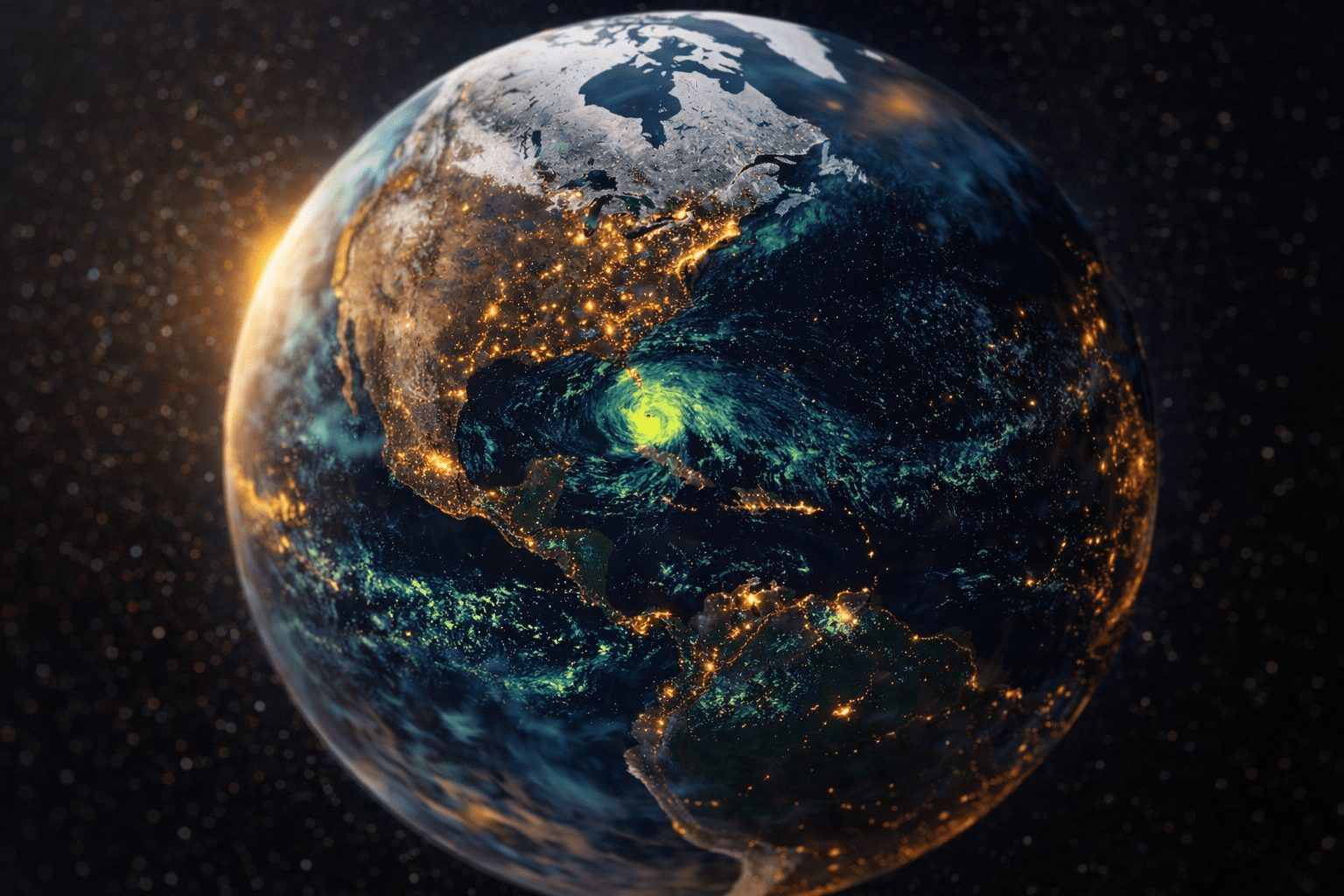
On Monday, chipmaker Nvidia launched a new series of open AI weather models, aiming to speed up forecasts using graphics processors and make advanced weather prediction more accessible.
The timing of the launch coincided with the American Meteorological Society’s annual meeting in Houston, as a winter storm sweeping parts of the U.S. exposed just how much forecasts can vary when models clash. Nvidia claims its Earth-2 Medium Range model outperformed Google DeepMind’s GenCast on over 70 forecasting variables. GenCast, which debuted in December 2024, had already set a new standard for AI-powered medium-range weather predictions. Mike Pritchard, Nvidia’s climate simulation director, described their approach as “a return to simplicity,” emphasizing a pivot toward “simple, scalable transformer architectures.” TechCrunch
The bottom line: forecasts only matter if they can be updated quickly and often. Energy traders, grid operators, and emergency managers need more frequent runs, finer local detail, and less downtime waiting on limited supercomputing resources.
Nvidia is also pushing the politics of infrastructure. It’s promoting “sovereign” forecasting—the concept that countries or companies handle and improve models on their own hardware, instead of outsourcing critical parts of the process.
Nvidia announced new open models, including Earth-2 Medium Range, which runs on a fresh “Atlas” architecture designed for 15-day global forecasts covering over 70 weather variables. Alongside that, the Earth-2 Nowcasting model leverages “StormScope” to convert satellite and radar inputs into storm forecasts at a kilometer scale for the next six hours. They also unveiled Earth-2 Global Data Assimilation, a “HealDA” model that integrates scattered observations to create the initial conditions needed for accurate forecasts. These additions complement existing Earth-2 models like CorrDiff and FourCastNet3. Early adopters report real benefits: Brightband CEO Julian Green said, “open source speeds up innovation,” Israel Meteorological Service director Amir Givati highlighted a “90% reduction in compute time,” and Emmanuel Le Borgne from TotalEnergies emphasized the importance of short-term forecasts since “minutes and local impacts matter.” NVIDIA Blog
Nvidia is releasing the model checkpoints via Hugging Face, along with its Earth2Studio open-source toolkit for building inference pipelines and PhysicsNeMo, which supports training and fine-tuning, the company announced. According to the post, Medium Range relies on a diffusion-based transformer that forecasts stepwise atmospheric shifts. Meanwhile, Nowcasting was trained on U.S. GOES geostationary satellite data but can be adapted for other regions with similar satellite coverage. The Global Data Assimilation model is labeled as “coming soon.” Hugging Face
Most national forecasts rely on physics-based simulations—numerical weather prediction solving equations for air, water, and heat worldwide. Nvidia is betting on AI to speed up parts of that process, mainly the costly preparation that converts raw data into usable initial states.
The company is also aiming to maintain a presence in the open ecosystem. It claims Earth-2 can operate alongside other models and tools, presenting the stack as modular components for agencies and firms looking to assemble their own systems.
Competition is ramping up. Nvidia highlighted DeepMind’s GenCast as a key benchmark, but the landscape also features models and tools from leading weather agencies and tech giants. Nvidia insists that this year, “open” access—not just sheer accuracy—is what sets them apart.
The risk remains clear: nailing benchmarks doesn’t guarantee improved alerts on a chaotic Tuesday. Agencies must test these models across different regions and rare events. In practice, success often depends on observation density, data accuracy, and the way AI integrates into daily operations.
There’s also a real-world limitation. Running “open” models demands hardware, shifting costs instead of eliminating them — from leasing supercomputer time to acquiring sufficient GPUs and hiring staff to operate, oversee, and maintain the models securely.
Nvidia announced it will reveal more technical details on the new architectures and is showcasing the Earth-2 software and models at the Houston meeting, which continues through Thursday.