
Singapore, Feb 2, 2026, 23:24 (SGT)
- NSAS will launch on April 1 under Singapore’s trade ministry.
- Agency tasked with developing and managing national space capabilities, as well as drafting space laws and regulations.
- The government reports that Singapore is home to around 70 space companies and holds joint ownership of three Earth observation satellites.
Singapore plans to launch its own space agency on April 1, 2026, consolidating efforts around national space capabilities and new regulations for the sector. The Ministry of Trade and Industry said this step will enable the country to “fully harness the value and opportunities of the growing global space economy.” Tan See Leng made the announcement during the inaugural space summit. Reuters
Officials note that space-based systems already support digital connectivity, navigation, maritime monitoring, and climate resilience in this trade-reliant city-state. At the summit, Tan urged the agency to help Singapore “unlock the full potential of space technology applications for Singapore’s national and regional needs,” while safeguarding its assets amid a growing crowded space environment.
Investment in space technology worldwide is set to climb even higher after reaching a record high in 2025, data from Seraphim Space reveals. The ministry also highlighted Singapore’s edge in advanced manufacturing, aerospace, micro-electronics, precision engineering, and artificial intelligence as it seeks fresh growth sectors.
NSAS will take over and expand the Office for Space Technology & Industry, Singapore, previously part of the Economic Development Board, according to a government press release. The new agency’s scope includes operations and regulation, aiming to develop national space capabilities while crafting legislation described as “pro-innovation and pro-business,” all within safety and sustainability frameworks. Gov
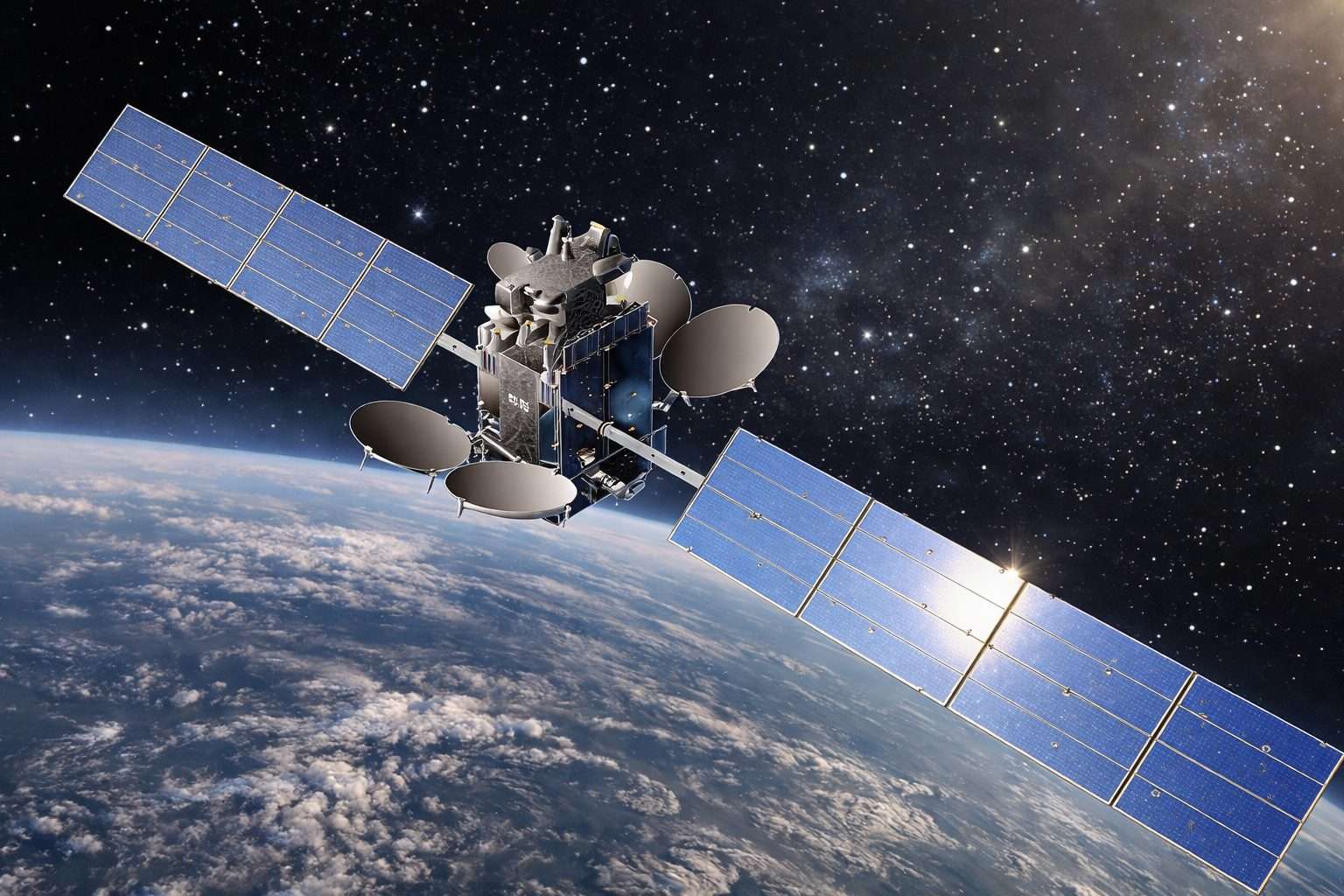
Singapore co-owns three Earth observation satellites alongside ST Engineering. Tan mentioned a multi-agency operations centre will back government users by handling “satellite tasking and bespoke geospatial data analytics.” This setup aims to boost sectors like port operations, urban planning, environmental monitoring, and food security. Channelnewsasia
Earth observation satellites snap images and gather data about our planet, while “tasking” refers to the daily process of deciding where these satellites should focus. Tan mentioned that Singapore plans to expand its satellite “constellation”—a network of linked spacecraft—and enhance its space situational awareness, which involves tracking satellites, monitoring debris, and identifying potential collision threats.
The government appointed Ngiam Le Na as chief executive-designate starting Feb. 2, ahead of the agency’s launch in April. According to a press release, she will step down from her role as deputy chief executive at DSO National Laboratories. Ngiam has also held senior positions at the Defence Science and Technology Agency. She has managed Earth observation satellite programs and assisted the Civil Aviation Authority of Singapore with counter-drone efforts. Additionally, she sits on the board of the Public Utilities Board.
Since 2022, Singapore has allocated S$210 million via the Space Technology Development Programme, backing research institutes and companies to create and launch payloads and test space technologies, the ministry said. Tan noted that Singapore’s investments will cover satellite remote sensing for carbon monitoring, debris cleanup methods, and microgravity research focused on human health sciences.
The ministry noted that Singapore is home to roughly 70 space companies, employing some 2,000 professionals across areas like component design, manufacturing, and satellite services. It highlighted collaborations with organizations such as the European Space Agency, the Indian National Space Promotion and Authorization Centre (IN-SPACe), and the UAE Space Agency, aiming to strengthen connections within the equatorial belt.
The agency will be crafting rules amid a chaotic, congested orbit. Singapore aims for regulations that balance business friendliness with strict safety and sustainability standards, but the framework and upcoming space laws are still in the works alongside industry input.
Tan described space technologies as “the backbone of our interconnected world,” noting the global space economy hit US$630 billion in 2023 and is projected to reach US$1.8 trillion by 2035. He emphasized that Singapore’s space ambitions go beyond technology, aiming to transform innovation into “real solutions” that boost the economy and tackle global issues.