
HOUSTON, March 23, 2026, 11:46 CDT
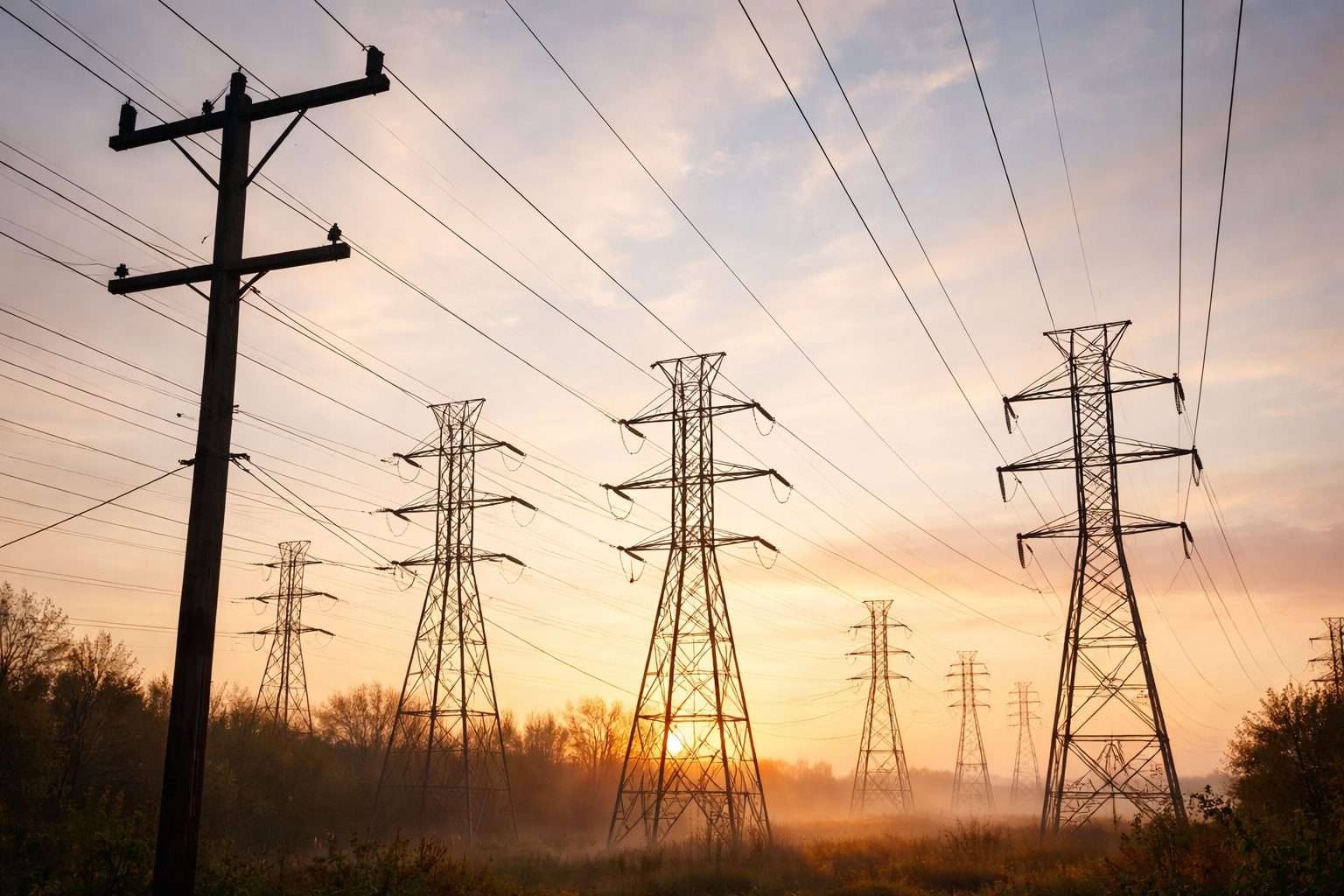
Google on Monday sounded the alarm: the U.S. isn’t adding electricity supply fast enough to keep up with artificial intelligence’s rapid growth, a constraint that’s already limiting where new data centers go. “We are not moving full throttle on energy,” said Ruth Porat, who serves as president and chief investment officer at both Alphabet and Google, speaking at the CERAWeek conference in Houston. Reuters
Power is fast turning into a bottleneck. The U.S. Energy Information Administration projects electricity load growth of 1.9% in 2026, then 2.5% for 2027—coming off a new national demand record set in 2025. Texas’s ERCOT market leads the pack, along with the PJM grid spanning the Mid-Atlantic and Midwest. Some of the largest AI campuses now gulp more than 1 gigawatt apiece at a single location.
Google has already begun reshaping its operations to fit that constraint. Just last week, the company widened its use of “demand response” contracts—these deals let major customers reduce electricity use when the grid is under strain—signing agreements with five U.S. utilities. That gives Google as much as 1 gigawatt of flexible load capacity, which is about what 750,000 homes would use. “A really important tool for meeting future demand,” said Michael Terrell, who heads advanced energy at Google. Reuters
The latest move is hands-on: On Friday, the U.S. Department of Energy announced that SoftBank and American Electric Power are teaming up to build an AI server campus in Ohio with a hefty 10-gigawatt punch—plus a 9.2-gigawatt gas plant, all on federal ground and fueled by $33.3 billion from Japan. There’s also $4.2 billion set aside by SB Energy and AEP Ohio for new transmission infrastructure. Masayoshi Son called the agreement a step toward locking in both energy and compute resources.
Competitors are running into similar obstacles. Back in February, Amazon told Reuters that lengthy waits for grid connections were holding up its European push. “There’s a misalignment. We want to expand and grow within two years,” AWS executive Pamela MacDougall said. Microsoft, meanwhile, is looking at superconducting power lines—an approach that could “scale power density without expanding our physical footprint,” according to Husam Alissa, who heads up systems technology for its data center unit. Reuters
Political winds are shifting. On March 4, Google, Microsoft, Meta, Amazon and other AI firms signed a White House pledge to cover the costs of new power generation and delivery upgrades for their U.S. data centers—a move aimed at easing worries about impacts on household electricity bills. Ari Peskoe, an energy lawyer at Harvard, suggested the Ohio model could signal “a new way forward” where data centers, not ratepayers, foot the bill for transmission linked to large-scale projects. Reuters
Timing isn’t on the utilities’ side here. Last month, Reuters said 46 U.S. data centers are looking to build their own, mostly gas-fueled, power plants—altogether, that’s 56 gigawatts, about 30% of the nation’s planned data-center capacity. PJM has flagged potential power shortages as early as 2027, citing the surge in data-center demand.
Money can’t speed up the clock. Jon Gordon, director at Advanced Energy United, put it plainly this month: “The real problem is the inability to get generation online fast enough to meet the data center demand.” Just footing the bill, he said, “doesn’t get it online any faster.” According to Reuters Events, lead times for large gas turbines have already stretched past five years, reported earlier in March. Environmental groups warn that the wave of new gas construction could tie the grid to high emissions for decades. Reuters
Alphabet hovered near flat around $301.27 by midday in the U.S. AEP advanced 1.5% to $127.54, while Constellation Energy picked up 2.3% to $288.59. Shares of Vistra climbed 3.6%, landing at $151.23. Vertiv tacked on 1.2%, trading at $258.95 as power-and-cooling names outperformed.
So far, companies are relying on a mix of curtailment contracts, private power generation, new transmission lines, and company-negotiated rate agreements. That patchwork is keeping AI construction on track even as grid upgrades fall behind.