
SEOUL, April 15, 2026, 01:22 KST
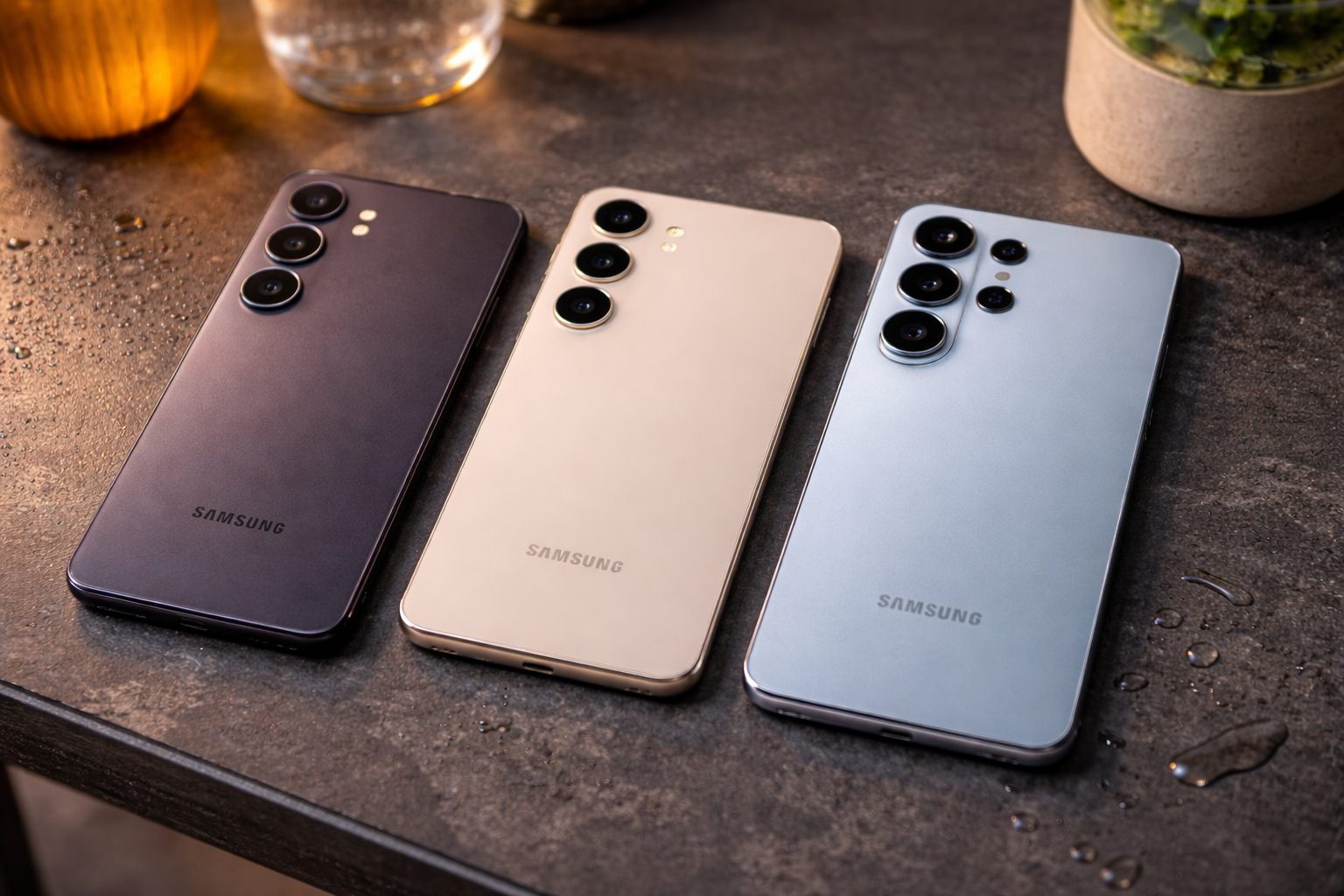
The Galaxy S26 rollout is shaping up around the Ultra, as reviews hit the S26+ for lacking a strong selling point and Samsung shifts gears to crank out more of its flagship. According to Digitimes on April 14, Samsung boosted its April production target for the S26 line to 3 million units, up from 2.4 million, mostly to cover rising Ultra demand. Notebookcheck, a day before, summed up the S26+ with one line: it’s still searching for a purpose.
It’s a key point: Samsung is relying on the S26 lineup to drive its flagship phone business this year, despite pricier components. According to Omdia, global pre-orders for the Galaxy S26 are running more than 10% ahead of the S25 series, even with steeper DRAM and NAND costs squeezing margins and complicating pricing decisions for vendors.
Samsung’s new lineup leans heavily on artificial intelligence, privacy features, and durability. During the launch, Chief Executive TM Roh described a vision of AI that “quietly” supports users without drawing attention. As part of its sales pitch for the Ultra, Samsung spotlighted the device’s Privacy Display—designed to limit viewing angles and deter prying eyes in public—as a key selling point for anyone considering a trade-up. Samsung Global Newsroom
The S26+ is taking the brunt of criticism. On April 13, Marcus Herbrich at Notebookcheck argued Samsung missed the mark by not giving the phone a single Ultra-level upgrade, pointing to static cameras, throttled processor performance, and a Wi-Fi battery run of 17 hours and 45 minutes—about two hours shy of the Snapdragon S25+.
Still, Samsung isn’t dropping its Exynos 2600 everywhere. On April 14, The Financial Express called the base S26 “polished and unexpectedly compelling” for day-to-day use, pointing to its brighter 6.3-inch display, 4,300 mAh battery, and an Exynos chip that stayed cool under typical loads. Official specs list 25W wired charging and seven years of software updates. The Financial Express
At the high end, things are more straightforward. On April 12, Android Authority said the 6.9-inch S26 Ultra finally brings enough to the table to warrant its premium pricing, highlighting the Privacy Display, improved cameras, bigger vapor chamber for better sustained performance, and quicker charging speeds. According to Samsung, the Ultra still packs a 5,000 mAh battery and can hit about 75% charge in 30 minutes when paired with a 60W adapter.
Still, some tweaks to the Ultra are a mixed bag. On April 10, SamMobile columnist Abhijeet Mishra pointed out that while 60W wired charging sounded impressive, it didn’t shake up daily use as much as expected — the bigger shift, he argued, was Samsung’s move to 25W wireless charging. Over at Android Police, they saw things differently: swapping titanium for aluminum helped slim the S26 Ultra to 214 grams, but to them, it felt like a step down in materials.
That leaves Google with a more open lane in the compact Android segment. The company puts Pixel 10 battery life at over 24 hours, promising roughly 55% charge in half an hour, plus Qi2 magnetic wireless charging via its Pixelsnap. AT&T’s spec sheet shows a 4,970 mAh battery and 128GB base storage for the Pixel 10, while Samsung’s S26 comes in at 4,300 mAh and 256GB. Side-by-side with S26, recent comparisons called out slimmer bezels on Samsung’s phone, but said Google’s model gets brighter outdoors.
Things aren’t set in stone yet. According to Samsung’s own spec sheet, both the S26 and S26+ could come with either Snapdragon or Exynos chips depending on where you buy—meaning battery performance and heat might not be consistent across all regions. Omdia analyst Sanyam Chaurasia also pointed out, “Vendors have little choice but to raise prices as cost pressures intensify,” hinting that factors like discounts, local pricing, and future software tweaks could still move the needle on early takes. Samsung Global Newsroom
At this stage, it’s the Ultra carrying most of the weight. Assuming Samsung sticks to its April production schedule, both supply chain chatter and initial reviews are lining up: the S26 Ultra seems to be attracting the bulk of demand. The S26+, meanwhile, hasn’t made its case.