
Tokyo, April 16, 2026, 00:13 JST
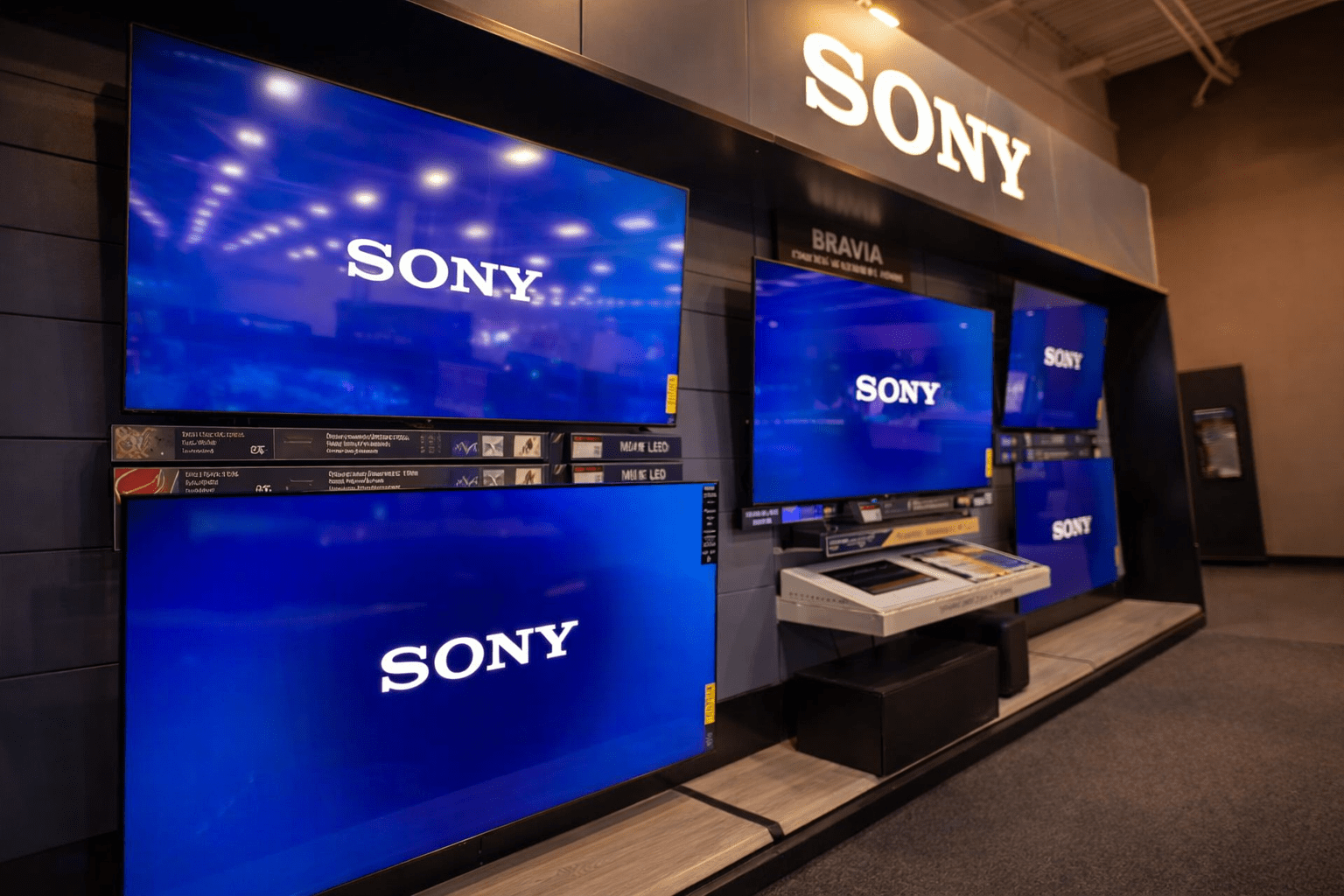
Sony will end several TV Guide and menu features on some 2023-2025 Bravia televisions in late May, cutting functions used by antenna viewers in the United States and by some viewers using external TV-provider boxes in Europe. Support notes show recent Bravia models will lose parts of the guide, channel logos and preview images, while some menus for external TV devices will also disappear.
The move lands awkwardly for Sony because it reaches recent premium sets — the 2025 Bravia 8 II and Bravia 5, 2024’s Bravia 9, Bravia 8 and Bravia 7, and the 2023 A95L series — and trims one of the few interfaces that still ties broadcast, pay TV and apps together on a single screen. Sony’s U.S. online store was still listing several of those models for sale, including the Bravia 9, Bravia 7, Bravia 5, Bravia 8 II, Bravia 8 and A95L.
That matters because the operating system — the software layer that controls the home screen, recommendations and input switching — is now a central battleground for TV makers. Parks Associates said 61% of U.S. internet households use a smart TV as their primary streaming device, and analyst Jennifer Kent said the operating system has become “the central point of competition,” with Samsung’s Tizen leading and Roku and LG also in the mix. Hub consultant Christina Pisano said in a 2025 study that being a viewer’s default “dramatically increases the likelihood they’ll keep you.” PR Newswire
In the U.S., Sony said antenna users on ATSC, the North American over-the-air broadcast standard, may lose program information in the electronic program guide, the on-screen TV schedule, on some channels. Only recently watched channels may appear, and channel logos plus thumbnail images in program descriptions will vanish; Sony said the set-top box menu used with external TV-provider devices will be replaced by a simpler control menu.
Sony did not spell out a reason in its U.S. notice. But Sony’s Japanese Bravia site said some display functions in the program guide would end from late May because of a contract change with the data provider.
The exact changes vary outside North America. Sony’s Ireland notice said viewers in Ireland and several Nordic and central European markets will lose channel logos and preview images for channels received over antenna, cable or satellite, while the UK and several other European markets will also lose the browsing menu for external TV-provider devices; Sony said the channels themselves would not be affected.
That chips away at one selling point of a connected TV: putting broadcast, pay TV and streaming in one place. Parks Associates said this week that 33% of pay-TV subscribers keep the service because it lets them find more content “all in one place,” and Elizabeth Parks, the firm’s president, said “Aggregation is now a strategic advantage.” Parks Associates
Sony has taken similar steps before. Support notices in Asia and the UK said guide-related and other third-party-powered TV Guide features on older Bravia sets were changed or removed in 2024, while the standard guide stayed in place on some models.
Still, the hit may not be uniform. Horowitz Research said homes with access to live TV through an antenna fell to 19% in 2025 from 32% in 2020, and almost half of U.S. homes were streaming-only, suggesting the number of owners who feel the cuts right away may be smaller than the backlash implies. But feature withdrawals on TVs that remain on sale are a risk few premium brands welcome.