
CAPE CANAVERAL, Fla., April 20, 2026, 04:47 EDT
- Blue Origin recovered a previously flown New Glenn booster. But AST SpaceMobile’s BlueBird 7 satellite failed to reach a usable orbital altitude, leaving it stuck too low for operations.
- AST says insurance should take care of the satellite’s price tag, as work on more BlueBird satellites keeps moving forward.
- The timing isn’t great: SpaceX, Amazon, satellite makers, and optical-link firms are all accelerating work on direct-to-phone and fast orbital networks.
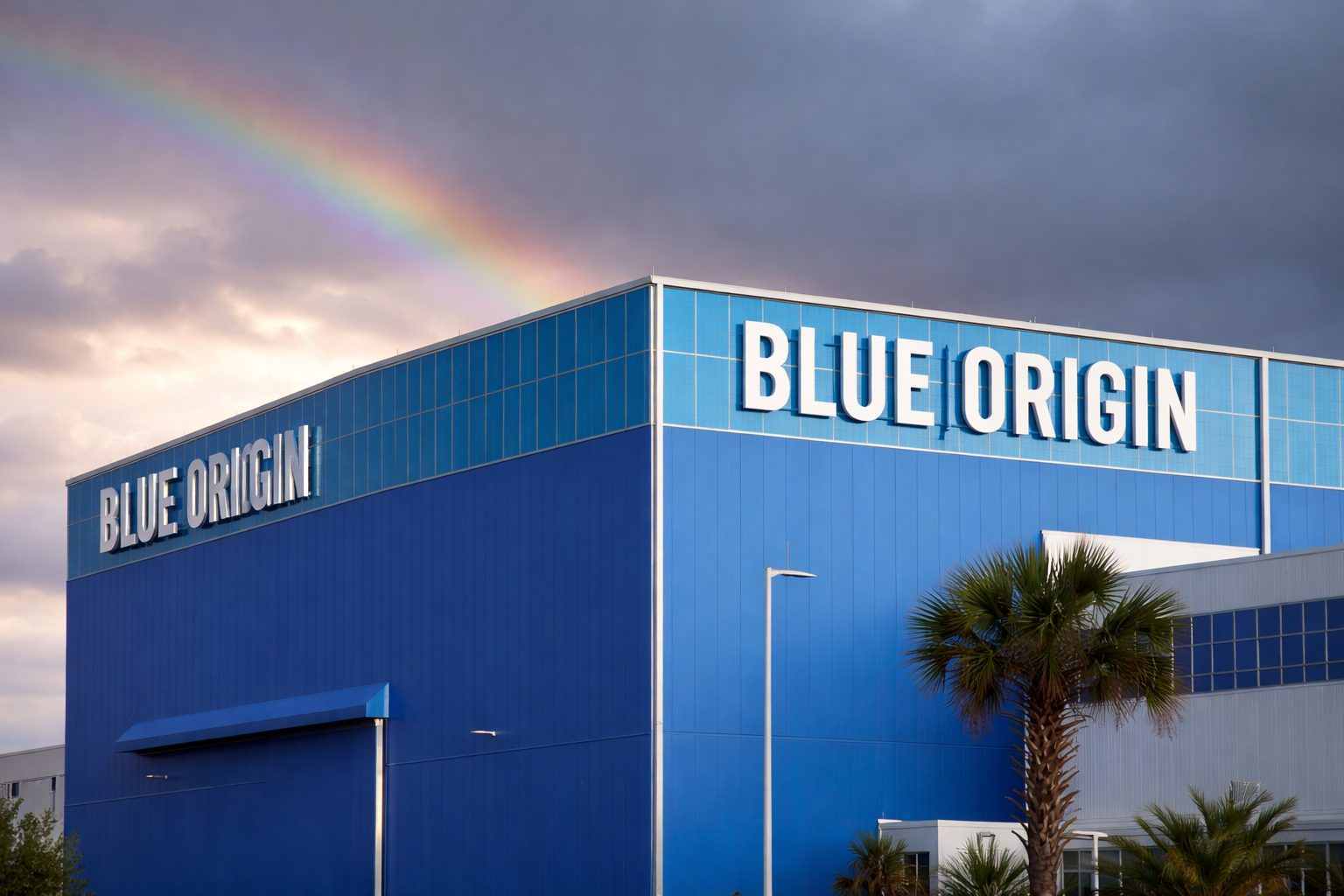
Blue Origin managed to recover its reused New Glenn booster on Sunday, marking progress for Jeff Bezos’ heavyweight rocket and its prospects for repeat missions. Not everything went smoothly, though: AST SpaceMobile’s BlueBird 7 satellite got stuck in low orbit and is now set to de-orbit. The booster lifted off from Cape Canaveral shortly after 7:25 a.m. ET and landed about 10 minutes later, Reuters reported.
The timing of the split decision matters, with the satellite sector moving beyond test launches into the build-out of actual networks. AST is chasing direct-to-device links, meaning its satellites aim to connect with ordinary smartphones—no add-ons required. SpaceX’s Starlink and Amazon’s Leo project are after these users, too, though their approaches differ. Low Earth orbit sits only a few hundred miles above ground, valued for quicker satellite internet, but competition in that crowded patch keeps heating up.
AST SpaceMobile said BlueBird 7 has separated from its launch vehicle and is powered up, but the company flagged the satellite’s orbit as “too low to sustain operations” with its onboard thrusters. Insurance is expected to cover the loss. As for BlueBird 8, 9, and 10, AST SpaceMobile plans to ship those within about 30 days. Business Wire
This recovery is a key milestone for Blue Origin. On its third New Glenn trip, the company re-used the first-stage booster called “Never Tell Me The Odds”—hardware that had already pulled off a successful landing last November, Blue Origin noted ahead of launch. But this time, the upper stage appears to have run into issues, not the booster, which impacted the customer’s payload. Blue Origin
“We foundationally developed New Glenn for what we think space is going to look like 50 to 100 years from now,” New Glenn Vice President Jordan Charles told Reuters before the result. Grand vision aside, the immediate job is more basic: get the payloads where they need to go—and repeat. Reuters
AST shares traded at $85.53 as of 4:30 a.m. EDT, down $5.41 from the last close, before the U.S. market opened. The latest dip isn’t just tied to a single satellite event. Management has reassured investors that its plan for launches every one to two months in 2026 remains on course, targeting a total of around 45 satellites deployed by year-end.
Things tightened up last week. Amazon moved in with a $11.57 billion acquisition of Globalstar—locking in satellite assets and grabbing direct-to-device spectrum in a clear pursuit of Starlink. “This helps Amazon catch up on direct-to-device spectrum,” Summit Ridge Group’s Armand Musey told Reuters. But SpaceX isn’t standing still; with sheer scale and launch volume, it’s likely to keep fueling M&A, Canaccord Genuity’s Austin Moeller said. Reuters
SpaceX is zeroing in on military missions, preparing to launch the last in the GPS III series—SV10—using its Falcon 9 rocket from Cape Canaveral early Tuesday. This will round out the U.S. fleet of 10 GPS III satellites, boosting jamming protection and sharpening positional data across the network.
The GPS III-8 mission is switching rockets, with SpaceX’s Falcon 9 now set to handle the launch after United Launch Alliance’s Vulcan remains under review for its anomaly. Col. Ryan Hiserote, who leads System Delta 80 at Space Systems Command, called the reassignment a sign of “rapid delivery of advanced GPS capability” and pointed to the importance of launch flexibility. Spaceforce
This week’s satellite tech buzz—outside of launch—zeroed in on faster data links overhead. MBRYONICS grabbed a spot on the Kepler Communications-led crew tackling the European Space Agency’s €18.6 million HydRON Element 3 initiative. The project aims to replace traditional radio with optical, or laser, communications, upping the volume of data zipping between satellites and to the ground. ESA’s Laurent Jaffart called HydRON a “multi-orbital optical communications network.” MBRYONICS chief John Mackey got straight to the point: connect all those space networks. Business Wire
Demand hasn’t faded, and smaller players are still attracting capital. Sidus Space secured $58.5 million in a registered direct offering—selling shares directly to investors—and plans to use the proceeds for working capital and general corporate purposes. Operating from Cape Canaveral, the company emphasizes its work in satellite manufacturing, tech integration, and AI-driven space data services.
Launch cadence, not demand, might actually be the tougher bottleneck here. If Blue Origin ends up taking longer to vet its upper stage, or AST’s mission timeline slips, big stakeholders like insurers, mobile networks, and backers could start second-guessing how soon direct-to-phone satellite service will actually materialize. SpaceX still leads on frequent launches. Amazon, for its part, has deep pockets. While AST pitches its phone-first approach, Sunday underscored the plain fact: making it to orbit—smoothly—still matters most.