
London, May 9, 2026, 18:04 (BST)
London’s FTSE 100 lost 0.4% on Friday, ending at 10,233.07, and notching up a third consecutive weekly decline. The more domestically focused FTSE 250 slipped 0.2%. Lingering uncertainty around a potential U.S.-Iran ceasefire and ongoing UK political jitters kept investors on the sidelines.
What’s different now: the pressure isn’t coming from just one direction. Investors are juggling rising energy costs tied to Gulf tensions, and at the same time, fresh political turbulence at Westminster after Prime Minister Keir Starmer’s Labour Party took a beating. Reform UK made gains, throwing more doubt on the old two-party dominance in Britain.
Saturday brought another shift in the political narrative—Starmer tapped former prime minister Gordon Brown to advise on global finance, following Labour’s loss in the municipal elections. Some Labour lawmakers have already urged Starmer to step down, but Reuters noted there’s little sign of an imminent leadership challenge.
It wasn’t a clean slide this week. The FTSE 100 slipped roughly 1.3%, moving from 10,363.93 on May 1 to 10,233.07 by May 8. The FTSE 250, on the other hand, managed a 1.4% gain over that stretch. A bounce midweek gave it some lift, though that momentum fizzled out by Friday.
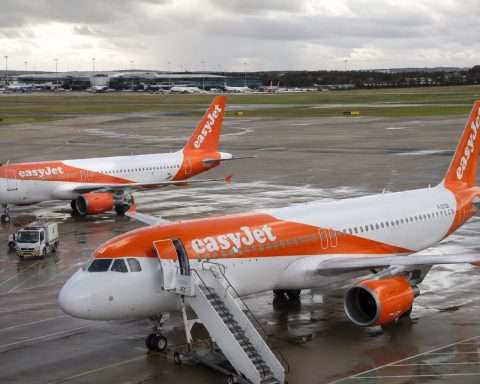
Airlines lost ground. Shares of British Airways parent IAG slipped after the group flagged that annual profit, free cash flow, and capacity will come in below prior forecasts, citing a roughly 2 billion euro jump in jet fuel costs for 2025. The company said about 70% of its expected fuel needs through the rest of 2026 are now hedged under contract. Chief Executive Luis Gallego remarked that IAG faces “no issues with fuel availability.” Over at J.P. Morgan, analyst Harry Gowers said the ongoing conflict would put IAG’s resilience to the test. Rivals Air France-KLM and easyJet have also highlighted rising fuel costs as a major pressure point. Reuters
Deal chatter kept single stocks in focus. Intertek slipped after it turned down EQT’s latest — and richer — £8.93 billion bid, as the company argued the offer not only undervalued the testing group but also posed significant execution risks. “A further bid from EQT or others is possible,” noted Panmure Liberum’s Joe Brent. Jefferies analysts put it bluntly: to get the board’s nod, an improved proposal might have to come in 5% to 10% higher. Reuters
There was a bit of a bounce in the bond market. Gilts — those UK government bonds — clawed back some ground after Starmer pledged to stay on, with the 10-year yield dipping 0.05 percentage point to 4.895% on Friday. Craig Veysey, fixed income lead at Guinness Global Investors, pointed out that gilts managed to recoup some of their recent lag as valuations started to look more appealing.
Builders and lenders got little relief from the latest domestic numbers. According to Halifax, house prices slipped 0.1% in April, marking a second straight monthly decline. Annual growth eased back to 0.4%. Amanda Bryden, head of mortgages at Halifax, pointed to “a greater degree of uncertainty” clouding the outlook after recent global events. Ashley Webb at Capital Economics flagged the risk of even higher borrowing costs and weaker house price growth if Starmer steps down. Reuters
Still, the trade isn’t set in stone. If Gulf tensions cool more permanently, oil and jet fuel might retreat, which would be a lift for carriers and consumer stocks; steadier gilt yields could make domestic shares more appealing. A spike in tensions, a bigger pound swing, or heavier Labour leadership scrutiny, though, would steer money back to defensives, energy buffers, and balance-sheet heavyweights.
UK stocks head into Monday with London’s benchmarks caught in a tight range—oil prices, sterling, gilts, plus corporate guidance all in the frame. The headline index points to caution, but beneath the surface, investors pick their spots, sticking to names with straightforward earnings stories.