
Sydney, May 14, 2026, 06:05 AEST
- Macquarie shares finished 1.1% higher on May 13, bucking declines among mortgage-focused bank peers.
- Macquarie’s profit came in ahead of expectations, prompting analysts to bump up their FY2027 EPS estimates. Still, the consensus target price didn’t budge much, holding close to A$249.
- Energy trading, asset divestitures, and exposure to higher interest rates are still the main variables in play.
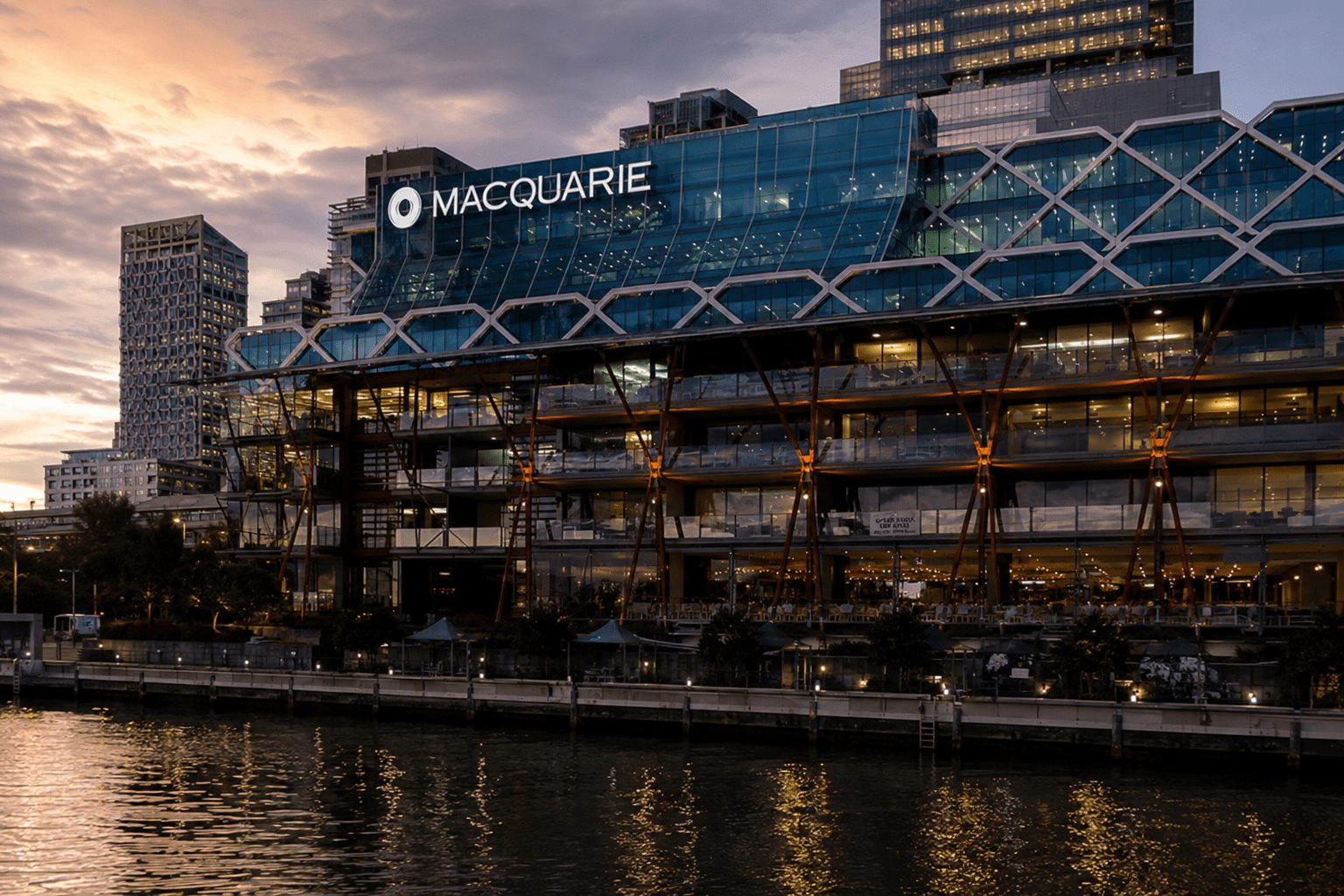
Shares of Macquarie Group bucked the slide in Australian banks on Wednesday, edging up after its better-than-forecast annual result and a resilient commodities unit drew investor attention. The stock finished at A$236.80, up A$2.60, or 1.1%, on May 13—even as Commonwealth Bank of Australia’s provision surprise rattled the sector.
That’s crucial: Macquarie isn’t seeing the same treatment as a typical mortgage bank. CBA shed almost A$30 billion in market cap following higher provisions and investors’ reactions to budget tweaks on negative gearing—the rental-property tax offset—while shares of Westpac and National Australia Bank slid as well.
That old question around Macquarie is back on the table—bank, global markets shop, asset manager, or just an uneasy blend? Sydney’s financial powerhouse still can’t shake the label debate. Right now, though, investors seem content with the hybrid.
Macquarie on May 8 reported a full-year net profit of A$4.85 billion to March 31, a 30% jump, while the second half brought in a record A$3.19 billion. The Commodities and Global Markets arm stood out, posting a 49% increase in profit contribution to A$4.22 billion, helped by strong client hedging across gas, power and oil, and the sale of the OnStream meters platform.
Reuters said Macquarie’s result topped the Visible Alpha consensus of A$4.39 billion, as turmoil in the Middle East fueled oil and gas trading. The stock spiked to a record A$249.49 after the numbers landed, then slipped as the wider market softened.
So far, analysts aren’t pushing the stock much higher. According to Simply Wall St, 11 analysts now see FY2027 revenue reaching A$19.5 billion, and statutory earnings per share moving to A$13.03—up from a previous post of A$12.46. The consensus target price? Still at A$249.
The debate hasn’t settled. JPMorgan bumped its Macquarie price target up to A$265 from A$240, sticking with its Overweight call. Investing.com flagged that Goldman Sachs and Jefferies remain at odds, underscoring how valuation—rather than just earnings momentum—has become the more challenging piece.
Julia Weng at Paradice Investment Management told Livewire Markets she was still upbeat on Macquarie, citing the group’s “very strong in commodities trading” position and likely upside from ongoing energy volatility. Hamish FitzSimons of AllianceBernstein sounded much cooler, describing the stock as a “hold heading to a sell” following its latest rally. Livewire Markets
Higher rates throw an extra wrench in the mix. On Polymarket, traders are betting there’s an 80% probability the Reserve Bank of Australia will hold rates steady at its June meeting. They’re giving a 21% chance to another hike, and see less than 1% odds of a rate cut. The market’s not huge—roughly $23,600 in volume.
Macquarie’s retail banking arm continues to expand, but not in the same league as CBA or Westpac. According to Broker Daily, Macquarie’s home loan portfolio jumped 28% over the past year, reaching A$181.3 billion and claiming roughly 7.1% of Australia’s mortgage market. That growth owes a lot to broker-originated loans.
There’s a catch: the upside could prove short-lived. Energy-market swings might boost trading profits for now, but that kind of tailwind doesn’t always last, and high bond yields complicate Macquarie’s asset deals. Simon Wright, head of Commodities and Global Markets, told Reuters that volatility is helpful — up to a point. Drag it out too long, though, and clients may start to pull back.
Macquarie gets a breather for the moment. Shares have slipped from last week’s peak, yet they managed to stay afloat while Australia’s mortgage banks took a hit. That’s the bet playing out: dial down CBA exposure, lean harder into commodities and capital markets — unless rates or an oil jolt flip the script again.