
MELBOURNE, May 14, 2026, 05:01 AEST
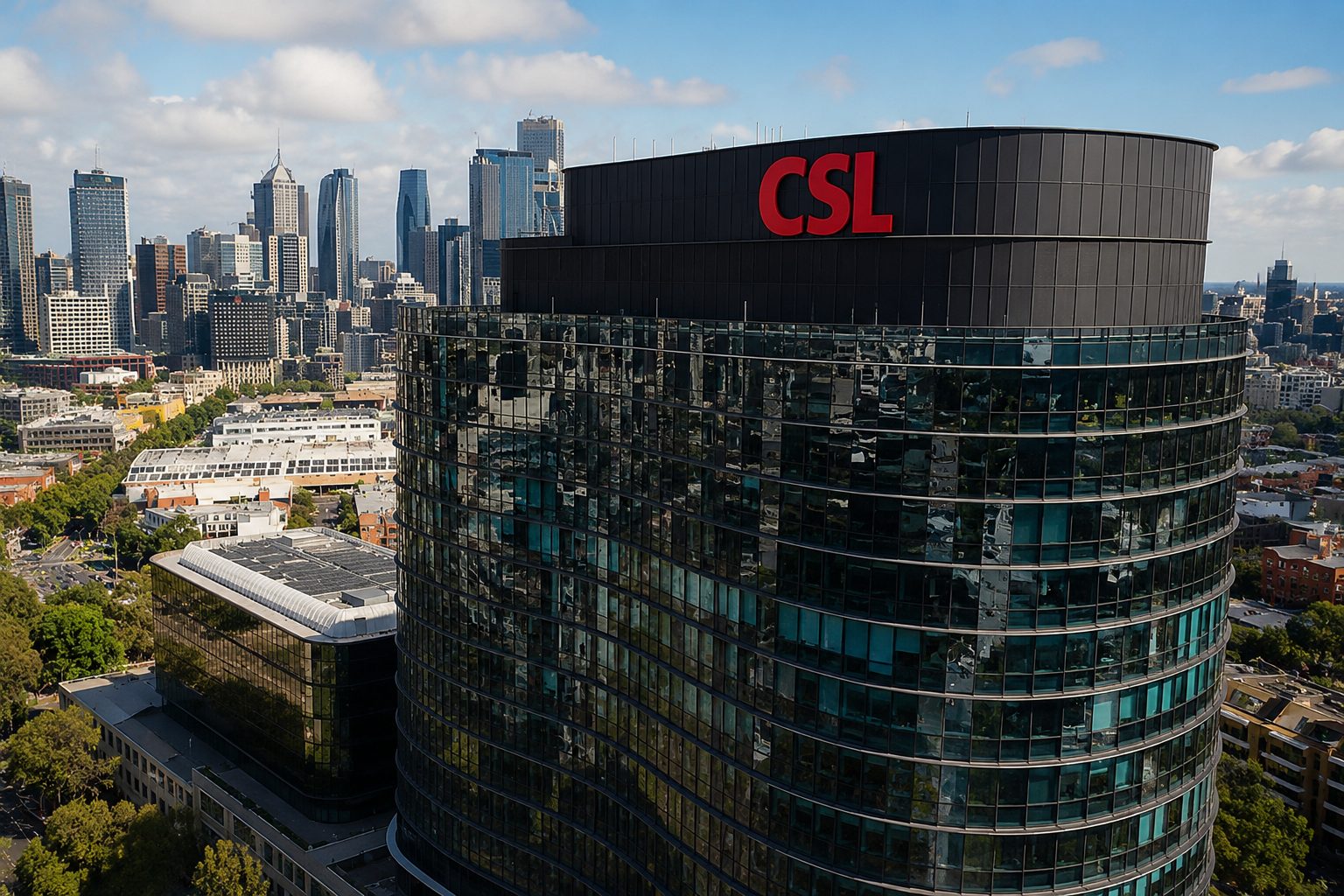
CSL Limited managed to halt its slide Wednesday, clawing back some ground after a steep drop. The company rattled investors this week with news of roughly US$5 billion in new non-cash impairments and a lowered fiscal 2026 forecast, sharply altering sentiment around the Australian biotech. Shares finished the day at A$98.79, inching up 0.24%, though the price remains a bruising 58.8% lower over the past year, according to market data.
It’s not just a single disappointing trading update at this point. CSL — long seen by Australian investors as a reliable healthcare name — is scrambling to shore up trust, but there’s still no permanent CEO in place. The overhang from the Vifor acquisition back in 2022 continues to drag on earnings, muddying valuation and leaving management’s forecasts in question. After cutting its guidance, shares tumbled 16% on Monday, marking their lowest level since January 2017, according to Reuters.
CSL is guiding for FY26 revenue around US$15.2 billion and NPATA near US$3.1 billion, both on a constant-currency basis. That measure factors out the impact of exchange rates. NPATA stands for net profit after tax, but before amortisation of acquired intellectual property and major one-off charges like restructuring or impairment costs.
Gordon Naylor, interim Chief Executive since February, said in the update that CSL’s “growth initiatives are working,” though the payoff will take longer to materialize than they’d thought. “As a result, we have now revised down our 2026 financial year guidance,” he added.
It’s an accounting writedown, not an immediate cash hit, but it’s still significant. CSL plans to spread the impairments across FY26 and FY27, covering CSL Vifor intangible assets—think product portfolio value—and also some under-utilized property, plant and equipment.
CSL laid out the trouble spots: U.S. immunoglobulin revenue could drop by around US$300 million as inventories shift back to normal levels. These antibody-based plasma therapies are used for immune disorders. There’s also a projected US$200 million revenue drop tied to weaker albumin prices in China, and another US$150 million in headwinds from a mix of the Middle East conflict, softer Hemgenix sales, and rival drugs in iron therapy.
“Back-to-back downgrades do raise legitimate questions about the company’s visibility into its own business,” said Mark Gardner, founder and CEO at Sydney’s MPC Markets, speaking with Reuters. Gardner pointed out CSL remains deep in a “complex transformation,” still wrestling with the aftereffects of what he described as an “overpriced acquisition.” Sahm
Shane Ponraj at Morningstar said Wednesday that investors were “blindsided” when CSL’s guidance landed below FactSet consensus, adding, “there is much to do to turn CSL around.” Ponraj slashed Morningstar’s fair value estimate on the company by 21%, dropping it to A$165. He cited shrinking plasma margins and increased competitive pressure. Morningstar
Competition is shaking things up. According to Morningstar, CSL is still among the three leading plasma therapy players, though fresh recombinant and gene-therapy options threaten to grab some of that market. The firm also flagged Roche’s Hemlibra as a challenge in haemophilia, and noted CSL trails only Sanofi when it comes to influenza vaccines.
CSL’s vaccine unit had more upbeat news Wednesday. CSL Seqirus reported that a JAMA Network Open study tracking roughly 430,000 U.S. adults aged 65-plus turned up no significant difference in effectiveness between adjuvanted and high-dose flu shots. Chief Medical Officer Gregg Sylvester called the results further evidence for “comparable protection” in this older group. Global Newsroom | CSL
Still, investors might be missing the mark by focusing elsewhere instead of the vaccine study. If U.S. immunoglobulin inventories take longer to normalize than CSL anticipates, weak albumin prices in China persist, or generic rivals push further into Vifor’s iron portfolio, August’s full-year numbers could just as easily trigger more strain—no guarantee of an exit from the downgrade cycle. The company noted those impairments could shift, pending more analysis, business updates, the audit, and board sign-off.
CSL said its hunt for a permanent CEO is moving forward. Naylor, after the transition, plans to rejoin the board as a non-executive director. Chief Commercial Officer Andy Schmeltz will step down citing personal reasons, and Diego Sacristan is set to assume commercial leadership of CSL Behring and CSL Vifor starting July 1.