
SINGAPORE, May 11, 2026, 17:02 (SGT)
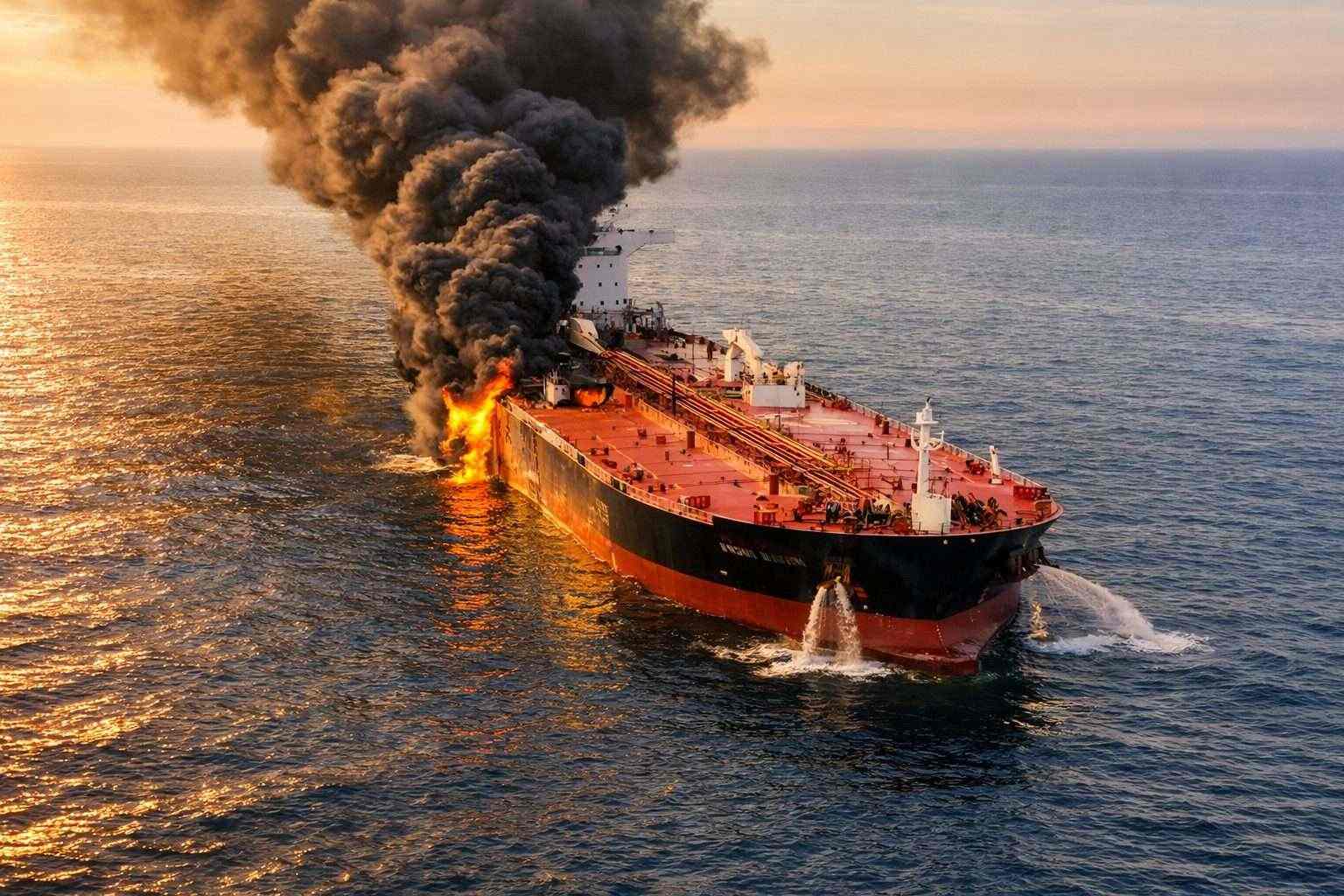
Roughly 6 million barrels of crude have exited the Strait of Hormuz on three tankers running dark, according to shipping data from Kpler and LSEG. Buyers are navigating a risky Gulf corridor still lingering under Iranian threats, with the Agios Fanourios I and Kiara M—both very large crude carriers—hauling 2 million barrels each of Iraqi crude. The Basrah Energy moved another 2 million barrels of Abu Dhabi’s Upper Zakum, unloading at Fujairah on May 8.
Right now, Hormuz is the flashpoint that’s keeping energy markets on edge after 10 weeks of conflict. Brent crude jumped almost 4% to $105.33 a barrel in early Monday Asia trade, while U.S. West Texas Intermediate climbed past 4% to $99.85. The catalyst: President Donald Trump dismissed Iran’s response to a U.S. peace plan. Priyanka Sachdeva, a senior market analyst at Phillip Nova, called oil “a geopolitical headline machine.” Reuters
As of February 28, when the war erupted, roughly 20% of global oil and LNG shipments passed through the Strait of Hormuz. Now, flows there have dwindled to a mere trickle. Every ship that makes it through is watched closely by refiners, traders, and governments—each journey seen as a gauge of how much supply can still get out ahead of any potential wider agreement.
The Agios Fanourios I, carrying a cargo of Iraqi crude, took Iran’s designated route through the strait on Sunday, according to Iran’s semi-official Tasnim news agency. Earlier, there were reports that the tanker had gone dark by switching off its trackers in an attempt to avoid attacks. Reuters shipping data indicates the vessel is headed to Vietnam, with an expected stop at the Nghi Son refinery later this month.
Gas shipments are pushing the limits along the same route. According to the Financial Times, at least two LNG carriers from Abu Dhabi slipped through Hormuz without broadcasting their positions, while a pair of Qatar-to-Pakistan ships neared the strait before abruptly turning back. Fraser Carson, a research analyst at Wood Mackenzie, called it “still early days” with just “a handful of cargoes” involved so far. He cautioned that switching off tracking data poses real dangers and won’t solve anything for the sector long term. Financial Times
A Qatari liquefied natural gas cargo managed to get through the strait after officials from Pakistan, Iran, and Qatar held discussions, providing Islamabad with a brief energy reprieve. The Al Kharaitiyat, sailing from Qatar, entered the Gulf of Oman on Sunday, headed for Pakistan’s Port Qasim. Islamabad is now expecting three more Qatari LNG ships to try for clearance in the next few days.
Gulf energy exporters aren’t all taking the same approach. ADNOC and its customers slipped a few concealed crude shipments through Hormuz, but, according to Reuters, those flows made up just a sliver of the UAE’s usual export numbers. Iraq, Kuwait, and Qatar have either shut down sales or dropped prices to find buyers. Saudi Arabia, for its part, has been sending oil out via Red Sea routes.
The risk stands out: ships rely on the Automatic Identification System, or AIS, to transmit their positions and steer clear of collisions. But when AIS gets switched off—even if it helps avoid detection by hostile forces—it throws a wrench into monitoring busy waters. That leaves insurers, charterers and government agencies trying to track cargo with a lot less visibility.
Diplomatic efforts lag behind rapidly shifting events. Iran countered Washington’s proposal, demanding the U.S. lift its naval blockade, ease sanctions, pay war reparations, and acknowledge Tehran’s control over Hormuz; Trump blasted those demands as “TOTALLY UNACCEPTABLE.” Iran’s foreign ministry stuck to its line, describing the offer as “generous and responsible.” Reuters
At this point, it’s far from business as usual. Ships are moving in tightly guarded convoys, lights off—these cargoes aren’t just sitting idle, they’re worth too much. How long these shaky routes last depends on whether Washington, Tehran, and their neighbors can hammer out who actually ensures safe passage through Hormuz.