Geopolitics 3 March 2026 - 20 May 2026

Critical Metals Stock Reacts as Tanbreez Deals Stir Up Rare-Earth Work and China Supply Risk

Critical Metals Stock Reacts as Tanbreez Deals Stir Up Rare-Earth Work and China Supply Risk

Critical Metals Corp stayed at $10.75 in early U.S. premarket on Thursday. Nasdaq-listed shares had jumped 9.69% in the previous session as investors digested new supply headlines from Tanbreez and a late filing that clarified disclosures on the company’s rare earth play in Greenland. Nasdaq regular hours were yet to start at the time. The Tanbreez move lands squarely in heavy rare earth elements, or HREEs, one of the market’s key hot spots right now. These less common rare earths show up in high-performance magnets, advanced electronics and defence gear. Western buyers are still facing risk from China’s export controls, with Reuters saying this week that Beijing’s rare earth export rules are still in force, even as U.S.-China talks continue.
May 21, 2026
U.S. Drone Ambitions Meet China Rare Earth Leverage

U.S. Drone Ambitions Meet China Rare Earth Leverage

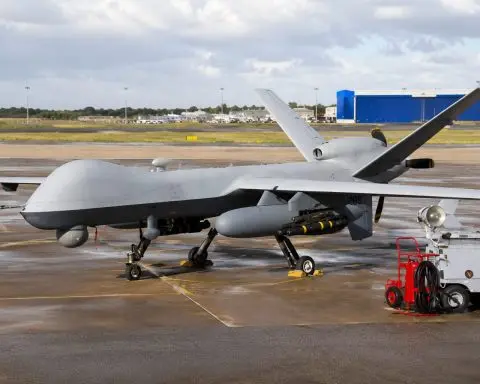
China said Wednesday it will talk with the U.S. about “reasonable” concerns on rare-earth export controls, but defended its rules as legal. Washington gets a chance to work on supply-chain issues, but not the broader rollback it wanted. Rare earths go into high-strength magnets, semiconductors, cars, and weapons. Export controls mean rules that can slow or block shipments. Pentagon officials want drones to move from a niche solution to a standard weapon. The Drone Dominance program says its first Gauntlet competition finished with 30,000 drones ordered. The program also plans to buy over 200,000 drones by 2027.
May 20, 2026
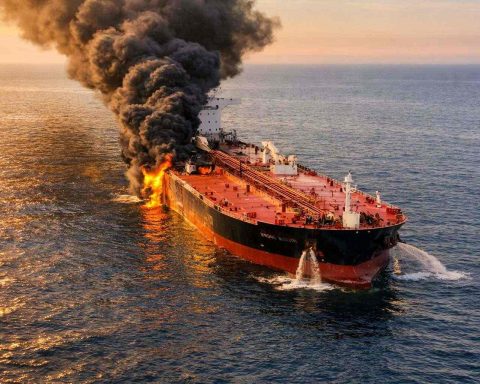
Oil Tankers Go Dark Near Hormuz as Iran Risk Keeps Crude Above $100

Oil Tankers Go Dark Near Hormuz as Iran Risk Keeps Crude Above $100

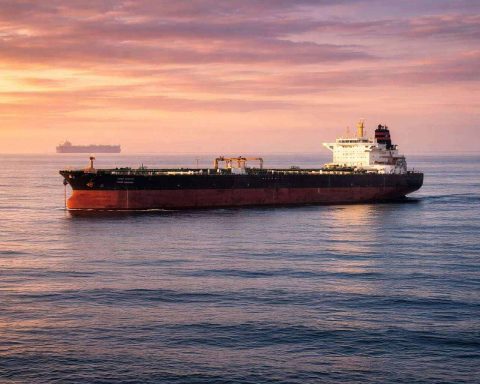
Roughly 6 million barrels of crude have exited the Strait of Hormuz on three tankers running dark, according to shipping data from Kpler and LSEG. Buyers are navigating a risky Gulf corridor still lingering under Iranian threats, with the Agios Fanourios I and Kiara M—both very large crude carriers—hauling 2 million barrels each of Iraqi crude. The Basrah Energy moved another 2 million barrels of Abu Dhabi’s Upper Zakum, unloading at Fujairah on May 8. Right now, Hormuz is the flashpoint that’s keeping energy markets on edge after 10 weeks of conflict. Brent crude jumped almost 4% to $105.33 a barrel in early Monday Asia trade, while U.S. West Texas Intermediate climbed past 4% to $99.85. The catalyst: President Donald
May 11, 2026
DNO Tawke Restart Stalls: Kurdistan Oil Output Still Shut as Genel and ShaMaran Feel Iran War Hit

DNO Tawke Restart Stalls: Kurdistan Oil Output Still Shut as Genel and ShaMaran Feel Iran War Hit

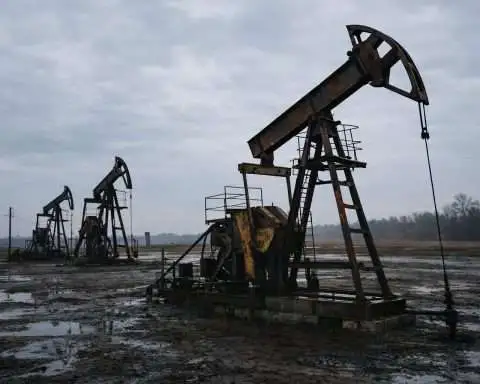
ERBIL, May 7, 2026, 23:03 DNO ASA has resumed some field activity at its Tawke license in Iraq’s Kurdistan, handling well maintenance and launching an eight-well drilling program. Actual production is still off, after the company suspended operations in the wake of the U.S.-Israeli strikes on Iran on Feb. 28. According to Reuters, DNO hasn’t provided any timeline for restarting output at either Tawke or Peshkabir.
May 7, 2026
Oil Price Shock: Brent Tops $126 as Trump’s Iran Blockade Deepens Hormuz Crisis

Oil Price Shock: Brent Tops $126 as Trump’s Iran Blockade Deepens Hormuz Crisis

Brent crude futures shot up to $126.41 a barrel on Thursday, hitting levels last seen in March 2022. The rally followed news that U.S. President Donald Trump would receive updates on possible new military actions targeting Iran, with the Strait of Hormuz still functionally shut. WTI, the top U.S. crude benchmark, climbed past $108. Hormuz isn’t just another shipping lane—it’s essential. The International Energy Agency puts the 2025 daily flow at roughly 20 million barrels of crude and oil products, or about a quarter of all seaborne oil trade worldwide. On top of that, LNG shipments out of Qatar and the UAE via the strait make up close to 20% of global LNG trade.
April 30, 2026
S&P 500, Nasdaq Records Face $105 Oil Test as AI Rally Meets Iran War Risk

S&P 500, Nasdaq Records Face $105 Oil Test as AI Rally Meets Iran War Risk

Stocks in the U.S. slipped Thursday, giving back some of their recent gains after Brent crude finished at $105.07. Fresh tension in the U.S.-Iran ceasefire hovered over the market, even as the artificial intelligence trade stayed strong. The Dow Jones Industrial Average shed 180.70 points to end at 49,309.33. The S&P 500 dipped 0.41% to 7,108.30, while the Nasdaq Composite slid 0.89% to 24,438.50. The shift caught attention—Wall Street seemed set to shrug off the Iran jolt as a blip. On Wednesday, the S&P 500 and Nasdaq both finished at record highs, then notched new intraday peaks Thursday before pulling back. The run isn’t over, but the rally’s turning pickier.
April 24, 2026
Iran War Slams Markets Again: Oil Tops $110, Bonds Sell Off, Nasdaq Deepens Correction

Iran War Slams Markets Again: Oil Tops $110, Bonds Sell Off, Nasdaq Deepens Correction

Stocks worldwide slid Friday, with Wall Street starting in the red. Brent crude, meanwhile, pushed past $110 a barrel again. President Donald Trump extended the deadline for Iran to resume shipping through the Strait of Hormuz, but investors remained unconvinced. This shift is drawing attention because both stocks and government bonds are under pressure—investors are unloading both, hinting at nerves over a lasting, energy-fueled inflation shock instead of just a fleeting geopolitical jolt. The strait remains restricted. Rate cuts in the U.S.? Traders are nearly ruling them out. Officials, meanwhile, on both sides of the Atlantic, are sounding alarms about the risk of slower growth and mounting prices.
March 27, 2026
Gold Prices Tumble Despite Iran War as Oil Whipsaws and Investors Dump Metals

Gold Prices Tumble Despite Iran War as Oil Whipsaws and Investors Dump Metals

Gold lost its initial war-driven momentum, sliding for the ninth session in a row on Monday. Prices dipped to a four-month low before clawing back some ground, after U.S. President Donald Trump put off planned strikes against Iranian energy targets for five days. That pause helped extend a rout that had already marked the metal’s worst week since 1983. This shift is notable: for once, bullion hasn’t been the go-to haven. Investors have been offloading gold rather than piling in, with oil-linked inflation jitters sending yields up and pushing out any chance of rate cuts. Charu Chanana at Saxo observed that the market is treating the turmoil as “more than just a geopolitical flare-up,” bracing for a longer-lasting stagflation shock—think
March 24, 2026
Oil Briefly Tops $119 as Iran Strikes and Hawkish Fed Deepen Stock Selloff

Oil Briefly Tops $119 as Iran Strikes and Hawkish Fed Deepen Stock Selloff

Oil jumped above $119 a barrel for a moment on Thursday, rattled by Iranian strikes on Gulf energy infrastructure. That move shook up markets that were already on edge as the Federal Reserve grows warier regarding rate cuts. Brent later eased to roughly $113.40, but the surge was enough to refocus traders on inflation. This oil shock is hitting just as U.S. producer prices jumped 0.7% in February—up 3.4% from a year ago—and with the Fed raising its inflation forecast for 2026. Gas at the pump? Now averaging $3.88 a gallon, that’s roughly 30% higher than prewar levels, making it more likely that both households and businesses get squeezed by another spike in fuel costs.
March 19, 2026
Oil Nears $120 as Iran War Hammers KOSPI, Asian Stocks and Wall Street

Oil Nears $120 as Iran War Hammers KOSPI, Asian Stocks and Wall Street

Oil jumped to levels not seen since mid-2022 on Monday, with Brent spiking to $119.50 a barrel after the U.S.-Israeli conflict with Iran disrupted Gulf supply routes and clogged traffic through the Strait of Hormuz. Stocks tumbled from Asia through Europe, and Wall Street followed with a weaker open after Asia’s latest selloff. This shift lands at a tricky moment, threatening to spark fresh inflation just as hopes for easing borrowing costs had started to build. Money markets quickly swung to price in possible rate hikes across Europe. IMF chief Kristalina Georgieva, for her part, cautioned that policymakers ought to "think of the unthinkable." Her warning: if oil prices climb 10% and stay elevated most of the year, global inflation
March 9, 2026
Oil Tops $100 for First Time Since 2022 as Iran War Cuts Supply, G7 Weighs Reserve Release

Oil Tops $100 for First Time Since 2022 as Iran War Cuts Supply, G7 Weighs Reserve Release

Oil surged past $100 a barrel on Monday, hitting levels not seen since 2022. Benchmark Brent crude climbed as high as $119.50, as the Iran war squeezed Gulf shipping lanes and triggered new production cuts. The sharp move rattled traders, governments, and central banks. This shift is significant: oil isn’t just trading on war premiums now. IMF Managing Director Kristalina Georgieva flagged that a sustained 10% jump in oil prices—if it holds up for most of the year—might tack on roughly 0.4 percentage point to global inflation.
March 9, 2026
Exxon Mobil’s rare Australia gasoline shipment shows how the Strait of Hormuz shock is rewriting fuel trade

Exxon Mobil’s rare Australia gasoline shipment shows how the Strait of Hormuz shock is rewriting fuel trade

Exxon Mobil is set to move at least 300,000 barrels of gasoline out of the U.S. Gulf Coast, headed for Australia to meet its own import needs, according to four sources familiar with the situation. The company has secured two medium-range tankers—Largo Eagle and Nord Ventura—to take on cargo in Houston sometime between March 13 and 18, loading a combined 600,000 barrels. The last tracked gasoline shipment on this route, based on Kpler data, was from Marathon Petroleum’s Garyville facility back in December 2023. Shipping costs run close to $6 million per vessel, or about $20 for each barrel, and the final price tag “will depend heavily on the magnitude and duration of the conflict,” said James Noel-Beswick, an analyst
March 5, 2026
Oil prices jump on Iran war as Hormuz logjam lifts Brent above $84, WTI near $79

Oil prices jump on Iran war as Hormuz logjam lifts Brent above $84, WTI near $79

Oil prices surged over 3% on Thursday, as the U.S.-Israeli conflict with Iran snarled Middle East supply lines and shipping routes. Brent crude, the global benchmark, advanced $2.92, or 3.6%, to $84.32 a barrel at 11:43 a.m. EST. U.S. West Texas Intermediate shot up $4.40, or 5.9%, landing at $79.06. “Crude prices are going to be very sensitive to the Strait’s closure,” said Dennis Kissler, senior vice president of trading at BOK Financial. For a fifth straight day, shipping through the Strait of Hormuz remains at a standstill, blocking a crucial artery for Middle Eastern oil and gas. Iraq has already pulled nearly 1.5 million barrels per day from the market, warning that almost 3 million bpd could go offline
March 5, 2026
Dollar back in favor as Iran war jolts energy prices and flips euro bets

Dollar back in favor as Iran war jolts energy prices and flips euro bets

This week, the U.S. dollar stuck close to its latest peaks. The Iran war sent energy prices sharply higher, prompting investors to shell out for euro downside protection. The pivot is catching up to markets now. For most of 2026, traders had loaded up on the opposite side—expecting a weaker dollar and brighter prospects overseas. Instead, the conflict upended those trades, rattling inflation forecasts in Europe and sending investors scrambling to trim positions in a hurry.
March 5, 2026
Iran war rattles oil, gold and stocks again as Seoul crashes and Wall Street hunts for an off‑ramp

Iran war rattles oil, gold and stocks again as Seoul crashes and Wall Street hunts for an off‑ramp

Wednesday saw another slide across Asian markets, with South Korea’s KOSPI tumbling 12% and Brent crude holding firm at $83.76 a barrel as traders braced for a drawn-out energy jolt from the Iran conflict. Gold, battered by a 4% drop on Tuesday, clawed back 1.5% to $5,155 an ounce. U.S. futures ticked a bit lower; Europe’s STOXX 600 managed a 0.6% gain. “Asia’s selloff is turning disorderly,” said Charu Chanana, chief investment strategist at Saxo in Singapore, noting that investors are no longer shrugging off the war as a short-term shock. Energy typically channels geopolitical shocks straight into inflation — and that’s where traders are still pinning their bets on rate cuts. Trump announced he’d told the U.S. International Development
March 4, 2026
Oil nears $85 as Hormuz crisis drags on and stocks slide again

Oil nears $85 as Hormuz crisis drags on and stocks slide again

Stocks around the world struggled again Wednesday, with oil climbing as fighting between the U.S., Israel, and Iran rattled supply chains and raised the risk of tankers steering clear of the Strait of Hormuz. Brent crude, the international yardstick, jumped 3.3% to $84.07 a barrel by 0659 GMT, while U.S. West Texas Intermediate put on 3% to reach $76.80. In Iraq, officials said output dropped by close to 1.5 million barrels per day, citing full storage and export blockages. “Only clear signs of de-escalation” would put a lid on the surge, OANDA’s Kelvin Wong said. President Donald Trump suggested U.S. Navy escorts and government-backed insurance to shield Gulf shipping from war-linked losses. The Strait of Hormuz, a slim waterway linking
March 4, 2026
Gold tumbles 5% as the dollar climbs and the Iran war tests the safe-haven bid

Gold tumbles 5% as the dollar climbs and the Iran war tests the safe-haven bid

Gold tumbled over 5% Tuesday, snapping back from a four-week peak as the metal lost ground to a firmer dollar and higher bond yields. Spot gold dropped 5.6%, sitting at $5,029.59 an ounce at 1450 GMT. U.S. gold futures retreated 5.1% to $5,041.50. https://www.reuters.com/world/india/gold-extends-gains-middle-east-war-boosts-safe-haven-demand-2026-03-03/ This shift’s significant—markets are juggling two jolts simultaneously. Iran’s conflict is sending traders toward so-called safe havens whenever risk surges. Yet, the very same situation is pushing energy prices up, stirring inflation concerns all over again.
March 3, 2026
Oil hits 19-month high as Iran war rattles global stocks and delays rate-cut hopes

Oil hits 19-month high as Iran war rattles global stocks and delays rate-cut hopes

Tuesday saw global equities and bonds tumble, rattled by a deepening U.S.-Israeli conflict with Iran. Oil and gas prices jumped, stoking fresh worries about another inflation jolt. That’s important right now, with investors previously betting on spring interest-rate cuts after inflation eased. Higher fuel costs feed into prices for energy, transport, and groceries—and can slow growth, too.
March 3, 2026
Oil Surges, Stock Futures Slide as Iran War Chokes Hormuz — What Wall Street Watches Next

Oil Surges, Stock Futures Slide as Iran War Chokes Hormuz — What Wall Street Watches Next

Futures on major U.S. stock indexes slipped Tuesday, with energy markets heating up once more as conflict linked to the United States, Israel and Iran continued to disrupt key supply routes. The Nasdaq 100 came under particular strain, dropping more than 2% early in New York, as crude and gas costs pressed higher. Timing is the sticking point for markets. Traders were already hashing out when the Federal Reserve could deliver its next rate cut. Now there’s an energy shock rolling through shipping, fuel, and inflation forecasts. Disruption in the Strait of Hormuz means surging costs—freight, diesel, jet fuel—show up on invoices almost instantly, then hit the data.
March 3, 2026
Strait of Hormuz closure pushes oil above $80 and gas to a 3-year high as Iran attacks snarl shipping

Strait of Hormuz closure pushes oil above $80 and gas to a 3-year high as Iran attacks snarl shipping

Brent crude climbed more than $3 on Tuesday, pushing its three-day rally further as the U.S.-Israeli conflict with Iran ramped up and new threats to shipping in the Strait of Hormuz stoked concerns over potential supply hits. As of 0745 GMT, Brent was trading at $80.89 a barrel; U.S. West Texas Intermediate stood at $73.78, according to Reuters. The Strait of Hormuz—wedged between Iran and Oman—handles roughly a fifth of the world’s oil flows, plus hefty gas shipments. After tanker attacks, vessel traffic has plunged. “Traffic is down at least 80 percent,” Michelle Bockmann, senior maritime intelligence analyst at Windward, told Al Jazeera.
March 3, 2026