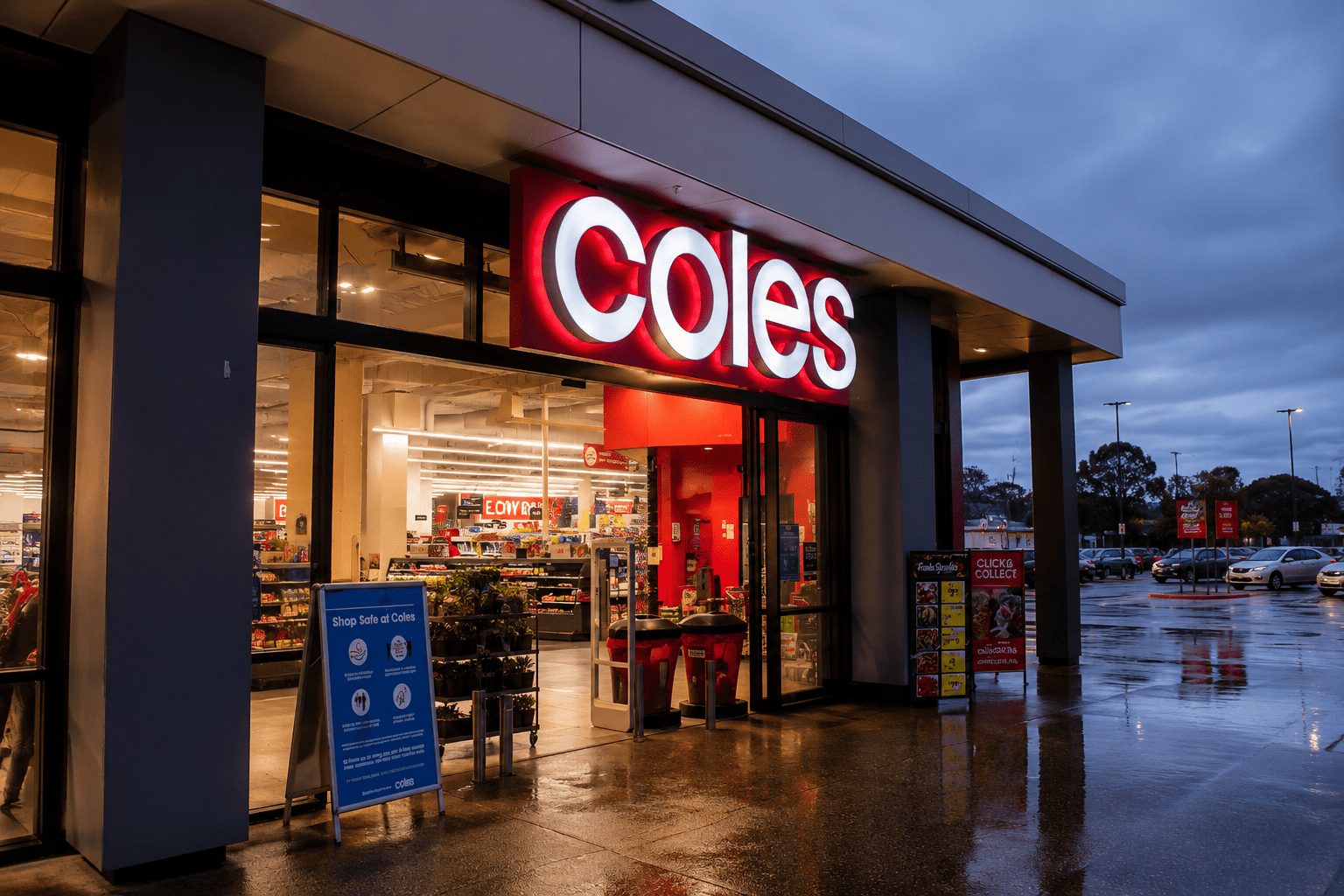

MELBOURNE, May 14, 2026, 08:03 AEST
- The Federal Court is set to deliver its decision at 9:30 a.m. AEST in the ACCC’s case targeting Coles and its “Down Down” promotions.
- The regulator says 245 products were advertised with misleading discounts. Coles rejects the allegations.
- Coles ended up 0.8% at A$21.13 ahead of the judgment.
Justice Michael O’Bryan is expected to hand down his decision this morning on whether Coles Group Ltd’s supermarket division misrepresented its “Down Down” price deals—a ruling poised to test the advertising tactics used by Australia’s largest grocers. Proceedings kick off at 9:30 a.m. AEST, according to ABC News. ABC News
The ruling carries weight right now, with grocery prices still a hot-button issue both politically and for shoppers. It could end up influencing how supermarkets advertise their discounts, whether you’re in the aisles or browsing online. The Australian Competition and Consumer Commission, or ACCC, is after declarations, penalties, costs and more under Australian Consumer Law—the legislation that prohibits false or misleading pricing claims.
The ACCC claims Coles misrepresented 245 products from February 2022 to May 2023. According to the regulator, Coles temporarily increased prices on certain items, only to later tag them with “Down Down” labels—prices that were lower than the brief spike, but still matched or exceeded the original regular price.
Coles rejected the allegations. When the proceedings kicked off, the company issued a market statement saying the claims stem from “significant cost inflation,” supplier price hikes, and increased operational costs. Coles also said it tried to balance raising retail prices with delivering value deals.
Jeannie Paterson, a consumer law specialist at the University of Melbourne, told AAP the case is “too close to call.” The marketing might well have been technically correct, she said, but that doesn’t mean customers won’t feel shortchanged. A Coles loss could mean “colossal” penalties. Still, even if Coles prevails, Paterson warned, shoppers could walk away even more skeptical about promo discounts. Woolworths, which has its own related dispute in the pipeline, is likely paying close attention. Michael West
The Federal Court flagged the Coles case as a public interest issue, posting an online file containing closing submissions, agreed facts, and further documents for Australian Competition and Consumer Commission v Coles Supermarkets Australia Pty Ltd.
Competition is fierce. According to the ACCC’s wide-reaching supermarket inquiry, Coles and Woolworths continue to control most of Australia’s grocery sector. ALDI, after more than two decades in the country, holds a 9% share. The regulator wants supermarkets to sharpen up on promotions and be more transparent with pricing.
Coles finished Wednesday at A$21.13, gaining 0.8%, based on figures from the company’s own investor page. Shares moved in a range from A$20.70 to A$21.31 over the session.
The legal threat comes on the heels of a strong sales result. Coles logged third-quarter group sales revenue at A$10.7 billion. Supermarket sales rose 4.0%. E-commerce jumped 24.8%, while liquor sales slipped 3.9%. Chief Executive Leah Weckert said “value and availability” will stay key priorities for customers in the months ahead.
Macro conditions remain unsupportive. The Reserve Bank of Australia lifted its cash rate target by 25 basis points to 4.35% last week, blaming higher fuel and commodity costs. Over on prediction markets, contract pricing suggested traders didn’t see another move coming at the June RBA meeting: Kalshi pegged the probability of a hold at 78%, with Polymarket’s “No Change” at 80%. Reserve Bank of Australia
Still, the decision doesn’t clear the air for the sector. A Coles defeat would open a battle over penalties and what remedy gets imposed; a win, and both Coles and Woolworths are staring down heightened oversight, as a new law banning excessive grocery pricing is set for July 1, 2026.
Investors are waiting to see if the decision lands as a legal blow just for one company, signals a bigger shift in supermarket discount tactics, or simply underscores that value pitches are facing tighter legal scrutiny.