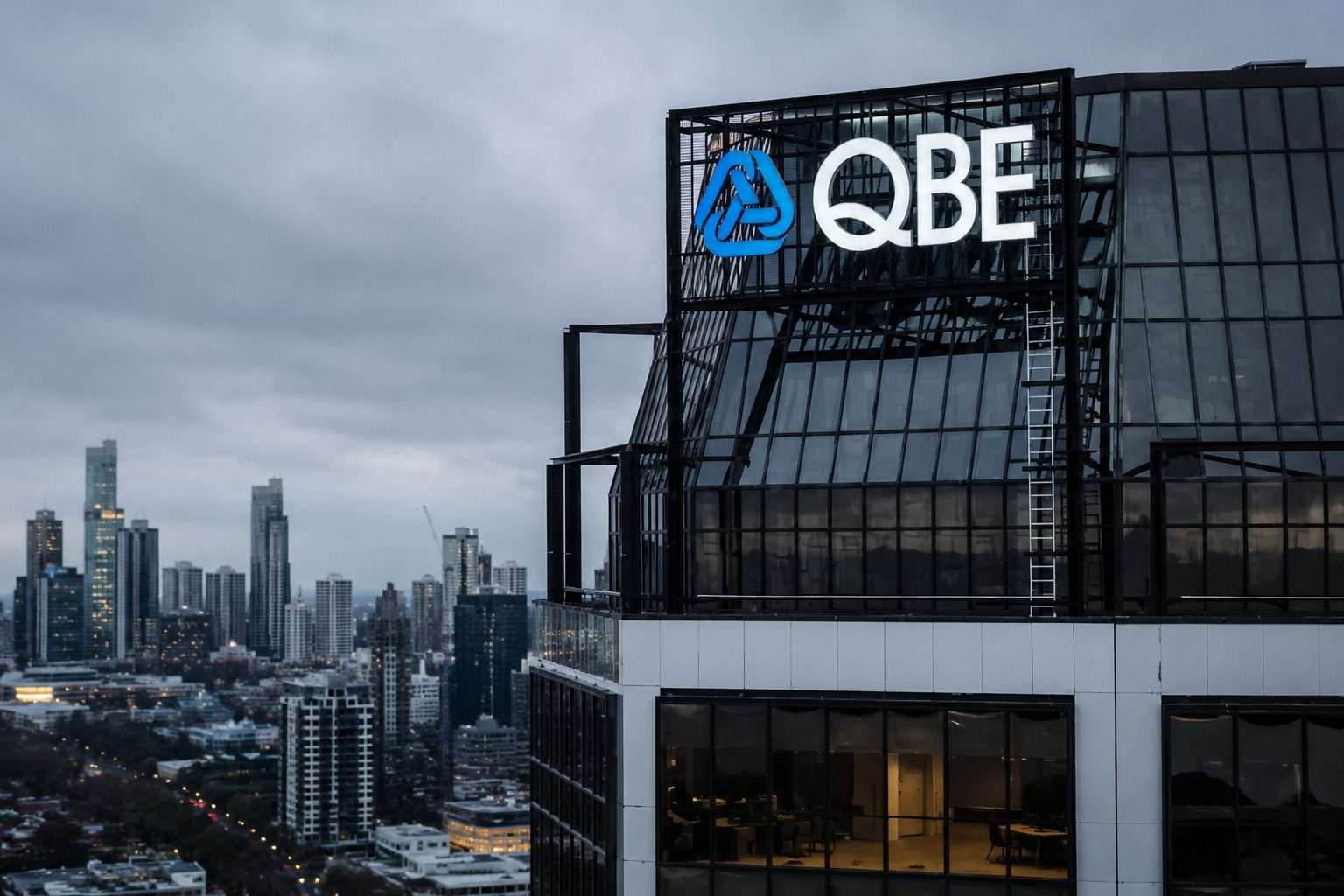

SYDNEY, May 16, 2026, 09:06 (AEST)
QBE Insurance Group Limited’s A$500 million Additional Tier 1 capital notes got a “BBB” rating from Fitch Ratings on Friday. The Australian insurer’s new funding is again on the radar for debt and equity investors. Fitch Ratings
QBE is boosting loss-absorbing capital just as investors keep a close watch on its 2026 underwriting goals, early catastrophe claims this year, and any signals of more competition in commercial insurance. The timing matters.
QBE priced A$500 million in wholesale floating-rate capital notes this week as part of its note issuance programme. The notes are set to qualify as Additional Tier 1 capital under rules from the Australian Prudential Regulation Authority, so they go into the capital stack for loss absorption during stress.
The notes will pay interest at the six-month BBSW rate plus 2.50% per year. BBSW, or bank bill swap rate, is the benchmark for floating-rate debt in Australia. According to the filing, QBE can call the notes in 2033 or 2034 if it gets APRA’s approval. If the notes are not redeemed or converted before then, mandatory conversion into ordinary shares is set for May 19, 2036.
QBE Insurance Group (QBE) finished up 1.86% at A$23.04 on Friday, according to delayed data, as the Australian market wrapped up the week. The shares have gained for five straight sessions.
QBE’s latest funding push comes after its May 8 trading update, where it stuck to its 2026 forecasts for mid-single-digit gross written premium growth and a group combined operating ratio of about 92.5%. Gross written premium means the value of premiums written before deductions. The combined operating ratio compares claims and costs to premium income; under 100% signals an underwriting profit.
QBE reported first-quarter gross written premium up 11% year-on-year at $9.2 billion, or up 7% when adjusted for currency. The group saw premium rate hikes around 2%. But the insurer noted rising competition in commercial property and Lloyd’s-linked lines, with rate pressure now clearer.
Jefferies raised its price target on QBE to A$25.55 from A$23 while keeping a buy rating, according to a note seen on MT Newswires. The 2% rate hike shows “mixed competitive dynamics” in different classes, the firm said. Tiger Brokers
But the cushion comes with risk. QBE reported net catastrophe claims of around $300 million for the four months to April. That is against its first-half allowance of $517 million. Direct underwriting impacts from conflict in the Middle East are still not material, at about $60 million so far. A tougher catastrophe season, bigger conflict losses, or more price competition could put pressure on holding the 92.5% ratio.
QBE Re named Montassar Cherrak as regional head of Middle East and North Africa, a new post in Dubai that puts him in charge of underwriting strategy in the area. Cherrak was most recently with SCOR SE, where he was senior underwriter and client relationship manager covering Africa and the Middle East.
QBE Re named Montassar Cherrak as regional head of Middle East and North Africa, hiring a senior exec from a rival reinsurer. Abdallah Balbeisi, QBE Re’s director of Europe and growth markets, said Cherrak’s underwriting record “makes him an excellent fit” for the job. The move is part of QBE’s effort to add local strength in Gulf and North African markets. Reinsurancene
QBE reports first-half 2026 numbers on Aug. 14. For now, investors are watching capital strength and claims discipline, with premium growth under the microscope as conditions tighten.