
The Hague, Netherlands, May 17, 2026, 09:39 (CEST)
- ASML will support Tata Electronics’ planned 300 mm chip fab in Dholera, Gujarat, a project India is billing as its first front-end semiconductor fab.
- The deal moves India’s chip push from subsidy pledges and political roadshows toward the harder work of equipment, skills and supply chains.
- Modi used the Netherlands visit to court Dutch technology and infrastructure firms, including ASML and NXP Semiconductors.
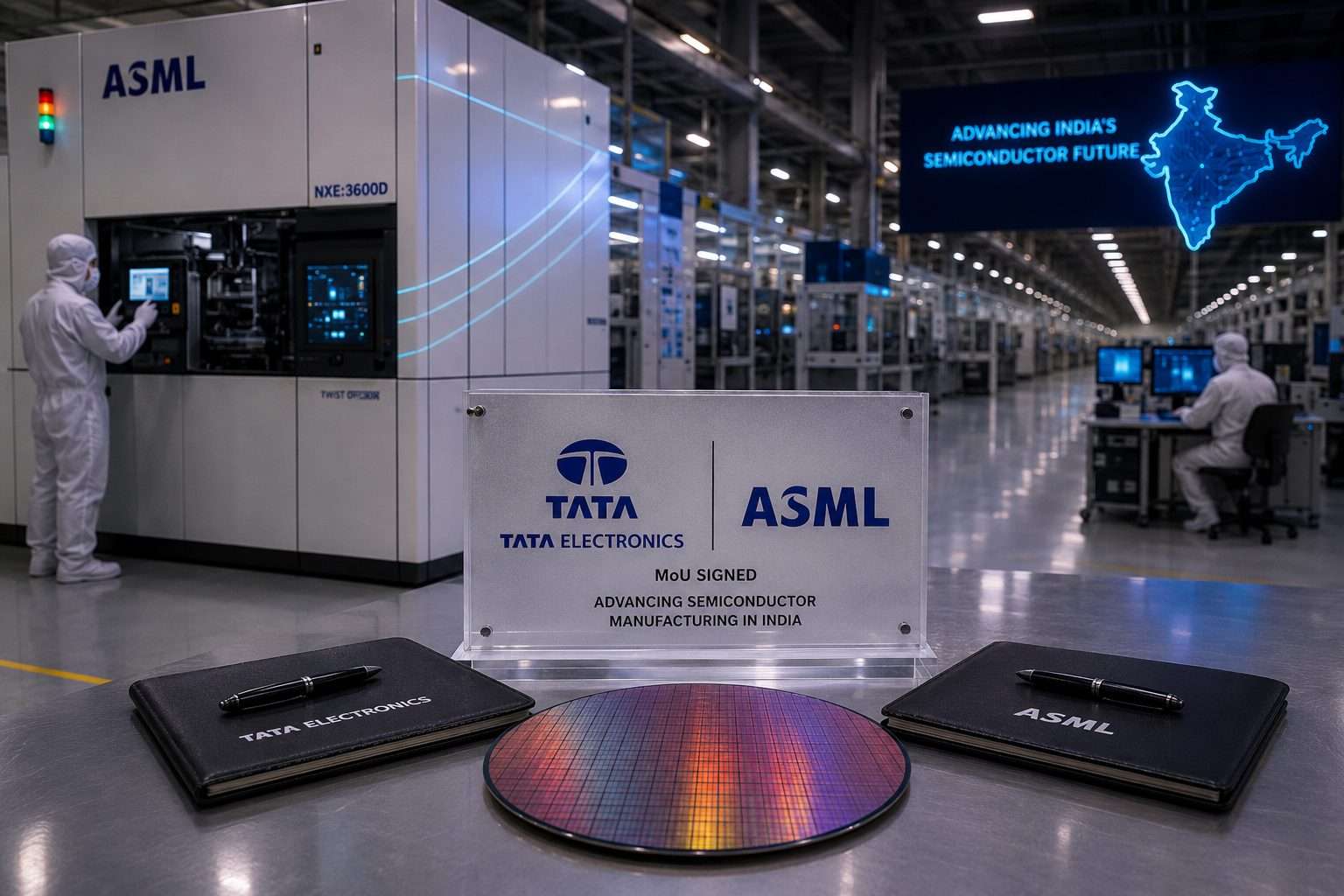
Tata Electronics and ASML signed an agreement in The Hague to support a planned semiconductor fabrication plant in Gujarat, giving India’s chipmaking drive a partner that sits near the centre of global chip-equipment supply.
The pact matters now because India has spent years trying to move from electronics assembly into wafer fabrication, the capital-heavy stage where chips are made on silicon. A “fab” is the factory that makes those wafers; 300 mm refers to the large wafer size used in high-volume plants. ASML
Prime Minister Narendra Modi and Dutch Prime Minister Rob Jetten watched the signing, turning the Tata-ASML deal into the main business marker of a wider India-Netherlands visit. The two governments also adopted a 2026-2030 strategic partnership roadmap.
ASML will help Tata establish and ramp up the Dholera plant with lithography tools and related systems, the companies said. Lithography is the light-based process used to print circuit patterns on wafers, and it is one of the most critical steps in chip production.
Tata Electronics Chief Executive Randhir Thakur said ASML’s expertise would help the company ramp the fab and build a trusted supply chain. ASML Chief Executive Christophe Fouquet said India’s semiconductor sector offered “compelling opportunities” and that ASML wanted long-term partnerships in the region. ASML
The Dholera plant carries a planned investment of $11 billion and is aimed at chips for automotive, mobile devices, artificial intelligence and other segments, ASML said. Tata has also partnered Taiwan’s PSMC, giving it access to process technologies including 28 nm, 40 nm, 55 nm, 90 nm and 110 nm.
Modi told a roundtable of Dutch chief executives that India wanted companies to “design and innovate” there. The meeting included ASML’s Fouquet, NXP Semiconductors Netherlands CEO Maurice Geraets, Philips CEO Roy Jakobs and executives from KLM, Port of Rotterdam, Prosus and other Dutch groups. Ndtv
The deal gives Tata a higher-profile equipment ally at a time when India is trying to pull more of the chip supply chain onshore. Reuters reported that India has pledged billions of dollars in subsidies for fabs and related manufacturing, with eight projects under way.
There is a catch. Signing an MoU does not mean chips roll out soon. The companies still have to install and run complex tools, train engineers, secure suppliers and reach acceptable production yields, the rate at which wafers come off the line without defects. The partnership itself points to those gaps: Tata and ASML said they would work on local talent, supply-chain resilience and research.
For ASML and other Dutch chip-sector companies, India is also a diversification story. Reuters has reported that Dutch semiconductor firms have been looking for new markets as U.S.-China technology restrictions reshape where chip equipment and know-how can go.
The semiconductor MoU sat inside a broader package from Modi’s visit, including agreements on critical minerals, green hydrogen, education, customs and water cooperation. That gives New Delhi more than a single chip deal to point to, but Dholera is the project that will show whether the diplomacy can survive contact with factory schedules.