
Barcelona—May 7, 2026, 21:04 CEST.
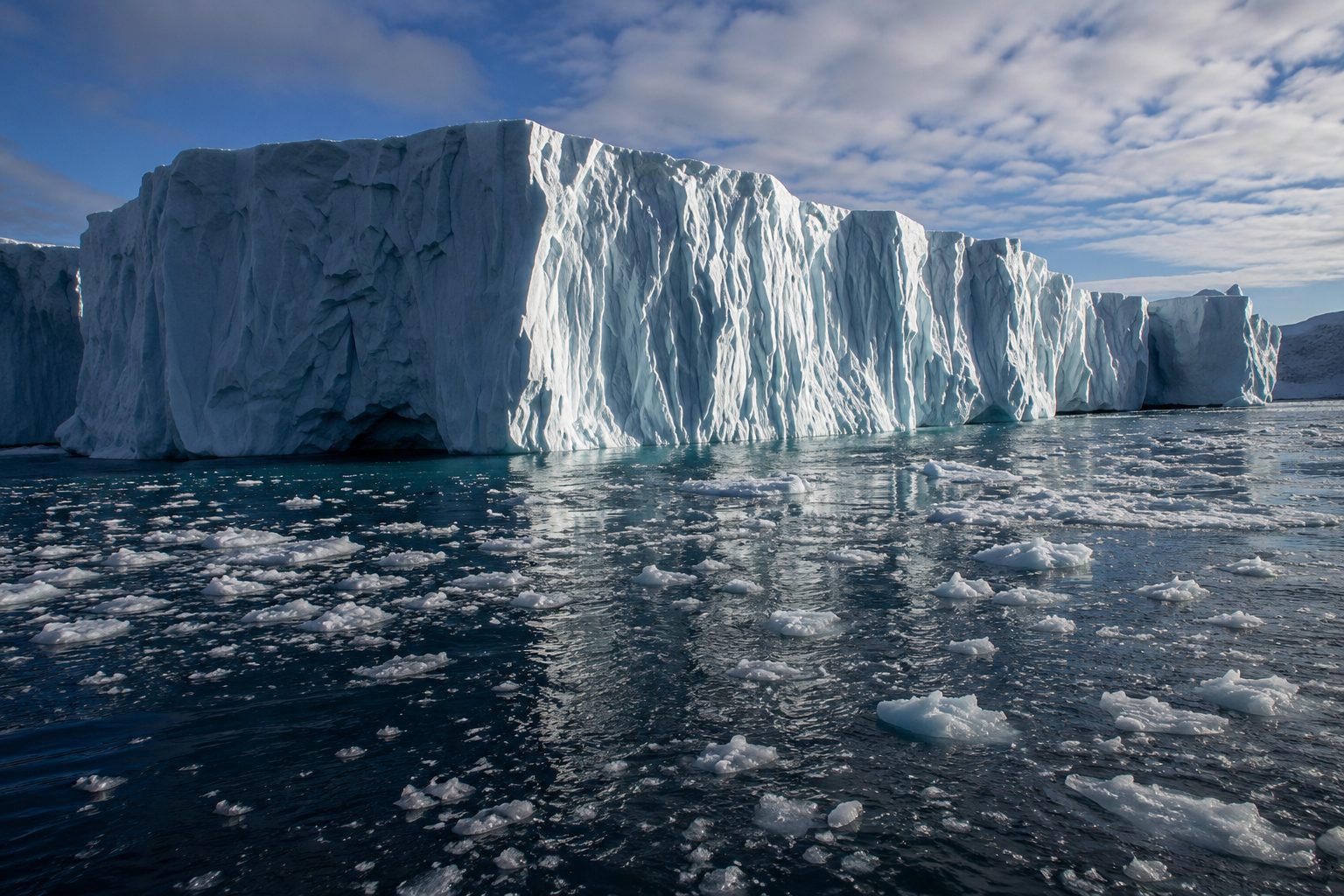
Greenland’s ice sheet is now seeing extreme meltwater production at a pace six times higher than in 1990, according to new research led by the University of Barcelona. Nearly all the most intense melt events have happened since 2000, the study reports. Published in Nature Communications, the findings show that extreme summer melt episodes have grown in frequency, scale, and intensity.
This is significant: Greenland is already among the top contributors to sea-level rise from melting ice sheets. According to NASA satellite data, the region shed roughly 264 billion metric tons of ice each year from 2002 to 2025. That melt pushed global sea levels up by about 0.8 millimeters annually.
This comes into play now, as the research pulls apart strange weather swings from the underlying, warmer climate. Put simply, a summer pressure system over Greenland these days meets warmer air—and that can drive more intense melt events than what was seen in past decades.
Looking at weather patterns and running a regional climate model, researchers tracked extreme melt events from 1950 through 2023. Since 1990, the reach of these events has ballooned by roughly 2.8 million square kilometers each decade. Extreme summer meltwater volumes have surged—a move from 12.7 gigatons per decade up to 82.4 gigatons per decade. One gigaton equals a billion metric tons.
Researchers found that seven out of the 10 biggest melt episodes happened post-2000—standouts include August 2012, July 2019, and July 2021. According to the study, these incidents didn’t match anything seen before in terms of atmospheric circulation.
Northern Greenland stands out in the study as the main hotspot. If emissions remain high, the paper in Nature Communications estimates meltwater anomalies could jump by up to 372% by 2100.
Josep Bonsoms, lead author of the study and a researcher with the University of Barcelona, warned that the ice sheet’s fast-paced transformation brings “global environmental consequences” and puts the Arctic squarely in the middle of “strategic, economic and territorial dynamics.” Universitat de Barcelona
The 30 million tons of ice Greenland is shedding every hour—a figure often repeated—draws from overall ice-loss studies, not just the recent melt-event research. Dr. Rob DeConto, an IPCC scientist, described that pace as “something I never thought I would see in my lifetime,” per a release on cryosphere science. Climate and Cryosphere
Previous studies put the numbers into perspective. According to a 2024 Nature paper drawing on over 236,000 glacier-front measurements from 1985 through 2022, Greenland gave up 5,091 square kilometers of ice area—translating to 1,034 gigatons in ice mass just from retreat. NASA’s Jet Propulsion Laboratory pointed out the ice sheet’s mass loss was about 20% higher than earlier estimates.
Another study, this one published in 2025 in The Cryosphere, zeroed in on a potential tipping point for Greenland’s ice sheet connected to surface mass balance — basically, the annual net of snowfall versus the ice lost to melt and runoff. Researchers pegged that critical threshold at 230 ± 84 gigatons per year, correlating it with roughly 3.4 degrees Celsius of warming above pre-industrial times in their model.
But it’s not a simple progression. The tipping-point paper flagged that its threshold depends on the model, and Phys.org’s coverage pointed out that certain ice-atmosphere feedbacks weren’t factored in; crucially, if temperatures remain elevated, the resulting surface drops can accelerate melting, setting up the ice sheet for even greater losses over time.
Greenland isn’t the only region dealing with vanishing ice. NASA data indicate Antarctica sheds roughly 135 billion metric tons of ice each year. Mountain glaciers worldwide? Over 7 trillion tons gone since 2000, AP reported. Still, it’s Greenland’s intensifying swings that put sea-level projections and plans for coastlines under tighter scrutiny, especially in the near term.