
New York, May 22, 2026, 12:04 EDT
- MCHB slipped on Friday as shares went ex-dividend. New investors won’t get the upcoming dividend.
- The company set a $0.70 Class A dividend for holders recorded at the close on May 23. Payment is due May 28.
- Investors are still looking at the bank’s HomeStreet integration and deposit runoff after its sale of a lending-servicing unit to Fifth Third.
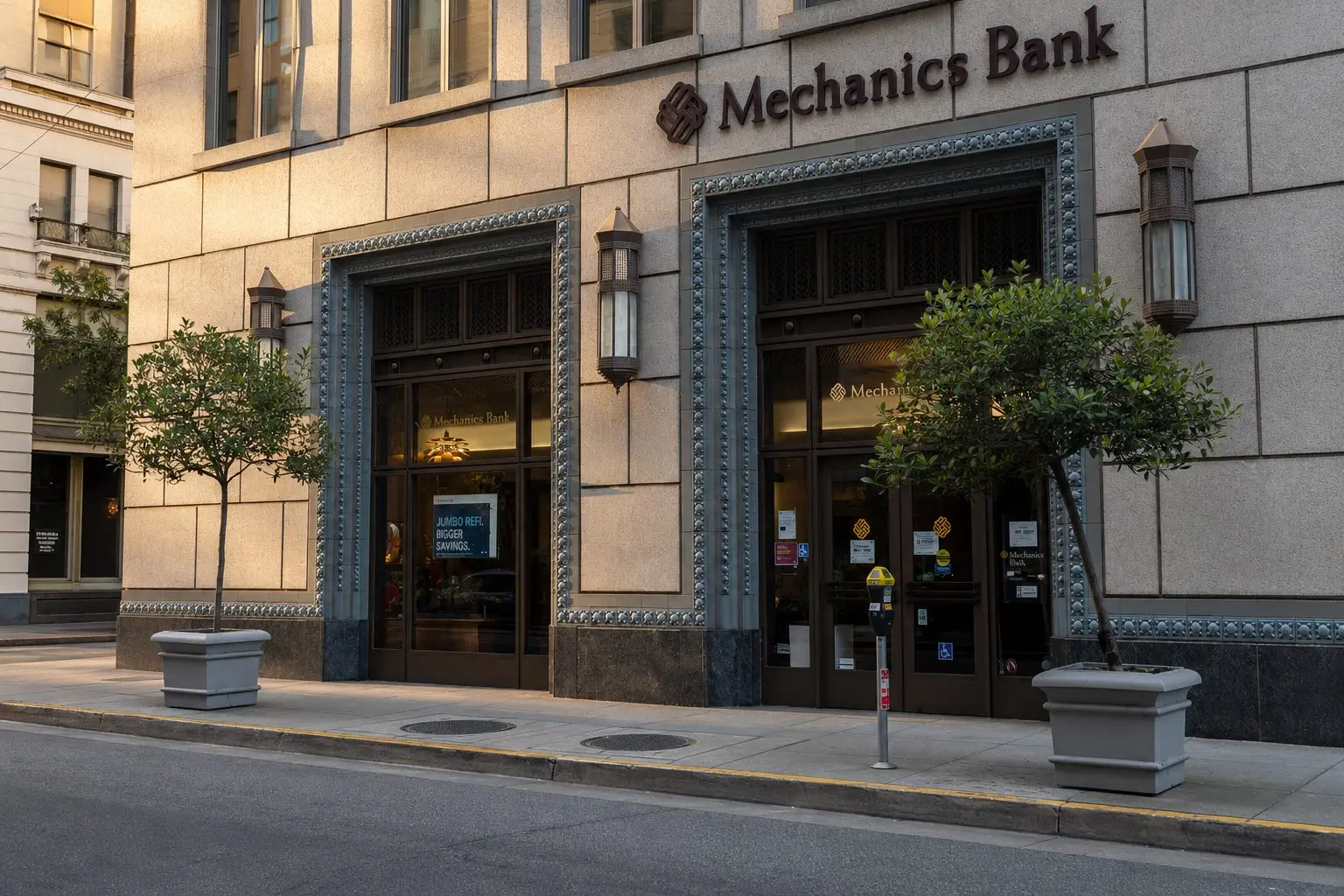
Mechanics Bancorp shares slid Friday after the stock went ex-dividend for a $0.70 cash payout. The move lines up with a typical dividend adjustment, rather than signalling any new warning from the company. Class A shares last traded at $14.30, down 4.41%. StockAnalysis listed May 22 as the ex-dividend date.
Ex-dividend day matters now because that’s when new buyers lose the right to the most recent payout, and stocks usually drop at the open by about the dividend value. Mechanics said earlier this month it plans to pay $0.70 a share for Class A and $7.00 for Class B on May 28. The record date is May 23 after the close.
U.S. stocks were trading Friday before the Memorial Day holiday. According to Nasdaq’s 2026 holiday calendar, markets will be closed all day Monday, May 25, for Memorial Day.
Mechanics Bancorp boosted cash returns after its HomeStreet deal as it continues to overhaul its business. The Walnut Creek-based bank holding company said Mechanics Bank had $21.4 billion in assets and 166 branches in California, Oregon, Washington and Hawaii at the end of March.
The latest dividend comes after Mechanics wrapped up a sale of a business line to Fifth Third Bank, a bigger regional player and a key benchmark for the deal. Mechanics said Fifth Third picked up its Fannie Mae Delegated Underwriting and Servicing business, with a servicing book of about $1.8 billion, in a roughly $126 million cash deal.
Mechanics posted mixed first-quarter results. Net income came in at $44.1 million, or $0.19 a share for Class A, off from $111.2 million, or $0.48, in the fourth quarter. That earlier period got a $55.1 million bargain purchase gain related to the HomeStreet merger. Net interest margin improved to 3.61% from 3.50% as deposit costs dropped.
Mechanics executives described the quarter as noisy, not weak. President and CEO C.J. Johnson called the move of legacy HomeStreet customers onto Mechanics’ main platform “a major milestone” and said most merger integration should wrap up in the second quarter. CFO Nathan Duda said profit numbers included items that didn’t show the “underlying performance,” pointing to credit-loss provisions, merger costs, and tax-asset remeasurement. Business Wire
Mechanics is still watching deposit levels. The bank said total deposits dropped $782.2 million in Q1, landing at $18.2 billion, as maturing HomeStreet CDs and seasonal outflows from noninterest-bearing demand accounts weighed.
Views from analysts are split. Keefe, Bruyette & Woods analyst Woody Lay kept his Market Perform rating but lowered his price target to $15.50 from $16 in early May. In April, Cantor Fitzgerald’s Dave Rochester initiated coverage with an Overweight and set a $17 target.
The risk is clear. If deposit runoff gets tougher, or credit costs go up, or commercial real estate slips, Mechanics’ dividend might not keep investors in the stock. Mechanics’ own Q1 presentation put its commercial real estate concentration ratio at 348%. The bank also set aside about $6.5 million in pretax provision from qualitative CECL factors tied to geopolitical uncertainty.
Friday’s move doesn’t point to a clear shift, looking more like the stock syncing with the upcoming dividend. Investors are watching to see if the bank can turn merger savings and cash from the Fifth Third sale into more stable earnings after the holiday.