
New York, May 27, 2026, 04:48 EDT
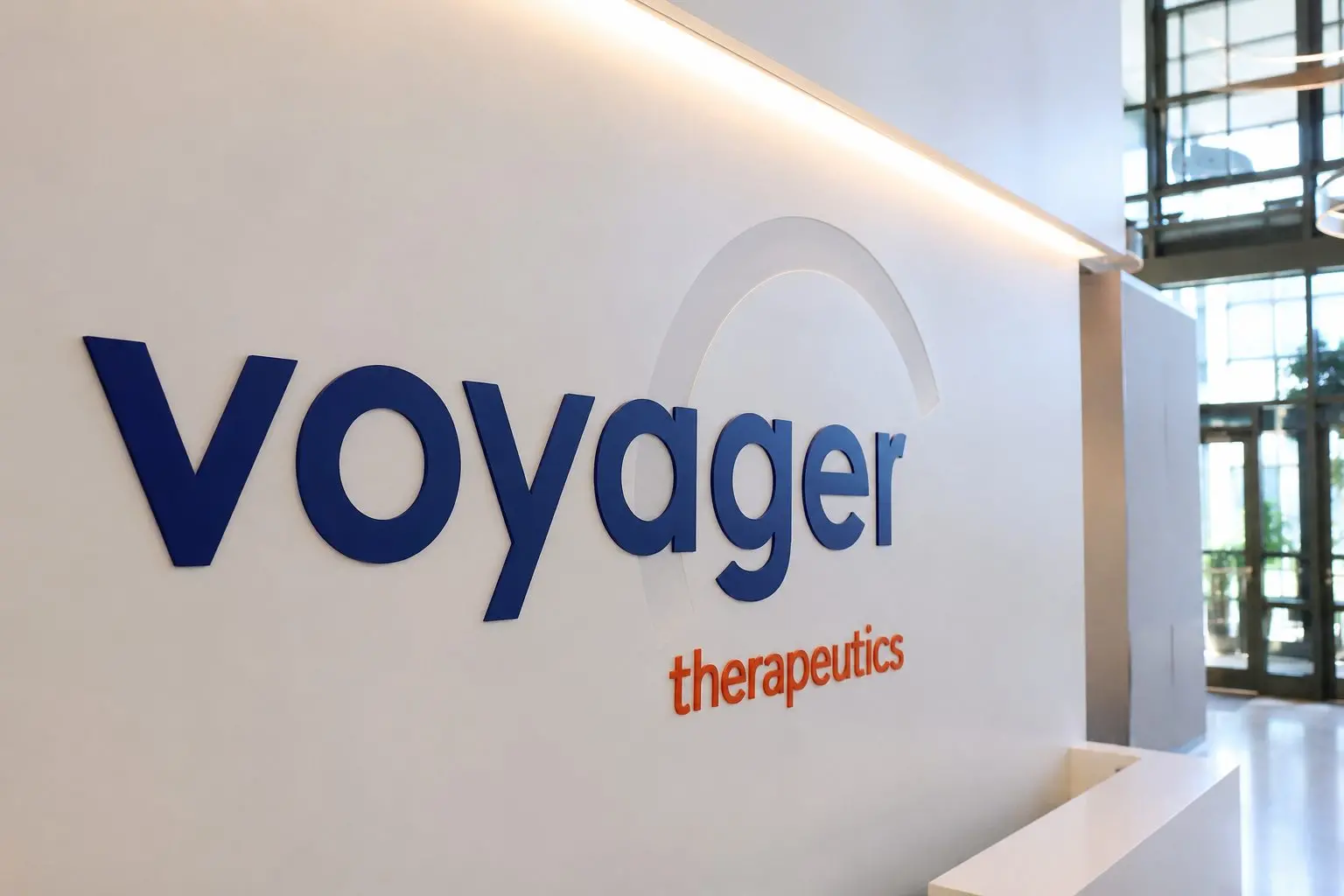
- Voyager Therapeutics last traded at $3.83, up 4 cents from the prior close, valuing the company at about $228 million.
- The stock is still a small-cap biotechnology trade, but analyst attention returned Tuesday after H.C. Wainwright kept a Buy rating and $25 price target.
- The next share-moving events are expected in the second half of 2026: first human dosing for VY1706 and tau PET imaging data for VY7523.
Voyager Therapeutics edged higher in late trading ahead of Wednesday’s regular Nasdaq session, with investors again focused on whether the company’s Alzheimer’s pipeline can move from lab data into human studies this year. Nasdaq’s regular session opens at 9:30 a.m. Eastern time, so the early price action was still thin pre-market/overnight trading, where prices can move on limited volume.
That matters now because Voyager is approaching the part of the biotech calendar that can reset expectations. The company has said its investigational new drug, or IND, process for VY1706 is on track in the second quarter; an IND is the request that allows a company to begin U.S. human testing.
Voyager has also guided to first-in-human dosing of VY1706 in Alzheimer’s patients and tau PET imaging data for VY7523 in the second half. Tau is a protein linked to Alzheimer’s disease, while PET imaging is a scan used to see biological changes in the body.
H.C. Wainwright reiterated a Buy rating and $25 target on Tuesday, Investing.com reported, citing pipeline progress and the 2026 catalyst window. The report said Voyager had gained 9.2% over the past week when the stock was trading around $3.80.
The broader tape helped a bit. The SPDR S&P Biotech ETF, a widely used basket of biotechnology stocks, was last at $133.35, up $1.73 from its prior close.
Voyager’s key recent scientific update came at the American Society of Gene & Cell Therapy meeting this month. The company said a single intravenous dose of VY1706 was well tolerated in a three-month GLP toxicology study, meaning safety testing run under regulatory standards, and reduced tau protein by as much as 64% in key brain regions of non-human primates.
Todd Carter, Voyager’s chief scientific officer, said the data were “consistent with the robust preclinical data package” and that the company looked to move into Alzheimer’s trials later this year. He also called VY1706 a potential “first gene therapy approach to targeting tau.” Voyager Therapeutics Inc.
Cash is the other reason the stock can keep the catalyst discussion alive. Voyager ended the first quarter with $171.7 million in cash, cash equivalents and marketable securities, and said that should fund planned operating expenses and capital spending into 2028; its first-quarter net loss narrowed to $27.9 million from $31.0 million a year earlier.
The competitive context is not a clean one-for-one comparison. Voyager’s closest tied names are partners, not simple rivals: Neurocrine Biosciences is linked to NBIB-‘223 for Friedreich’s ataxia, while Novartis is a partner in Voyager’s TRACER capsid platform, the virus-shell delivery technology used to get genetic medicines into target tissues.
But this is still an early clinical story, and that is the risk. FDA clearance is not automatic, preclinical results in animals may not hold up in people, and any safety issue, delay or weak tau readout could hit the stock harder than it would a larger drugmaker with approved products. Voyager itself has warned that development timing, trial results, regulatory decisions and manufacturing hurdles could change its plans.
For now, the market is treating Voyager less like an earnings story and more like a milestone trade. The shares have room to move because the company is small; they also have little room for disappointment.