
New York, May 29, 2026, 12:05 EDT
- Newegg shares fell about 5% in Friday trading after the company reported lower first-quarter sales and gross merchandise value.
- The company swung to a quarterly profit, helped by tighter costs and inventory control.
- Management pointed to memory shortages, cautious consumers and stronger enterprise demand for AI-capable hardware.
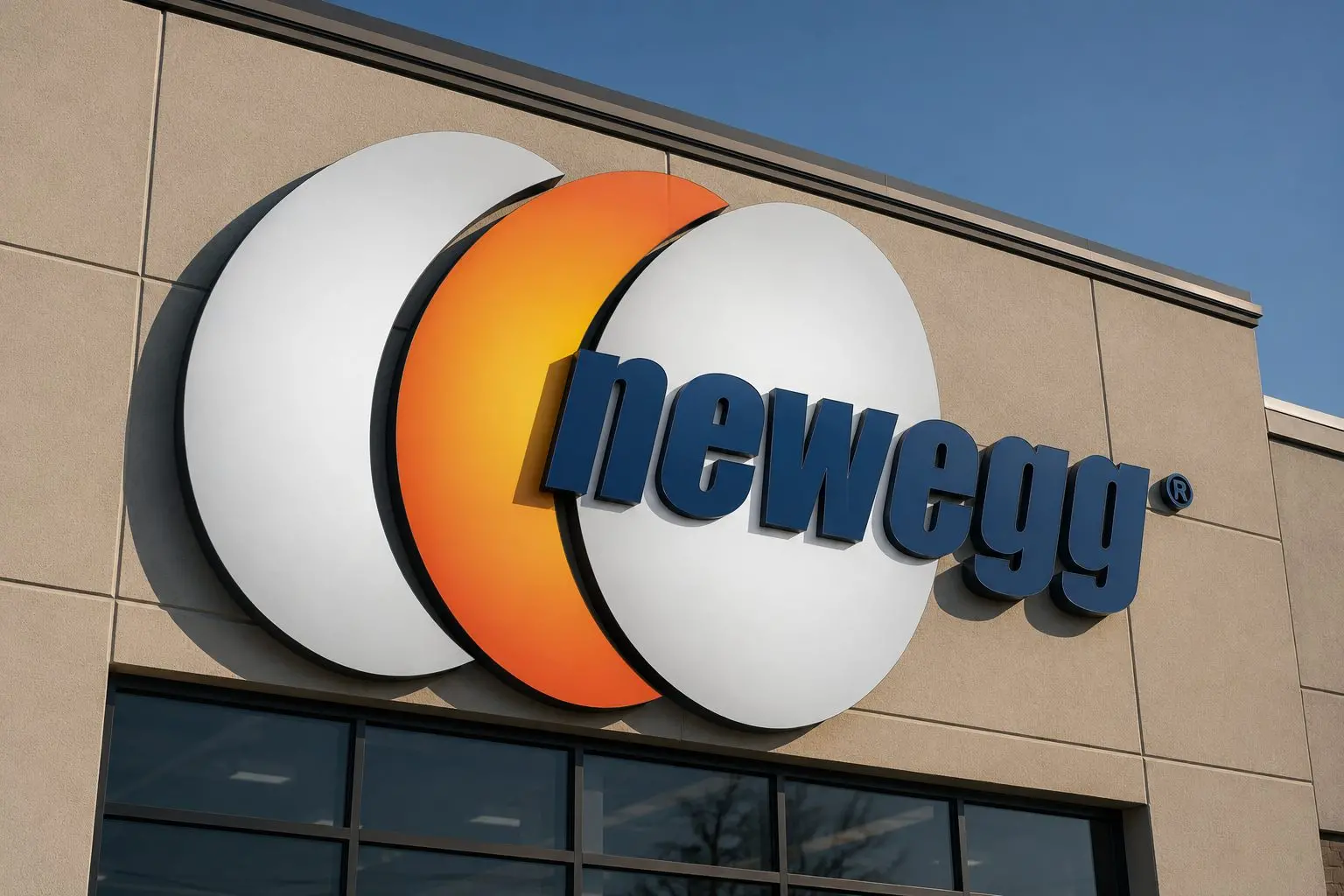
Newegg Commerce shares fell in Friday trade, a day after the online electronics retailer reported an 11.8% drop in quarterly net sales even as it moved to a profit. The stock was last at $17.60, down 5.4%, after touching an intraday low of $17.25.
The move matters because Newegg’s latest numbers show the tension in the PC-parts market: customers are still buying higher-ticket hardware, but fewer are coming back to the site. In a May 28 Form 6-K, the company said first-quarter net sales fell to $306.2 million from $347.2 million a year earlier, while GMV — gross merchandise value, a measure of products sold through its own sites and marketplace — fell 12.1% to $377.5 million.
Newegg still turned in better profit figures. Gross profit rose 10.3% to $43.7 million, and net income was $7.8 million, compared with a $2.5 million loss a year earlier. Adjusted EBITDA, a company profit measure that strips out interest, taxes, depreciation, amortization and some other items, rose to $10.0 million from $5.4 million.
Chief Executive Anthony Chow said the quarter came against “memory supply constraints” and pricing pressure, and that Newegg put more weight on “pricing discipline and margin management.” Interim Chief Financial Officer Christina Ching said consumers had become more “price-sensitive,” while enterprise buyers kept spending on premium AI-capable hardware.
The operating data was less clean. Newegg said active customers fell to about 0.57 million from 0.67 million a year earlier, and the repeat purchase rate dropped to 17.59% from 22.12%. Average order value rose to $470 from $439, suggesting bigger baskets did not fully offset weaker customer activity.
The fall lagged larger retail and e-commerce names. Amazon shares were down 0.5%, while Best Buy, a closer consumer-electronics retailer, rose 3.2% in Friday trading.
Newegg also tried to keep attention on the week ahead. On Friday it announced a larger Computex 2026 presence in Taipei from June 2 to June 5, including a Gamer Zone, a PC Builder event and a new simulator-builder configurator tied to gaming rigs. Chow said Computex was an important industry stage and that growth was coming at the intersection of gaming hardware and the builder community.
But the downside case is not hard to see. If component shortages keep lifting memory and storage prices, or if discretionary tech buyers stay cautious, Newegg may have to defend margins at the cost of sales volume. The filing also showed net cash used in operating activities of $45.6 million in the quarter, against $4.9 million of cash provided a year earlier.
For now, investors are treating the profit swing as only part of the story. The sharper question is whether Newegg can rebuild customer momentum while holding the margin gains it just posted.