
Sydney, June 10, 2026, 02:02 AEST
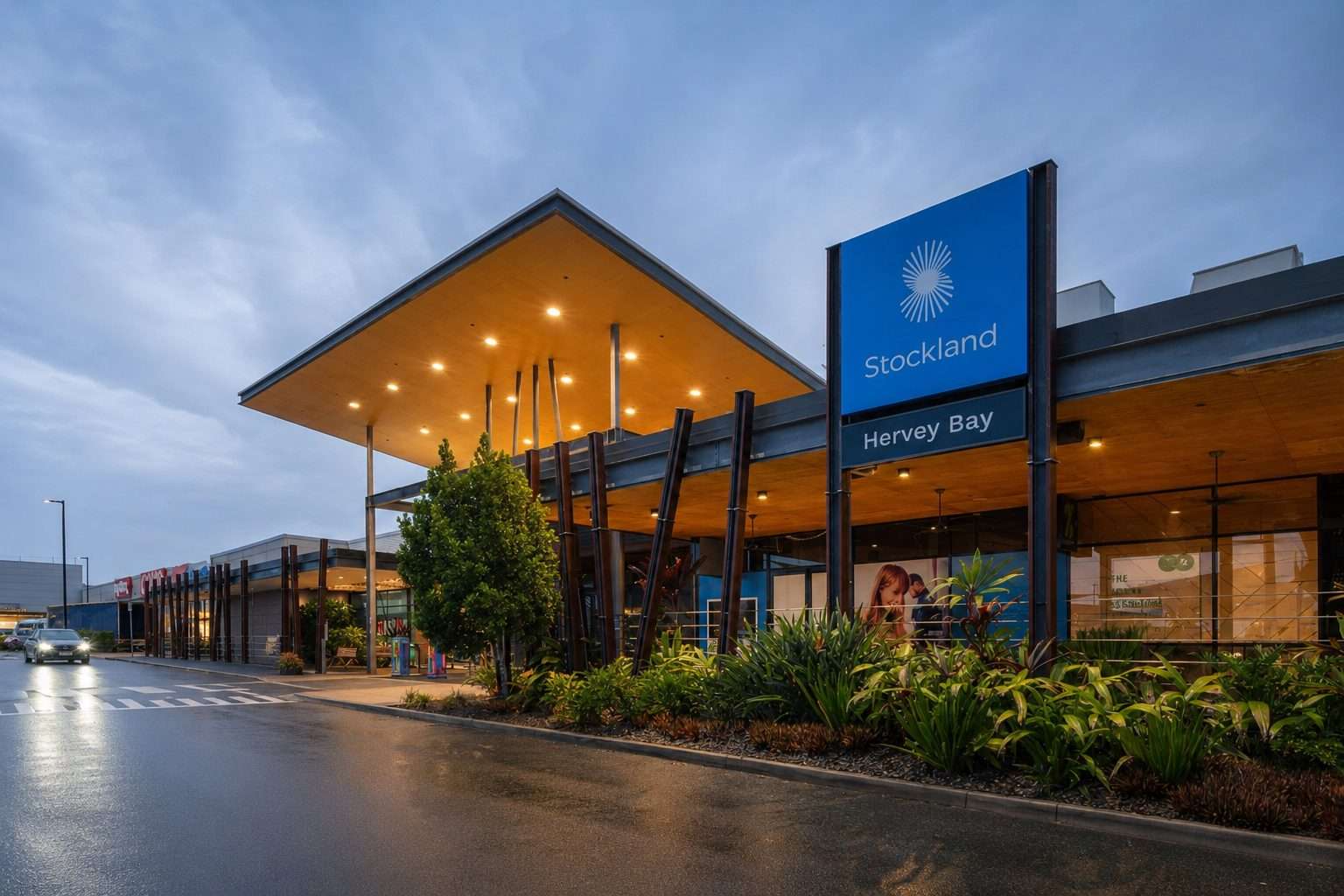
Stockland rose on Tuesday, outperforming a weaker Australian market as investors edged back into the diversified property group after the long weekend.
The shares closed at A$3.86, up 0.78%, after trading between A$3.78 and A$3.87 on volume of about 12 million securities, Google Finance data showed.
The move matters because Stockland sits in the middle of two live trades: Australia’s rate-sensitive property sector and the still-tight housing supply story. Higher rates can pressure property valuations and buyer demand, while housing shortages and strong land-lease demand remain central to Stockland’s earnings case.
The ASX cash market was outside normal trading hours at the time of publication. Normal trading runs from 09:59:45 to 16:00 Sydney time, while ASX’s 2026 calendar showed Monday, June 8, was closed for the King’s Birthday holiday.
The broader market did not help much. The S&P/ASX 200 lost 0.24% at Tuesday’s close, with falls in gold, metals and mining, and materials stocks weighing on the benchmark, Investing.com reported.
Stockland’s gain was not isolated. Mirvac rose 0.60%, Scentre Group added 1.64% and Goodman Group gained 0.32%, pointing to a firmer tone across parts of listed property even as the main index slipped.
Still, the bounce was small against recent damage. Stockland remains down roughly a third in 2026, with Intelligent Investor data showing the security off 32.75% this year and 28.39% in the financial year to date.
Rates are the key overhang. The Reserve Bank of Australia lists the cash rate target at 4.35%, with the next monetary policy decision due at 2:30 p.m. on June 16; the central bank also notes that changes in interest rates affect asset values, including homes and shares.
Fresh data kept the pressure on that trade. A Westpac-Melbourne Institute survey showed consumer sentiment fell 2.9% in June to 80.6, with a reading below 100 meaning pessimists outnumber optimists. Matthew Hassan, Westpac’s head of Australian macro-forecasting, said the index was “back amongst the weakest seen” in the survey’s 50-year history. Reuters
Business sentiment was also weak, though less bad than April. NAB said business conditions held at +3 in May and confidence improved to -14 from -23; NAB economist Michael Hayes said confidence “remains very weak and in negative territory across all industries.” Reuters
Stockland’s own latest operating update, released in late April, is still the main company reference point. The group maintained FY26 funds from operations guidance of 36.0 to 37.0 cents per security — funds from operations is a property-sector profit measure used to track recurring earnings — and kept expected distribution per security at 25.2 cents.
The same update showed why investors are not treating Stockland as a simple housing-rate proxy. Masterplanned community sales rose 43% from a year earlier, land lease community sales rose 162%, and Stockland said it had finalised a 50/50 data-centre partnership with EdgeConneX, with several projects tied to secured power or fast-track approval processes.
But the downside case is plain enough. If borrowing costs stay high, consumer confidence weakens further or construction costs bite, Stockland’s residential settlements and margins could be harder to deliver. The company itself said it was monitoring geopolitical and macro volatility, including effects on transactions, supply chains and consumer behaviour, and that guidance depends on no material change in market conditions.
The next scheduled company catalyst is its FY26 results, due to be released to the ASX on Aug. 19. Until then, the shares are likely to keep trading off housing data, rate expectations and whether investors regain appetite for Australian property risk.