
MELBOURNE, June 28, 2026, 23:03 (AEST)
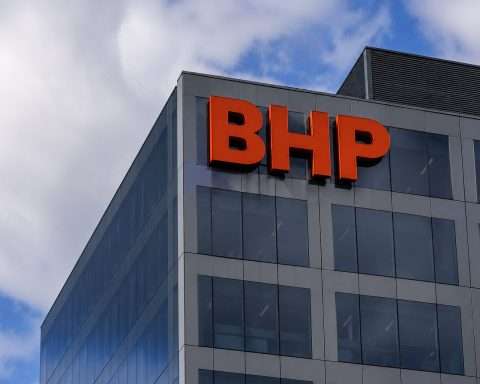
- BHP Group Ltd ASX:BHP closed at A$58.99 on Friday, up 0.80% for the session but still down 9.30% from A$65.04 on June 18.
- Reuters estimates BHP’s equity value has dropped by around A$30.7 billion since the Jansen update. That math uses 5.081 billion shares on issue and the A$6.05 per share decline.
- Jansen Stage 2’s capital cost is up to roughly US$1.58 billion for each million tonnes of annual potash capacity, BHP said. That’s an increase from US$1.12 billion at the time of approval.
- Brandon Craig is set to take over as CEO on July 1. BHP’s next operational review is slated for July 16.
Australian Securities Exchange was closed on Sunday. ASX trading usually goes from 10 a.m. to 4 p.m. Sydney time on ASX business days. That means BHP’s last price is from Friday’s close.
BHP finished Friday at A$58.99, up 0.80%. The S&P/ASX 200 (INDEXASX:XJO) added 0.18% to 8,764. But BHP’s gain barely moved the needle for the week — shares are still down 9.30% from A$65.04, which was the price before the Jansen project update.
BHP has lost roughly A$30.7 billion in ordinary equity value since June 18. That figure comes from a share drop of A$6.05 across 5.081 billion shares on issue. The company’s market value at Friday’s close stood near A$299.8 billion.
BHP’s selloff didn’t stop at the charge. The company flagged a US$2.3 billion impairment from Jansen and now sees Stage 2 investment at US$6.9 billion, up from US$4.9 billion. Output for Stage 2 is now set for late FY2031.
The capex per unit of planned output, which usually gets less attention, has climbed. Stage 2 is still planned to hit 4.36 million tonnes a year, but now the capital cost has risen to about US$1.58 billion per million tonnes of annual capacity, up from US$1.12 billion at the time of approval.
BHP is counting on Jansen to help push the company past iron ore. The miner says Stage 1 is still targeting first output in mid-2027. An updated internal rate of return for Stage 2 is 11%. When both stages are running, Jansen should produce 8.5 Mtpa, or about 10% of the world’s potash.
BHP investors want management to keep costs tight, according to Elan Miller at Blackwattle Investment Partners. “Cost control is definitely a priority,” Miller said. Capex is also a focus, said Glyn Lawcock from Barrenjoey. “Capex increases are on everyone’s mind,” Lawcock told Reuters. Reuters
Craig steps in July 1, just days after the Jansen reset. BHP cut its Americas role in two, appointing Jessica Farrell as president North America, also from July 1. Farrell will handle South America too until BHP finds someone for that job.
BHP has put a named executive in charge of its North American business, which includes Jansen. In South America, where BHP is expanding copper work in Chile and Argentina, there is still no permanent regional president.
BHP got some help from commodity prices. Copper closed at US$6.14/lb on June 26, gaining 1.15% for the day and up 21.23% from a year ago. Iron ore settled at US$100.33 a tonne, a slip of 0.04% on the day and down 8.18% for the month.
BHP’s first test comes Monday, with shares reopening near A$59. Craig takes over as CEO on Wednesday. The company has its FY2026 operational review set for July 16, and full-year results coming Aug. 18.
The stock holds a 28.53% gain in 2026 and is up 59.72% for the financial year. But there’s a new cost number out: the project, only 16% done, is now running 40.8% over its approved Stage 2 budget.