
LONDON, July 3, 2026, 15:03 BST
- BAE was at 1,981.01p, slipping 0.08%. Shares had jumped 5.45% on Thursday. FTSE 100 edged lower, according to delayed data.
- The UK is putting £63 billion into its nuclear deterrent and submarine projects over four years, and £8.6 billion into GCAP, the fighter jet program run by BAE and partners in Japan and Italy.
- Maritime is set to deliver 22% of BAE’s 2025 sales but will contribute just 14% of underlying EBIT, keeping programme mix in focus for investors.
- The House of Commons Library said in a briefing that £4.7 billion out of the £15 billion boost still needs to get confirmed at Budget 2026.
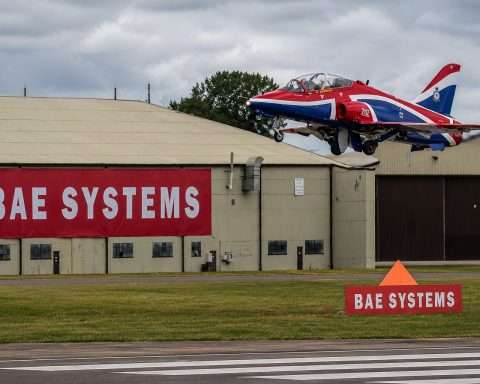
BAE Systems plc (LON:BA) edged lower late Friday in London, giving up some ground after Thursday’s rally. Shares traded at 1,981.01p as of 15:01 BST, down 0.08%. Investors looked past headline defence spending and focused on how much work could go to lower-margin submarine projects. The FTSE 100 Index (INDEXFTSE:UKX) was last off 0.03% according to Google Finance.
| Latest available market data | Price/level | Move | Time shown by source |
|---|---|---|---|
| BAE Systems plc (LON:BA) | 1,981.01p | down 0.08% | 15:01 BST |
| FTSE 100 Index (INDEXFTSE:UKX) | 10,649.91 | off 0.03% | 14:02 BST |
| QinetiQ Group plc (LON:QQ) | 482.40p | up 0.92% | 15:01 BST |
| Rheinmetall AG (ETR:RHM) | €1,094.60 | fell 1.83% | 15:46 CEST |
| Thales SA EPA:HO | €240.60 | added 0.08% | 15:41 CEST |
BAE jumped 5.45% to £19.83 on Thursday, outpacing the FTSE 100, which added 1.67%. But MarketWatch data shows the stock remains 16% under its 52-week high of £23.60 set in March.
BAE is set to benefit from the UK Defence Investment Plan, which sends long-term spending toward its strongholds. Reuters reported the plan earmarks £8.6 billion for GCAP over four years, £63 billion for nuclear deterrent and submarine projects, £11 billion for munitions and weapons, and £790 million for air, drone and missile defence.
| UK plan line | Amount | BAE read-through | Investor test |
|---|---|---|---|
| GCAP fighter programme | £8.6 bln | Air segment; Reuters lists BAE as a main programme leader | Growth with better margin, but a long time to delivery |
| Nuclear deterrent/submarines | £63 bln-plus; £47 bln shown for subs, upkeep and infra in the nuclear table | Falls under Maritime; submarine build is a big part | Stronger order outlook, margins start out low |
| Typhoon sustainment | More than £1.1 bln | Air; BAE gets Typhoon share and supports it | Upgrades, exports |
| Munitions/weapons | £11 bln to £11.1 bln | MBDA and Bofors orders, plus BAE Glascoed, but not all in BAE’s sales | Depends on capacity, timing of awards |
The business mix is key. BAE’s Maritime unit reported £6.8 billion in 2025 sales, with a 6.7% return on sales. That compares with 10.8% for the group overall. The Air segment posted £9.3 billion in sales and an 11.9% margin. Electronic Systems brought in £7.5 billion, posting a 15.4% return.
BAE’s outlook for 2026 is still for growth overall, but the different segments have different returns. The company sees Maritime sales up 5% to 7%, with a 7% to 8% margin. Air is forecast to grow 9% to 11%, at around a 12% return. Electronic Systems is forecast to rise 6% to 8%, with return close to 15%.
BAE CEO Charles Woodburn backed the defence plan, calling it “much-needed clarity for industry.” Earlier in May, Woodburn said BAE started 2026 strong and kept its guidance: sales growth of 7%-9%, underlying EBIT up 9%-11%, underlying EPS up 9%-11%, and free cash flow above £1.3 billion. BAE Systems
BAE’s order book isn’t the problem. The company finished 2025 with a record backlog of £83.6 billion, up from £77.8 billion. Order intake came in at £36.8 billion. The May list named a £2.5 billion Eurofighter support deal in Türkiye, around £1.1 billion in MBDA orders, plus contracts for space, artillery, and naval work.
The funding side is more unclear. The House of Commons Library put the four-year plan at £298 billion, with £15 billion marked as added defence money. Of that, £10.3 billion comes from confirmed sources, leaving £4.7 billion to be settled at Budget 2026. The briefing also noted there are no detailed numbers for spending after 2029/30.
Defence stocks are not a guaranteed bet as budgets grow. Reuters said Friday that KNDS has pushed back its IPO, citing investor nerves over how Europe’s defence industry can handle a ramp-up, despite higher military budgets. Sash Tusa at Agency Partners told Reuters that some are seeing companies “underperforming in execution terms” despite big order books and plenty of market potential. Reuters
BAE’s next test comes with its half-year results due July 30. Defence budgets help, but the market will focus on how orders convert, the cash flow timing, and what’s happening with Maritime returns as more submarine, shipyard and supply-chain projects come in.