
Riyadh, July 6, 2026, 23:05 (AST)
- Saudi Aramco TADAWUL:2222 has cut its August Arab Light price for Asia by $11 a barrel, putting it at $1.50 below Oman/Dubai. That’s the biggest monthly cut since Reuters started tracking the data in 2003.
- The cut was bigger than the $8 drop forecast in a Bloomberg survey quoted by Mint and The Times of India, putting the main Saudi grade at its lowest since June 2020.
- OPEC+’s main seven producers signed off on a 188,000 bpd hike for August. Brent hovered around $72 a barrel.
Saudi Aramco TADAWUL:2222 didn’t just trim a headline price for August. The new list scraps the last Iran-war premium on Saudi crude heading to Asia. Arab Light dropped from a $9.50 premium in July to a $1.50 discount. Four of the five top Asian grades now go under the Oman/Dubai benchmark.
The three-month move in Arab Light to Asia stands out less, but it’s big. The grade dropped $21 a barrel from the May premium to the August discount, according to Saudi Aramco’s pricing statements cited by Reuters. That $21 is lost upstream revenue for sellers. For refiners in China, India, Japan and South Korea, that means cheaper feedstock as Gulf supply picks up.
| Arab Light Asia OSP vs Oman/Dubai | Differential ($/bbl) | Month-on-month change |
|---|---|---|
| May 2026 | +19.50 | — |
| June 2026 | +15.50 | -4.00 |
| July 2026 | +9.50 | -6.00 |
| August 2026 | -1.50 | -11.00 |
Brent crude traded at $72.19 a barrel at 11:26 a.m. ET on Monday, up 7 cents. That’s well off its April high above $126. U.S. West Texas Intermediate was at $68.81, up 12 cents. Both are now close to where they were before the Iran war hit Gulf exports.
OPEC said seven countries, including Saudi Arabia, Russia, Iraq, Kuwait, Kazakhstan, Algeria and Oman, will bring back 188,000 bpd in voluntary cuts in August. The group also left the door open to raising, pausing or reversing the rollback after that and scheduled the next meeting for Aug. 2.
| Arab Light region | Pricing basis | July differential | August differential | Change |
|---|---|---|---|---|
| Asia | Oman/Dubai | +9.50 | -1.50 | -11.00 |
| Northwest Europe | ICE Brent | +15.85 | +0.85 | -15.00 |
| Mediterranean | ICE Brent | +15.65 | +0.65 | -15.00 |
| North America | ASCI | +12.60 | +4.60 | -8.00 |
Saudi isn’t just making OSP cuts in Asia. The latest table shows Europe and the Mediterranean saw even bigger drops—$15 a barrel. But Asia is the focus since the new prices take Saudi’s main stream below the regional benchmark. Reuters says August OSP for Asia is at the lowest level since June 2020.
“The downward move is still influenced by earlier stranded tankers managing to exit the Gulf, resulting in an increase in oil on water,” UBS analyst Giovanni Staunovo said. Robert Yawger, energy futures director at Mizuho, said: “It is increasingly looking like the Gulf producers are gearing up for a price war.” Tamas Varga at PVM noted producers are “selling into a falling market.” Reuters
This matters for investors in two ways. Refiners may see margins improve if product cracks don’t drop as quickly as crude spreads. Producers get hit faster on revenue, particularly if cheaper OSPs move from term deals to spot markets and futures curves stay weak.
China’s independent refiners picked up more discounted Middle Eastern crude last week as Asia saw higher supply. Reuters said UAE, Iraqi and Qatari barrels traded at discounts. Margins for Shandong teapots recovered, moving to 200-400 yuan a ton from a 100 yuan loss in June, depending on crude prices.
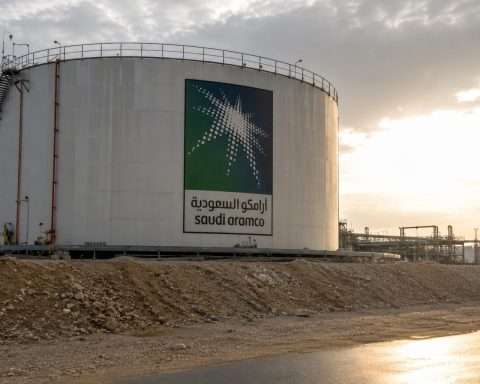
Saudi Aramco began using spot pricing to push sales in Asia after resuming Ras Tanura loadings. By July 2, at least five supertankers carrying 10 million barrels of Saudi crude had left Ras Tanura and cleared the Strait of Hormuz. Two of those ships were headed for China, and two were bound for Japan, according to Reuters.
WTI is slipping after reports that Saudi Arabia is offering discounts to Asian buyers, FXEmpire’s Vladimir Zernov said. He put WTI support just under $68, at $66.50 to $67.00. Brent is holding near $72, with resistance at $72.00 to $72.50, and support below $70 at $67.00 to $67.50, Zernov added.
The first thing to watch is if low-priced Saudi barrels can lure Asian refiners from Russian and Iranian crude on discount. Reuters said Iranian oil has been sold at $3 below ICE Brent and Russian Urals delivered to China traded near a $7 discount, as more Middle East supply came in after the Hormuz Strait reopened.