
ANKARA, July 8, 2026, 17:03 (TRT)
- NATO launched its first raw materials pool for defence, bringing in 12 of its 32 allies. The U.S., UK, Germany and France aren’t part of the initial group.
- Denmark is on the list after Donald Trump repeated his comment that Greenland ought to be “controlled by the United States, not by Denmark.” Reuters
- Market times at press: Ankara 17:03 TRT, London 15:03 BST, New York 10:03 EDT, Sydney 00:03 AEST. Critical Metals Corp NASDAQ:CRML was trading at $8.655 in New York.
NATO’s update on raw materials puts the focus back on Greenland for investors. The alliance is putting together a supply-chain group, but the options for direct public equity plays are still mostly Arctic mine developers, and most of them don’t produce yet.
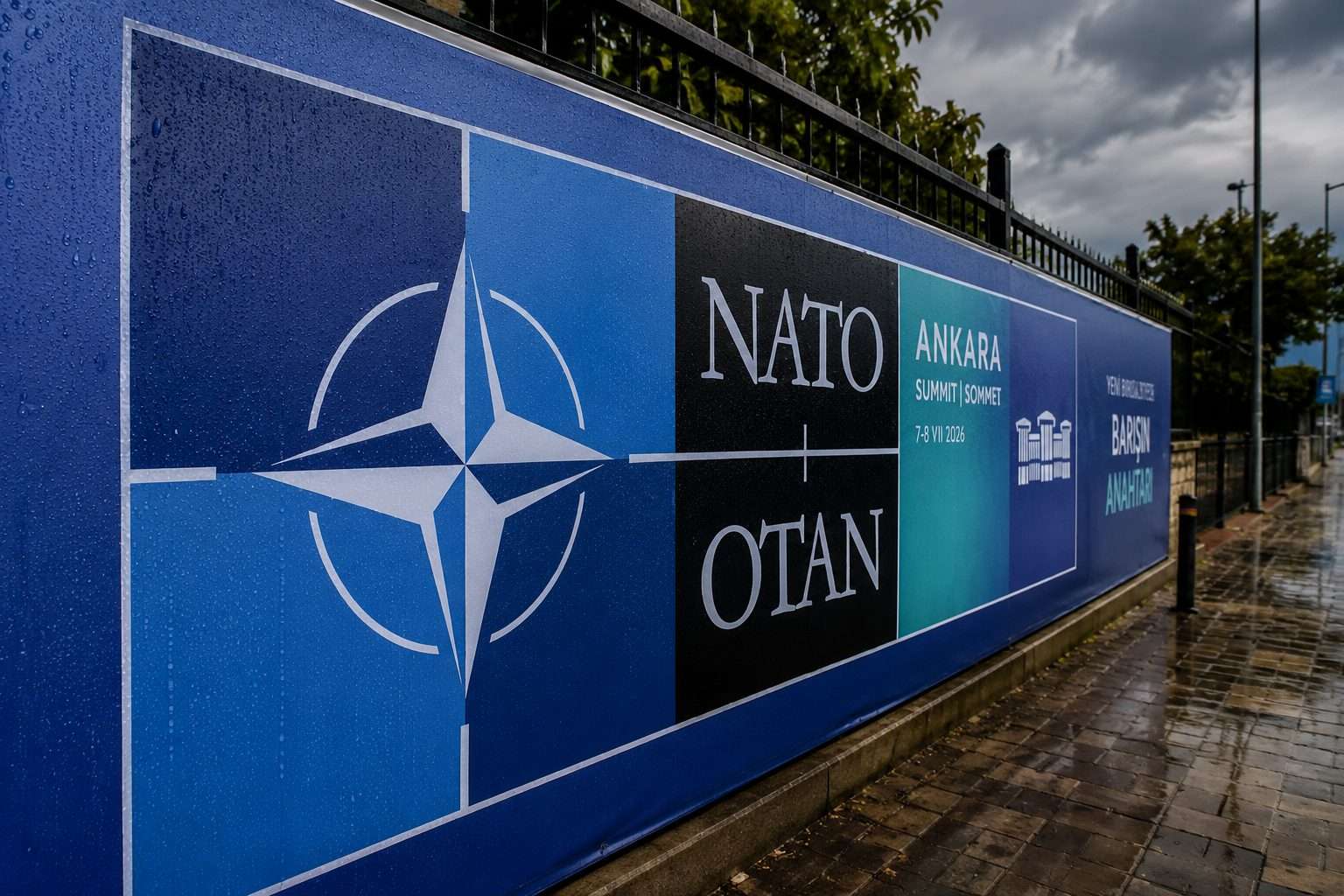
Secretary General Mark Rutte kicked off NATO’s defence-critical raw materials project at the Defence Industry Forum in Ankara on Tuesday. NATO said in a statement the project covers buying, storing, moving and managing materials, components and recycled products used in defence production. “For our defence to remain ready and strong, we need our industrial base and our supply chains to be resilient,” Rutte said. NATO
The project doesn’t cover all of NATO. The first group has Belgium, Canada, Denmark, Finland, Greece, Italy, Luxembourg, the Netherlands, Norway, Spain, Sweden, and Turkey. That means 20 members aren’t in, like the U.S., UK, France, Germany and Poland.
Trump told reporters in Ankara that he wants Greenland to be under U.S. control. Danish Prime Minister Mette Frederiksen said Denmark would “defend every inch of NATO” and made clear Greenland was not for sale. Danish Foreign Minister Lars Lokke Rasmussen said Copenhagen, Nuuk and Washington are talking, but staying within Danish kingdom limits, and that they’re looking at the 1951 U.S.-Danish defence pact as a possible path. Reuters
| Test for investors | Latest fact | Market read-through |
|---|---|---|
| NATO scope | 12 countries in on the raw-materials effort | First moves look like groundwork on stockpiles and logistics, ahead of the big defence funders coming in. |
| Greenland sovereignty | Denmark joined NATO group, U.S. outside for now | Greenland projects now look exposed to policy risk over and above just the ore quality. |
| Project focus | Targeting buying, storage, transport, management | No mine financing here. The group leans into offtake, processing, storage and port-side work first. |
| UK position | UK not in the initial pool | UK players may take a more direct route through local munitions or energetics spending, not NATO’s raw-materials plan. |
Investors are watching because the bottleneck isn’t just in mining. The International Energy Agency said China accounted for 60% of rare earth mining, 91% of refining, and 94% of permanent magnet output in 2024. The IEA said demand for magnet rare earths has doubled since 2015 and could jump more than 30% by 2030. IEA Executive Director Fatih Birol said, “sustained investment, stronger resilience measures and deeper international cooperation” are needed. IEA
| Listed Greenland exposure | Ticker | Main asset | Latest sourced check |
|---|---|---|---|
| Critical Metals Corp | NASDAQ:CRML | Tanbreez heavy rare earths | Greenland cleared the transfer of another 50.5% of Tanbreez to Critical Metals in April. That brings its stake to 92.5%. European Lithium Ltd (ASX:EUR) kept 7.5%. |
| GreenRoc Strategic Materials Plc | LON:GROC | Amitsoq graphite | Greenland gave out a 30-year mining licence in December. Reuters said output expected near 80,000 tonnes of graphite concentrate a year. |
| Energy Transition Minerals Ltd | ASX:ETM | Kvanefjeld rare earths | The group says Kvanefjeld has 1.01 billion tonnes in JORC resources, but Greenland is moving to block a licence renewal under its uranium rules. |
Critical Metals trades as the main listed Greenland rare-earth play. In May, Reuters said REalloys Inc (NASDAQ:ALOY) reached a 15-year binding offtake agreement to take 15% of yearly rare-earth concentrate from Tanbreez. The deal gives REalloys priority for concentrate rich in dysprosium and terbium. These heavy rare earths are used in defense and industrial-strength magnets.
The stock is still about permits, funding, and actually getting the project done. Critical Metals Executive Chairman Tony Sage called Tanbreez “a project in development” back in April, after the Greenland government signed off on the transfer that brought the company’s stake to 92.5%. Shares of Critical Metals in New York were at $8.655 at the time, for a market cap near $706.6 million. Critical Metals
GreenRoc is focused on graphite, not rare earths. In December, Reuters said Greenland gave the company a 30-year exploitation licence for the Amitsoq project, which has support from the European Raw Materials Alliance and EU Strategic Project status. “Europe lacks secure access to it,” Chief Executive Stefan Bernstein said. Reuters
Energy Transition Minerals is an example of risk on the other side. The firm lists a big Kvanefjeld deposit, but Reuters said in April that Greenland may reject its exploration licence renewal, citing a 2021 uranium law. The company has been pursuing arbitration in Copenhagen.
The UK isn’t in NATO’s raw-materials group, but London’s not skipping on defence budgets. The government said last week it will put £11 billion into munitions and weapons, planning at least six new energetics plants. For listed defence firms in the UK, this is mostly about ramping up explosives, propellants and munitions, less about Greenland mineral stakes.
Greenland can’t quickly take China’s place. Denmark and Greenland’s geological survey, GEUS, says only about 400,000 square kilometres of Greenland are ice-free. Its 2023 review looked at 38 raw materials. GEUS also said much of the area is still poorly mapped, tough terrain and climate drive up costs, and a lot of the estimates are out of date or lack detail by today’s standards.