
TOULOUSE, July 8, 2026, 17:05 CEST
- Airbus SE EPA:AIR and MTU Aero Engines AG ETR:MTX said they want to launch a joint hydrogen fuel-cell engine business by 2027, pending regulatory green lights and worker talks.
- European cash equities were open between 0900 and 1730 at the time. Late session quotes had Airbus off 2.64% and MTU sliding 3.18%.
- According to the FT, Airbus may end up holding around 75% in a JV that’s valued at over 1.2 billion euros. That stake is less than 1% of Airbus’s own market cap but tops 6% of MTU’s.
- Airbus’s 2026 stock story is still about delivery catch-up. After handing over 351 jets in the first half, it now needs to average 86.5 planes a month for the rest of the year to hit its 870-jet target.
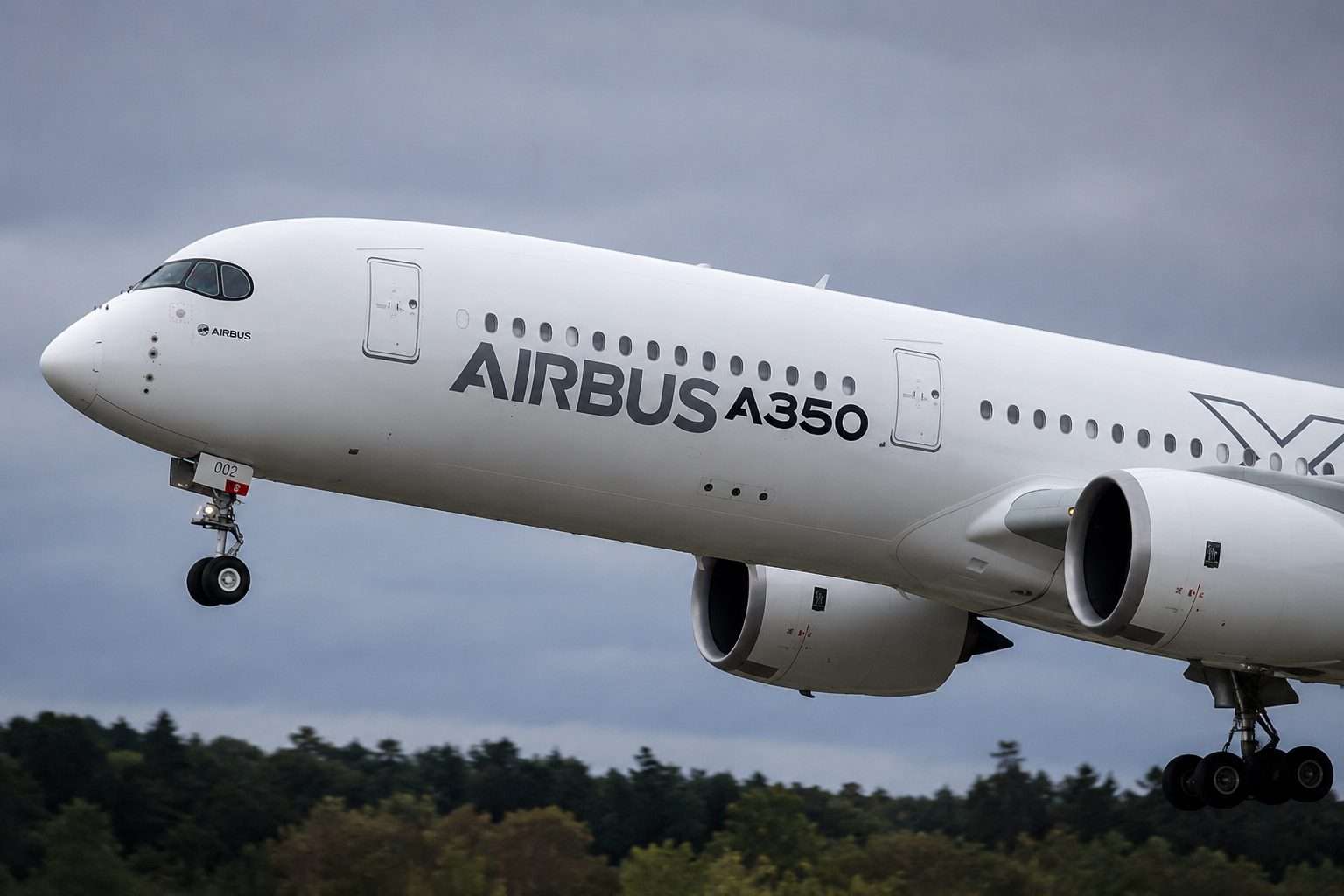
Airbus SE EPA:AIR is moving into engine-making, something civil aircraft companies usually avoid. The company and MTU Aero Engines AG ETR:MTX plan a joint venture to build and sell a fully electric hydrogen fuel-cell engine for commercial jets. They aim to start in 2027 if regulators and labour sign off. Airbus called the move the “next logical step.” MTU’s Stefan Weber said they want a “safe, reliable and economical” propulsion system. Airbus
Investors didn’t price in any short-term lift for the project. Google Finance listed Airbus at 198.56 euros as of 1647 CEST, down 2.64%, valuing the company at 156.99 billion euros with a P/E of 31.32. MTU was at 356.40 euros at 1646 CEST, off 3.18%, giving it a 19.21 billion euro market cap and an 18.87 multiple. Both shares traded about 10%-12% below 52-week highs.
| Company | Late quote | 1-day move | Market value | P/E | Distance from 52-week high |
|---|---|---|---|---|---|
| Airbus SE EPA:AIR | €198.56 | fell 2.64% | €156.99 bln | 31.32 | down 10.3% |
| MTU Aero Engines AG ETR:MTX | €356.40 | dropped 3.18% | €19.21 bln | 18.87 | off 12.0% |
The first hint for investors is the FT’s reported valuation—over 1.2 billion euros. That keeps the venture small on Airbus’s balance sheet but makes it a bigger deal for MTU. The setup isn’t equal: Airbus keeps control over the tech and has policy sway, while MTU gets a bigger shot at a future engine pool but faces more risk, especially since there isn’t a certified commercial engine yet. The FT cited Airbus’s Bruno Fichefeux, who called it the “hydrogen engine maker,” and said Airbus would own about 75%. Financial Times
| Item | Confirmed or reported fact | Investor read-through |
|---|---|---|
| Scope | Development and roll-out of fully electric hydrogen fuel-cell engines | Airbus is getting deeper into propulsion intellectual property, not just building planes |
| Timing | Launch set for 2027 pending required approvals and social steps | No cash-flow gain in 2026 |
| Ownership/value | FT said Airbus will own around 75%, valuing the unit over €1.2 billion | Moves the needle much more for MTU than for Airbus given market size |
| Technical base | MTU reported the fuel-cell design is done, stack production underway, eMoSys motor tested, Munich test cell up and running | Lab-phase risk is down, certification risk still there |
Airbus on Wednesday lowered its 20-year forecast for passenger-jet deliveries by 1% to 42,060 planes. The company now expects 47% of those deliveries to come from replacement demand, up from 45%. “The post-COVID recovery has effectively flattened,” said Antonio Da Costa, who heads market analysis for Airbus. That’s a problem for hydrogen aircraft, since future clean-sheet models have to secure capital in a market where airlines already have the option to buy new conventional jets and increase their use of sustainable aviation fuel. Reuters
Airbus is still a delivery story in the near term. The company posted negative 2.5 billion euros in first-quarter free cash flow before customer financing, but stuck to its 2026 goals for about 870 commercial planes, 7.5 billion euros adjusted EBIT, and 4.5 billion euros in pre-financing cash flow. Reuters said Airbus delivered 351 jets in the first half, up 15%. To reach 870 this year, the second-half pace needs to be 86.5 jets per month, just under June’s 89 but much higher than the first-half monthly average of 58.5.
MTU is still making most of its profits from its existing engine business, so investors may not want to pay up for the hydrogen potential just yet. The German engine group reported Q1 adjusted revenue at 2.244 billion euros, adjusted EBIT of 320 million euros, and free cash flow of 177 million euros. The backlog stood at 31.6 billion euros, with geared-turbofan MRO at about 44% of its commercial maintenance. MTU is still making money on current engine models like the Pratt & Whitney GTF for Airbus single-aisles, while the hydrogen project is not part of its main 2026 profit targets.
Airbus is betting more on strategy than finances with this deal. The company pushed back its hydrogen aircraft target from 2035 to sometime between 2040 and 2045 as technology and infrastructure have lagged. Airbus is now putting its money on fuel-cell electric propulsion. Airbus says this technology makes water vapour, not in-flight carbon dioxide or nitrogen oxides. But challenges go beyond just building the engine. Both Airbus and MTU say progress also depends on hydrogen supply, airport infrastructure and rules for certification.
Investors will get early updates before the venture starts. Airbus is set for a Q2 pre-quarter update on July 15, then a business update July 21, and will report half-year results July 29. MTU has its Q2 call on July 30. Discussions stay focused on ownership, capex, R&D accounting, grants, consolidation, and if the venture will have an actual budget or just a name.