
SHANGHAI, August 19, 2026, 20:12 CST
- Unitree closed 460% above its IPO price after rising as much as 629%.
- The closing value was roughly 200 times the robot maker’s 2025 revenue.
- Commercial deployment and U.S. restrictions remain key tests.
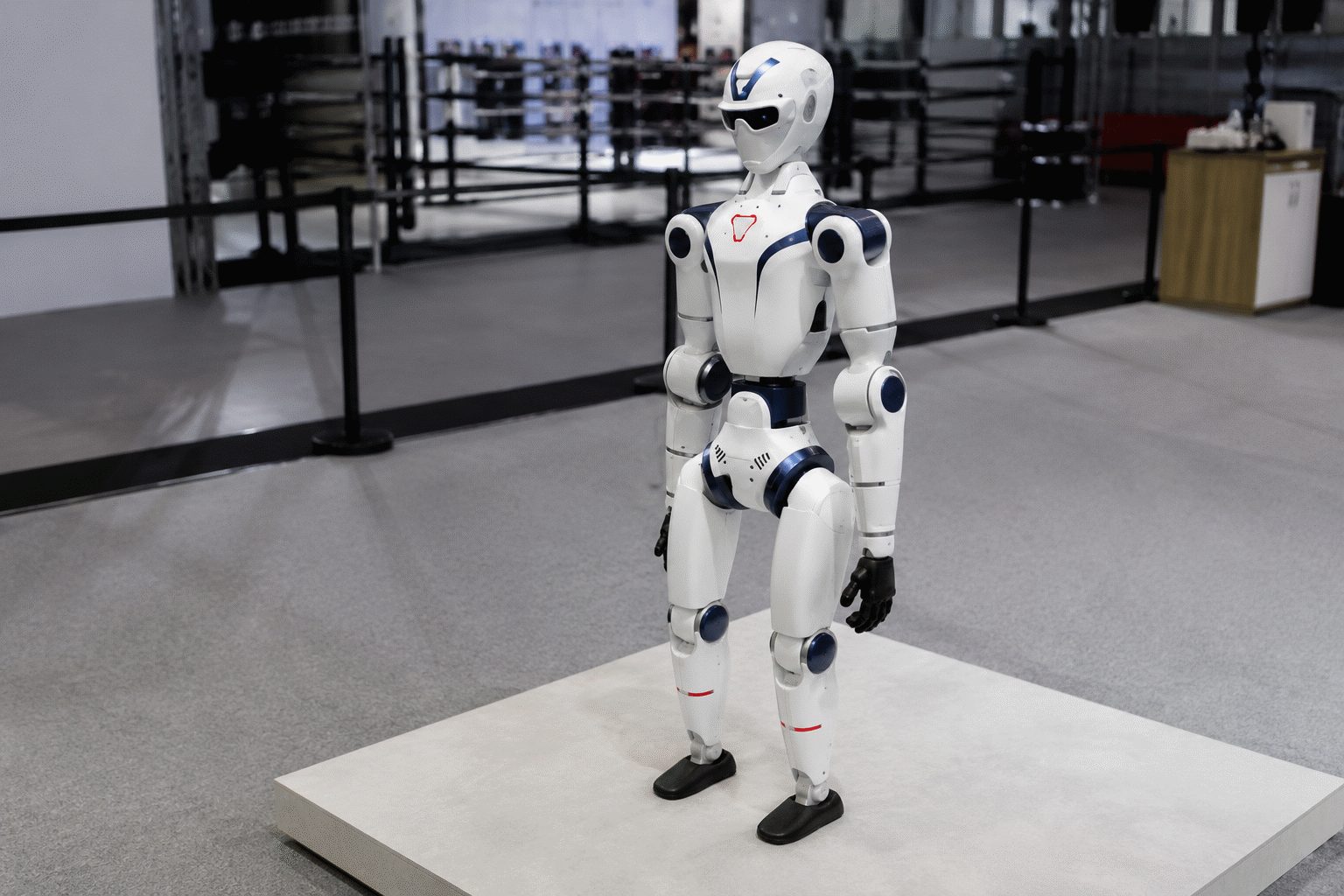
Unitree Robotics (SHA:688836) closed 460% above its offer price in its Shanghai debut. The surge valued the humanoid robot maker near $50 billion.
That price is roughly 200 times Unitree’s 2025 revenue. The preliminary ratio shows how much growth investors already expect from physical AI.
The harder test starts now. Unitree ships thousands of machines, yet few work at scale in commercial settings. Research, education and demonstrations still drive much of the market.
| Market measure | August 19 result | Comparison |
|---|---|---|
| IPO price | 150.80 yuan | Starting point |
| Intraday high | 1,100 yuan | 629% above IPO price |
| Close | 845 yuan | 460% above IPO price |
| Average China IPO first-day gain in 2026 | 279% | 181 percentage points below Unitree’s close |
| CSI 300 | Down 3% | Broad market fell |
The company raised about 6.1 billion yuan, or $904 million, through the listing. Its shares touched 1,100 yuan before closing at 845 yuan.
The close far exceeded the 279% average first-day rise for Chinese listings this year. It also came as the CSI 300 fell 3%. Demand was highly concentrated.
Unitree’s revenue reached 1.70 billion yuan in 2025. That was more than four times its 2024 level. Reported net profit rose to 278.21 million yuan.
| Year | Revenue | Revenue change | Reported net profit |
|---|---|---|---|
| 2023 | 159.13 million yuan | Not comparable | 11.15 million yuan loss |
| 2024 | 392.77 million yuan | 147% increase | 94.50 million yuan |
| 2025 | 1.70 billion yuan | 333% increase | 278.21 million yuan |
The closing market value implies about 1,200 times reported 2025 profit. That estimate uses rounded public figures. Different profit measures produce different multiples.
Low entry prices help explain the volume. Unitree lists a humanoid at $4,900 before tax and shipping. Its range then climbs toward full-size research systems.
| Unitree model | Starting price | Height | Weight | Degrees of freedom |
|---|---|---|---|---|
| R1 Air | $4,900 | 123 cm | About 27 kg | 20 |
| R1 | $5,900 | 123 cm | About 29 kg | 26 |
| G1 | $13,500 | 132 cm | About 35 kg | 23 |
| H2 | $29,900 | 180 cm | Not stated on cited store page | 31 |
Prices exclude shipping, tax and some development features. The R1 lasts about one hour per battery. Unitree also warns buyers that humanoid robotics remains at an early stage.
Unitree shipped more than 5,500 humanoids in 2025. Global shipments totaled roughly 15,000, according to Omdia data cited by AP. That gives Unitree more than one-third of reported volume.
Volume is not deployment. Morningstar analyst Kangyuxiao Li said the real test is “reliable performance and attractive returns” at commercial scale. The distinction matters for factories buying fleets, not prototypes. Associated Press
Overseas customers supplied more than 40% of 2025 revenue. The United States contributed about 13%. A July U.S. order blocks future foreign-made humanoid and quadruped models, though existing models can still be sold.
Risks: Early demand may not translate into repeat orders. Competition could cut prices and margins. Wider trade limits would weaken overseas growth, while technical failures could slow factory adoption.
The IPO gives Unitree money and visibility. It also creates a demanding public benchmark. Investors have priced a large robotics market before customers have proved its economics.