
SEOUL, August 20, 2026, 09:08 KST — Samsung Electronics (KRX:005930) has raised prices for some advanced contract-chip orders by up to 15%. AI demand has filled key production lines and restored pricing power to a foundry business that has lost money since 2022.
- New SF4 and SF5 orders face increases of as much as 15%.
- Samsung held 7% of first-quarter foundry revenue, versus TSMC’s 73%.
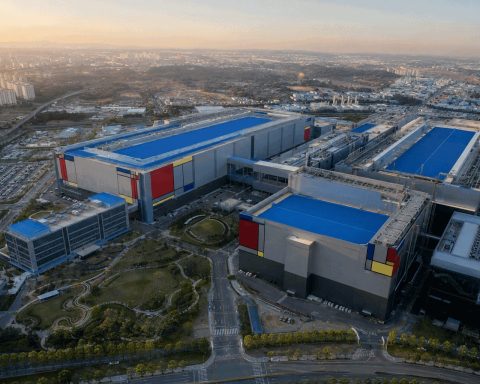
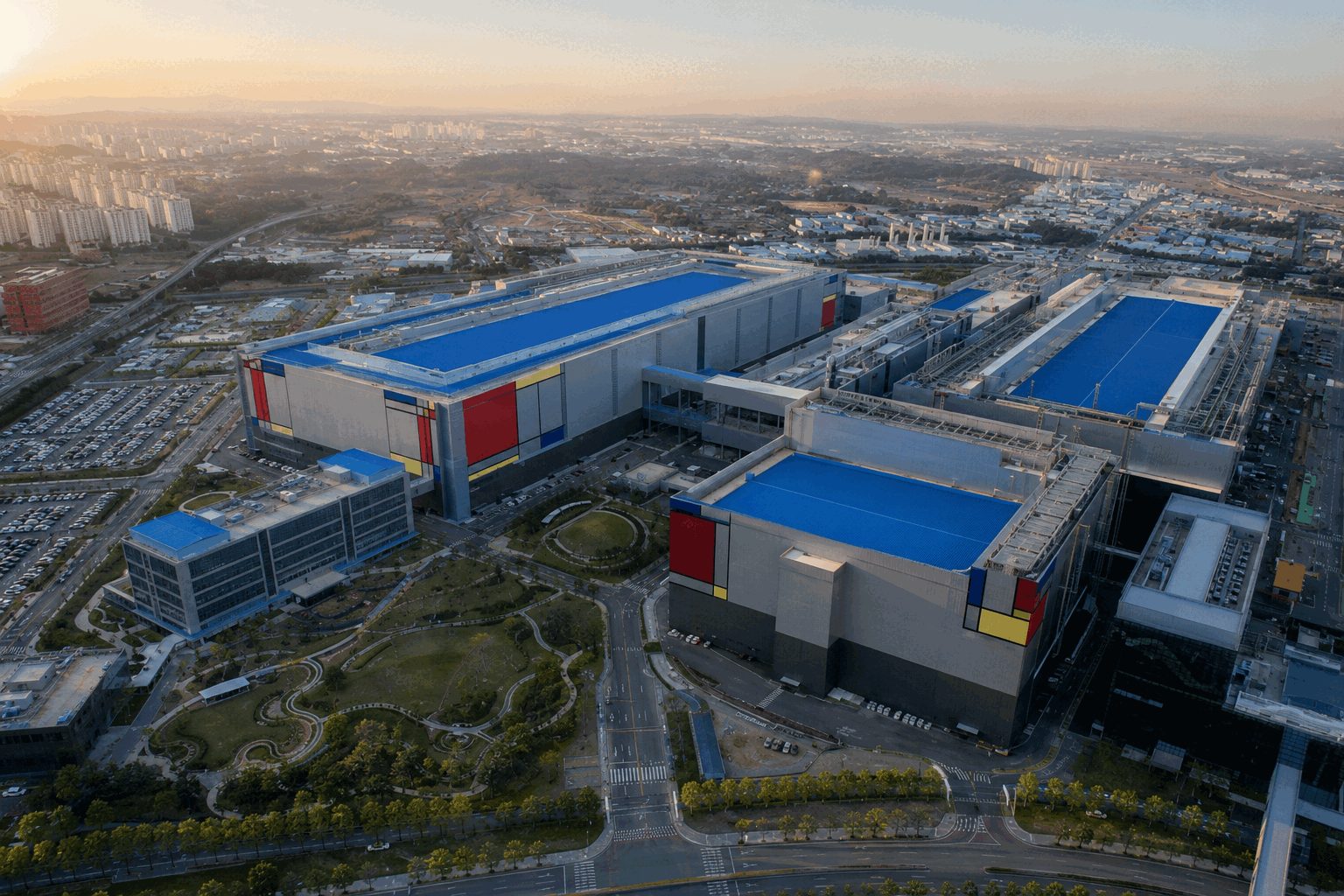
- Pyeongtaek’s SF4 production line has operated at full capacity since late 2025.
The shift matters because Samsung had relied on aggressive prices to win orders. Tight supply now lets the company charge more without matching the scale of Taiwan Semiconductor Manufacturing Co. (TPE:2330). Buyers gain another manufacturing source, but lose part of Samsung’s discount.
Higher wafer prices do not translate directly into a 15% device-price rise. Fabrication is only one part of a chip’s cost. Still, the increases add pressure for designers of AI accelerators, flagship phone processors and high-performance computing products.
| Samsung process | Reported price change | Timing | Current demand signal |
|---|---|---|---|
| SF4, 4 nanometres | 10%–15% for China and U.S. customers; 5%–10% in Taiwan | Raised in July for new orders | Pyeongtaek line at full capacity |
| SF5, 5 nanometres | 10%–15% | Latest new orders; exact start not disclosed | Strong advanced-node demand |
| 8 nanometres | Nearly 10% | Latest new orders; exact start not disclosed | Demand details not disclosed |
Chinese and U.S. SF4 customers accepted the steepest increases, the sources said. U.S. restrictions on advanced chipmaking equipment have increased Chinese reliance on overseas foundries. Samsung must also balance those orders against U.S. customers and its own component needs.
| Customer region | Reported SF4 increase | Commercial context |
|---|---|---|
| China | 10%–15% | Strong demand and fewer advanced domestic manufacturing options |
| United States | 10%–15% | AI and high-performance computing orders compete for capacity |
| Taiwan | 5%–10% | Home market of dominant rival TSMC |
| Other regions | Not disclosed | No comparable verified figure available |
The pricing leverage rests on a narrow base. Counterpoint Research put Samsung at 7% of global pure-foundry revenue during the first quarter. TSMC held 73%, while Semiconductor Manufacturing International Corp. (HKG:0981) had 5%.
| Foundry | Q1 2026 revenue share | Latest verified capacity signal | Latest verified pricing signal |
|---|---|---|---|
| TSMC | 73% | High N4/N5 utilization; mature-node supply tightening | Higher prices reported by industry analyst; magnitude not disclosed here |
| Samsung Foundry | 7% | SF4 line at Pyeongtaek full since late 2025 | Up to 15% on selected new orders |
| SMIC | 5% | 93.7% utilization in Q2 | Higher Q3 pricing for sought-after capacity; magnitude not disclosed |
Samsung’s Pyeongtaek SF4 line makes logic products for customers including Qualcomm (NASDAQ:QCOM). It also produces base dies for Samsung’s multilayer high-bandwidth memory. That links one scarce line to both outside chip designers and the company’s own AI-memory supply.
The company expects advanced processes to generate more than half of foundry revenue this year. AI and high-performance computing should exceed 30% of the mix, up from 15%–20% in late 2025. Samsung is targeting double-digit foundry revenue growth in the second half.
Its second-quarter disclosure said earnings improved on HBM base-die demand and strong U.S. orders. Samsung also cited more 2nm high-performance-computing engagements. The company plans second-generation 2nm mobile production and additional 4nm base-die sales during the half.
SMIC’s move shows that Samsung is not alone. The Chinese foundry raised prices for sought-after third-quarter capacity after Q2 utilization reached 93.7%. Its average wafer selling price had already increased 5.7% from the previous quarter.
Seoul-based analyst Lee Min-hee said customers were shifting toward Samsung and Intel (NASDAQ:INTC) as TSMC’s capacity tightened. “If Samsung raises prices from here, its foundry business could potentially become profitable as early as next year,” Lee said. Reuters
That outcome is not assured. Better utilization and pricing can lift margins, but customers still weigh yield, performance and delivery reliability. Samsung has not disclosed contract values, customer volumes or the foundry unit’s current loss.
Risks: The price data comes from anonymous commercial sources, and Samsung declined comment. Increases vary by node, customer and geography. AI demand could weaken, while yield problems or new capacity could reduce Samsung’s pricing power.