FORT WORTH, Texas, Jan 29, 2026, 03:23 (CST)
- In Fort Worth, an English teacher has prohibited generative AI and shifted most class assignments back to handwriting
- Unlike districts rolling out chatbots for students and teachers to explore AI, this approach takes a different direction.
- Multiple teacher essays call for pared-down classroom walls, citing research that visual clutter hampers concentration
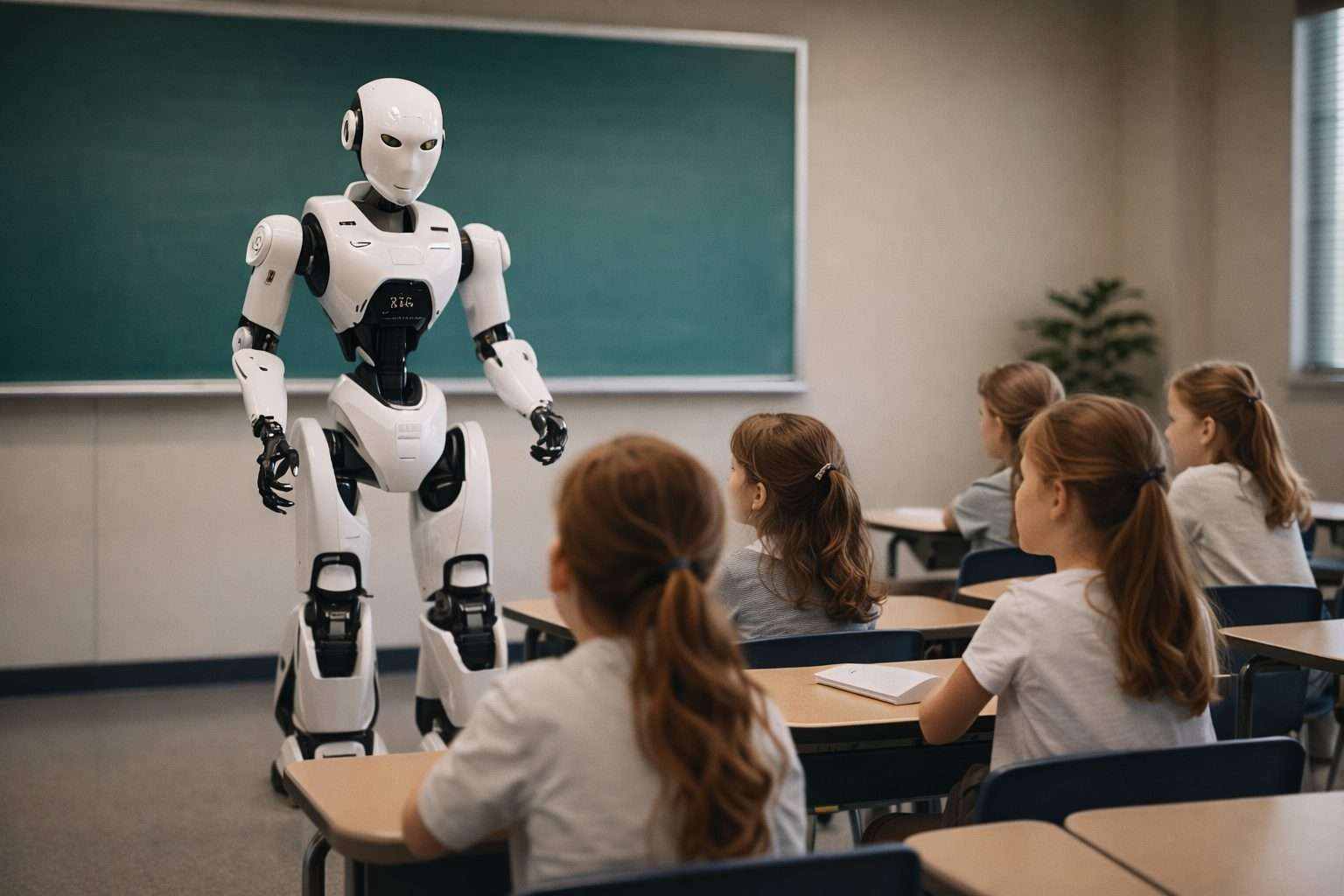
At a high school in Fort Worth, an English teacher has abandoned school-issued laptops in class, pushing students to use pen and paper instead to block generative AI from handling their work.
As U.S. schools wrestle with how to handle generative AI — software that produces text and answers from prompts — more teachers are testing these tools for lesson planning and feedback. This is happening amid growing worries about cheating.
The screens aren’t the only thing sparking debate. Teachers are also questioning how much “stuff” belongs on classroom walls. Many argue that crowded, social-media-friendly walls can overload attention and tax working memory—the short-term mental “scratchpad” students use to process information.
At Southwest High School, Chanea Bond insists that nearly all her American literature and composition work be handwritten and turned in on paper, NPR reported. “All of my students are handwriting,” Bond said. 1
Bond, a teacher in the Fort Worth Independent School District, initially tried using AI in her classes but pulled back when students leaned on it to generate thesis statements for a literary analysis of Maya Angelou’s “Still I Rise.” “It was terrible,” she said, pointing out that the students weren’t really connecting with the text.
Bond grades more than just the final essay—she evaluates every stage: thesis, outline, bibliography, even a handwritten draft. This approach makes it harder to pass off a bot-crafted final version. “The steps matter,” she explained, underscoring that they prove the thinking process is genuine.
Some students told NPR the approach felt strange at first but forced them to slow down. Junior Meyah Alvarez said it “get my brain thinking,” while others noted that AI use on assignments is common, despite being a “cultural taboo.”
Bond’s approach isn’t unique. Brett Vogelsinger, an English teacher and Bond’s friend from Philadelphia, told NPR he tries to model responsible AI use. He noted that schools are still in an “experimental phase,” allowing AI on some assignments provided students are transparent about it.
School districts are moving in the opposite direction, integrating chatbots as official tools. Miami-Dade County Public Schools in Florida now provides high schoolers with access to Google’s Gemini, NPR reported. Superintendent Jose Dotres highlighted in a video, “The future is now.”
A fresh debate is stirring over what students should be exposed to during the school day. In a Thursday essay for Teacher Magazine, Australian educator Andressa Bassani called for teachers to cut back on classroom wall displays. She pointed out that when the surroundings get too visually cluttered, “the brain stops listening,” referencing studies that link overly decorated classrooms with distraction and poorer learning results. Bassani also referred to classroom management expert Bill Rogers, who famously said, “You can’t teach through misbehaviour.” 2
Jo Griffin, a literacy expert and learning sciences consultant, made a similar point in an earlier EducationHQ article. She warned that “Calm does not mean bare” and that too much visual noise can boost “extraneous cognitive load” — mental effort that doesn’t support learning — hitting vulnerable students the hardest. Griffin insisted the “real Pinterest boards” should live in students’ minds, not plastered all over classroom walls. 3
But strict bans have their downsides. Teachers who completely forbid AI risk leaving students ill-equipped to use it wisely or spot its errors. On the flip side, stripping too much AI from classrooms can weaken the connection, routine, and support that many students rely on.
For Bond, the trade-off seems worth it—at least for the moment. She told NPR she’d prefer students to be able to write and argue on their own, without relying on machines. This comes even as some districts and teachers are adopting chatbots and rethinking whether cluttered classroom walls really help students focus.