HOUSTON, March 23, 2026, 12:51 PM CDT
Global energy companies pushed AI simulation deeper into the power business on Monday. Hitachi Energy launched its HMAX Energy software-and-services suite for utilities, renewable operators and data centers, while Nvidia and Emerald AI said they would work with AES, Constellation, Invenergy, NextEra Energy, Nscale Energy & Power and Vistra on large AI data centers designed to connect faster and respond to grid conditions. Varun Sivaram, Emerald AI’s chief executive, said such sites should not be “passive loads or permanent islands.” 1
The timing matters. At CERAWeek in Houston, Google President Ruth Porat warned the United States was not “full throttle on energy” as AI data centers expand, and the U.S. Energy Department says data centers could consume up to 9% of the country’s electricity generation by 2030, up from 4% in 2023. 2
The Energy Information Administration expects U.S. electricity generation to rise 1.2% in 2026 and 3.1% in 2027. In Texas’s ERCOT market alone, it sees output climbing 7.3% between 2025 and 2026 as solar and gas generation rise, another reason power companies are trying to squeeze more from existing renewable and grid assets. 3
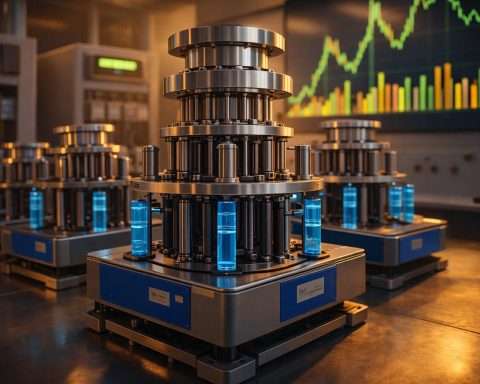
At the center of the push are digital twins, software copies of equipment or networks that let engineers test many operating cases before touching the real asset. Hitachi said its Nvidia-backed models can simulate the electrical chain from the grid to the server rack, and Siemens this year broadened similar tools through its Digital Twin Composer. 1
The same approach is already reaching renewable production. Nvidia has said Siemens Gamesa uses Omniverse-based wind-farm models to optimize offshore layouts for maximum power output at lower cost, while Reuters reported in February that Google’s Minnesota supply deal with Xcel would add 1,400 megawatts of wind, 200 MW of solar and 300 MW of long-duration storage and that AES agreed to build shared infrastructure for a Texas site alongside a new data center. 4
Google said last week it now has agreements with five U.S. utilities that let it trim as much as 1 gigawatt of data-center demand during periods of grid stress. Michael Terrell, Google’s head of advanced energy, called that demand response — paying large users to cut load at peak times — “a really important tool.” 5
Investors are watching the build-out in real time. In afternoon U.S. trading, Nvidia rose about 1.6%, NextEra gained roughly 1.4%, Vistra climbed about 3.8% and Constellation added nearly 2.8%, while AES was little changed.
Peers have already cashed in. Siemens Energy said last month that AI-driven demand for turbines and grid equipment nearly tripled quarterly net profit and helped push its shares to a record high, even as wind unit Siemens Gamesa was only starting to recover. 6
But software will not clear the physical bottlenecks on its own. Reuters reported last month that PJM sees possible power shortfalls over coming decades, more than 2,500 GW of projects are stuck in grid-connection queues globally and turbine makers including GE Vernova and Siemens Energy have warned they cannot meet all of the demand surge; Amundi analyst Timothy Ho has also said some European generators re-rated on AI hopes despite only “limited tangible evidence” so far, leaving the next move in clean-energy shares to depend on whether faster modeling actually turns into quicker interconnections, steadier output and better earnings. 7