Baltimore, Jan 27, 2026, 12:20 (EST)
- According to agencies, an AI system processed close to 100 million Hubble image cutouts in roughly 2.5 days.
- Researchers identified over 1,300 unusual objects, with more than 800 never documented before.
- NASA and ESA noted that comparable tools might assist in sorting data from Euclid, the Rubin Observatory, and NASA’s Roman telescope.
NASA reported Tuesday that researchers deploying an AI tool called AnomalyMatch sifted through nearly 100 million image cutouts from the Hubble Legacy Archive, identifying over 1,300 unusual objects. The European Space Agency (ESA) noted that more than 800 of these anomalies haven’t appeared in any scientific papers before. 1
The agencies described the outcome as tackling a straightforward issue: experts simply can’t sift through the flood of telescope data image by image. They added that even citizen-science projects fall short when dealing with archives as massive as Hubble’s.
NASA warned that pressure will increase as new observatories start sending back “unprecedented” amounts of images. It highlighted ESA’s Euclid mission, NASA’s soon-to-launch Nancy Grace Roman Space Telescope, and the U.S.-supported Vera C. Rubin Observatory.
AnomalyMatch, a neural network crafted by European Space Agency researchers David O’Ryan and Pablo Gómez, learns patterns in data to spot probable outliers. According to the releases, it highlights these anomalies but leaves the final judgment to the researchers.
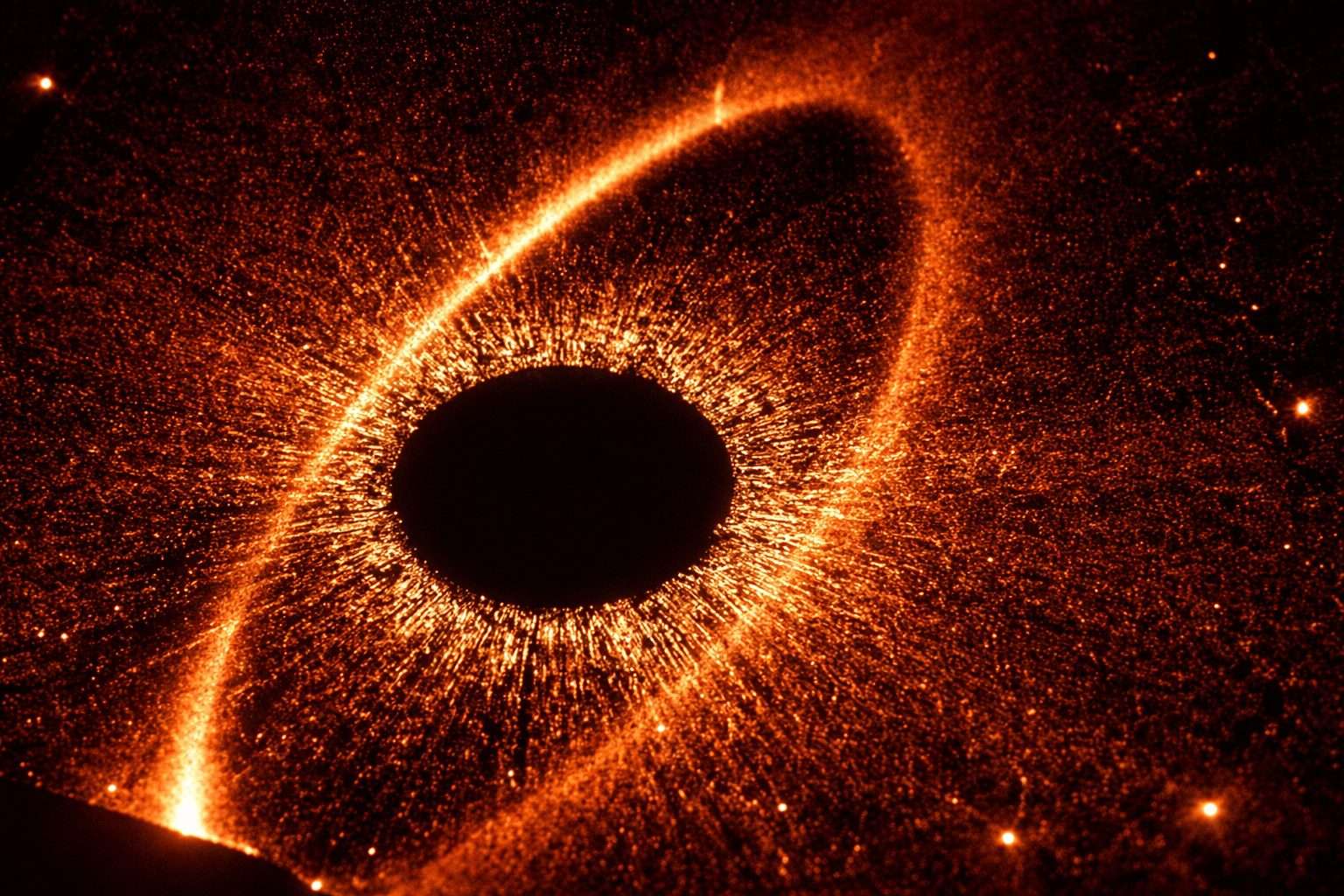
ESA reported that most anomalies were galaxies in the throes of merging or interacting, often trailing long streams of stars and gas. Others appeared as gravitational lenses—where a foreground galaxy’s gravity bends the light from a more distant one into arcs or rings. The survey also uncovered ring galaxies, “jellyfish” galaxies, and edge-on planet-forming discs that look like hamburgers. Several dozen objects, however, resisted classification. 2
“Archival observations from the Hubble Space Telescope now cover 35 years,” O’Ryan noted. The study appeared in the journal Astronomy & Astrophysics, according to the agencies.
Gómez said, “This clearly shows how AI can boost the scientific value extracted from archival datasets.”
ESA reported that Euclid kicked off its survey in 2023, mapping billions of galaxies over a third of the night sky. The Rubin Observatory plans to launch its 10-year Legacy Survey of Space and Time, aiming to gather over 50 petabytes of images. Meanwhile, Roman is slated for launch by May 2027 at the latest.
But the AI doesn’t nail down every outlier. The team still sifted through the top picks manually, and a few dozen objects defied classification, requiring more follow-up to figure out their nature.
Hubble is a joint effort between NASA and ESA. NASA’s Goddard Space Flight Center oversees the telescope and mission operations, while science operations fall under the Space Telescope Science Institute in Baltimore. STScI released the official statement for NASA this Tuesday. 3