
Houston, March 23, 2026, 08:50 CDT
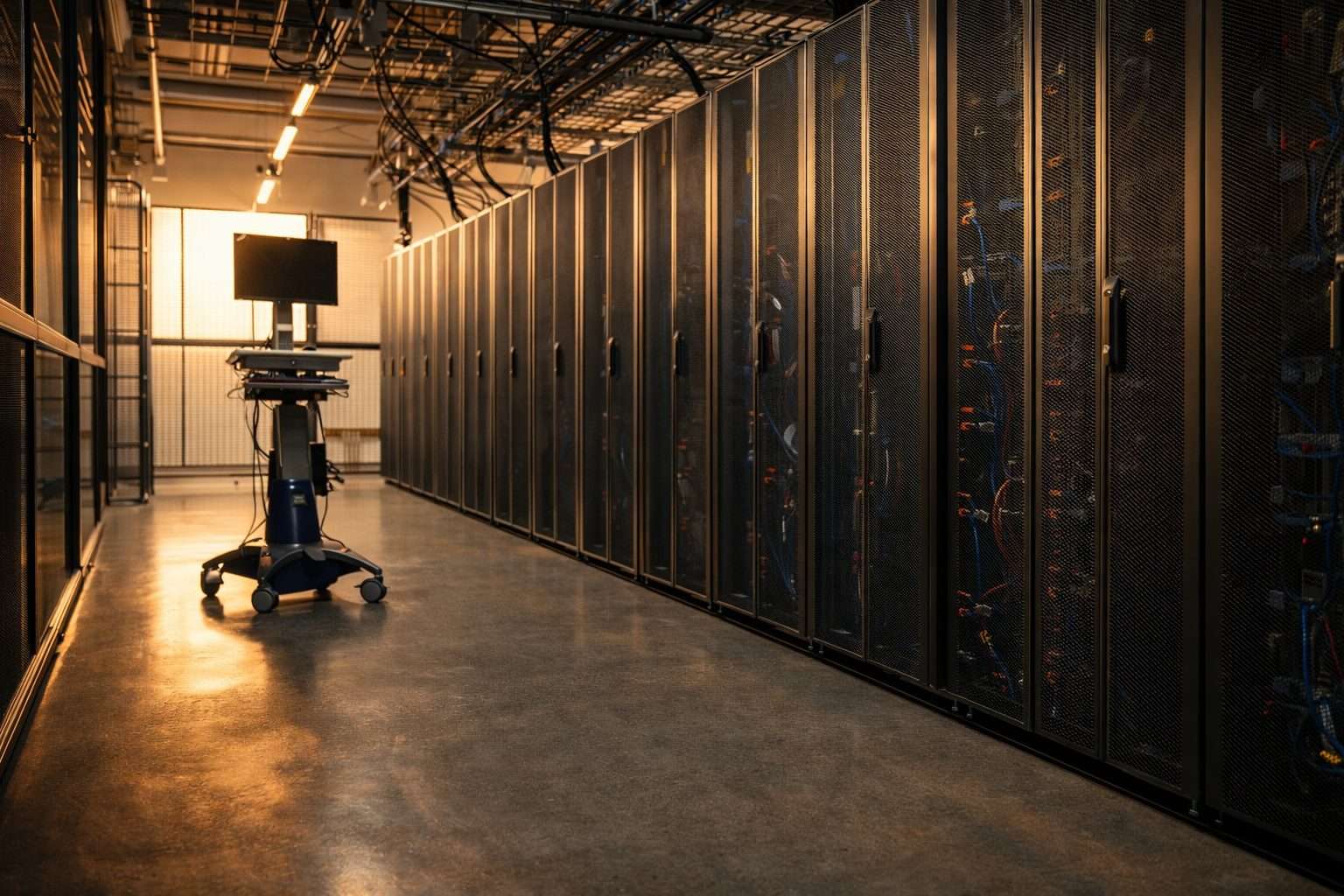
Nvidia and newcomer Emerald AI announced Monday at CERAWeek in Houston they’re teaming up with AES, Constellation, Invenergy, NextEra Energy, Nscale Energy & Power, and Vistra on what they’re calling “flexible” AI data centers. The idea: these centers can cut back or reschedule their power draw when the grid gets tight—helping speed up new connections as electricity demand, not just chips, becomes the bottleneck for the sector. NVIDIA Newsroom
The timing isn’t complicated. Just last week, Google broadened deals enabling utilities to trim as much as 1 gigawatt from its data center load when the grid is under pressure. Then, two days ago, SoftBank and AEP rolled out plans for a 10-gigawatt campus in Ohio, supported by 9.2 GW of new gas-fired generation and $4.2 billion earmarked for transmission improvements.
Those numbers keep piling up. This month, the U.S. Energy Information Administration projected a 1.9% jump in electricity load for 2026, with 2.5% growth on deck for 2027. ERCOT in Texas and PJM, which covers slices of the Mid-Atlantic and Midwest, are set for the steepest increases. S&P Global, for its part, puts global data-center power demand growth somewhere between 12% and 16% a year from 2025 through 2030.
Nvidia refers to these new sites as AI factories—think sprawling server campuses dedicated to training and running AI models. The company says its DSX Flex software is built for operators needing to adapt to grid swings, matching computing demand with batteries or on-site generation. “Must be designed together,” CEO Jensen Huang said. Constellation’s Joe Dominguez, for his part, called out the grid “peak problem.” NVIDIA Newsroom
Nvidia climbed 2.4% to $176.81 in early U.S. trading. Shares of Constellation advanced 2.5% to $288.95, Vistra tacked on 3.4% to $151.00, and AEP edged higher, up 0.4% at $126.11. Both Constellation and Vistra have highlighted demand tied to AI as a growth driver. This year, Constellation stands out for its positioning in that space, according to Melius Research analyst James West.
The price side looks different too. According to Reuters Events, fourth-quarter average solar PPA rates in North America jumped 9% from a year ago to $61.7 per megawatt-hour. Wind contracts moved up by the same margin, hitting $73.7/MWh. Caroline Mead at Engie North America points out that hyperscalers aren’t chasing isolated agreements anymore—they’re going after “multi-gigawatt portfolios.” Reuters
Google’s newest contracts hint at a subtler approach. The tech giant says it’s now able to offer up to 1 GW of data center power demand that can be slashed when the grid is stretched—what the industry calls demand response. Michael Terrell, who heads advanced energy at Google, described that capability as “a really important tool” for handling future demand. Reuters
Then there’s the brute force approach. SoftBank’s Ohio venture with AEP plans to link up dedicated power generation to a sprawling AI campus—an arrangement that might let developers sidestep the long wait for grid hookups, provided they’re able to bankroll their own energy supply and infrastructure.
But cracks remain in the simple story. PJM, according to Reuters, has flagged possible supply gaps by 2027, and both GE Vernova and Siemens Energy point out that big gas-turbine orders are now booked out deep into the back half of the decade. Vistra’s Jim Burke, for his part, contends that data center demand won’t start seriously straining the supply-demand balance before late 2027 or even early 2028.
The question of who foots the bill is equally fraught. Ari Peskoe, an energy lawyer at Harvard, points out that Ohio’s approach might set a precedent, potentially shifting transmission costs onto data centers instead of regular ratepayers—right as utilities face more scrutiny over whether AI growth will hike up household costs.
“Building energy systems capable of sustaining economic growth”—that’s the new industry focus, according to Atul Arya, chief energy strategist at S&P Global. Monday’s announcement in Houston highlights just how fast things are moving: the future of the AI surge could hinge less on chip technology, more on who can deliver enough power to the data centers. News Release Archive