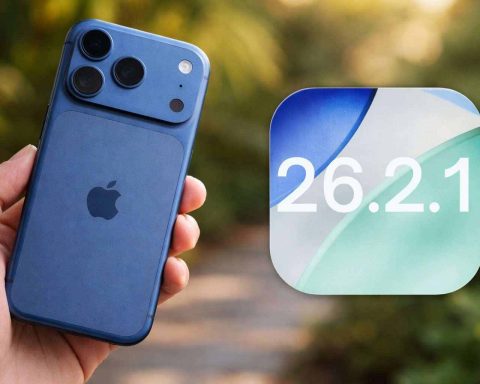
- Apple is leaning on Google’s Gemini models for a long-promised Siri upgrade, pushing its AI strategy back into focus.
- Analysts say the tie-up could widen privacy and regulatory scrutiny as Apple and Google deepen a long, complicated partnership.
- Investors are watching for a consumer payoff from “Apple Intelligence” ahead of Apple’s Jan. 29 earnings.
Apple’s decision to base a revamped Siri on Google’s Gemini is renewing questions about how far two longtime partners can deepen ties, with privacy lawyers and analysts pointing to possible regulatory blowback.
The move lands as U.S. antitrust enforcers look harder at Google’s distribution agreements and as Apple tries to show its own AI push can turn into something users notice, not just a promise on a launch-stage.
It also comes with Apple heading into quarterly results on Jan. 29, when investors expect clearer signals that “Apple Intelligence” — its generative AI, software that can produce and summarize text — can help drive iPhone upgrades and services growth. 1
In a joint statement on Jan. 12, the companies said the next generation of Apple Foundation Models — large AI models trained on broad data, often called large language models or LLMs when used for text — will be based on Google’s Gemini models and cloud technology, helping power Apple Intelligence features including a more personalized Siri “coming this year.” 2
Apple said Apple Intelligence will continue to run on Apple devices and on its Private Cloud Compute servers, which it describes as a way to handle heavier AI requests without sending user data into a third-party cloud. In plain terms: Apple wants Gemini’s model capability while keeping the processing inside Apple-controlled infrastructure.
The urgency is hard to miss. Apple Intelligence had a rough start in 2024, and the iPhone 16 was marketed as “Built for Apple Intelligence” but shipped without it, while the promised smarter Siri “never materialized,” The Verge wrote. 3
Some analysts see the partnership as a strategic pivot. “Apple’s partnership with Google … represents a deep strategic shift,” said Ibrahim Aljarah, a professor at the University of Jordan and chief AI officer at Arrowad Group, while describing the reported $1 billion-a-year fee as a sign of the scale of investment. 4
Others are less concerned about the tech than the governance. Akshata Namjoshi, an equity partner at Karm Legal, said the tie-up should give users a new option but left “some areas which need more discussions,” pointing to questions about data use and compliance with rules such as Europe’s GDPR.
The financial terms were not disclosed. A TechPolicy.Press analysis, citing Bloomberg, put the service fee at roughly $1 billion annually and contrasted it with estimates that Google pays Apple about $20 billion a year to remain the default search engine in Safari — a comparison that brings antitrust sensitivities back to the surface. 5
Apple has also kept other doors open. It already lets users hand off some requests to OpenAI’s ChatGPT inside iOS, and the Gemini partnership is framed less as an iPhone app feature than as new plumbing for Siri and other Apple Intelligence functions.
On CNBC’s “Fast Money,” trader Tim Seymour called Apple “kind of like an afterthought” for investors chasing pure AI plays, while saying he “loved the Google Gemini partnership” as a shortcut to best-in-class models. 6
But there is a downside scenario, and it isn’t technical. Google this week asked a U.S. judge to pause parts of an order requiring it to share data while it appeals a ruling that it held an illegal search monopoly; prosecutors are weighing remedies that could also hit Google’s agreements with Apple. Apple, for its part, is also facing an antitrust case in India tied to its iOS app marketplace. Source 7
For now, consumers will judge the deal on whether Siri becomes useful beyond basic tasks, and whether Apple can meet its “this year” timeline. Investors may get the next concrete readout when Apple reports on Jan. 29.