
NEW YORK, May 17, 2026, 05:24 (EDT)
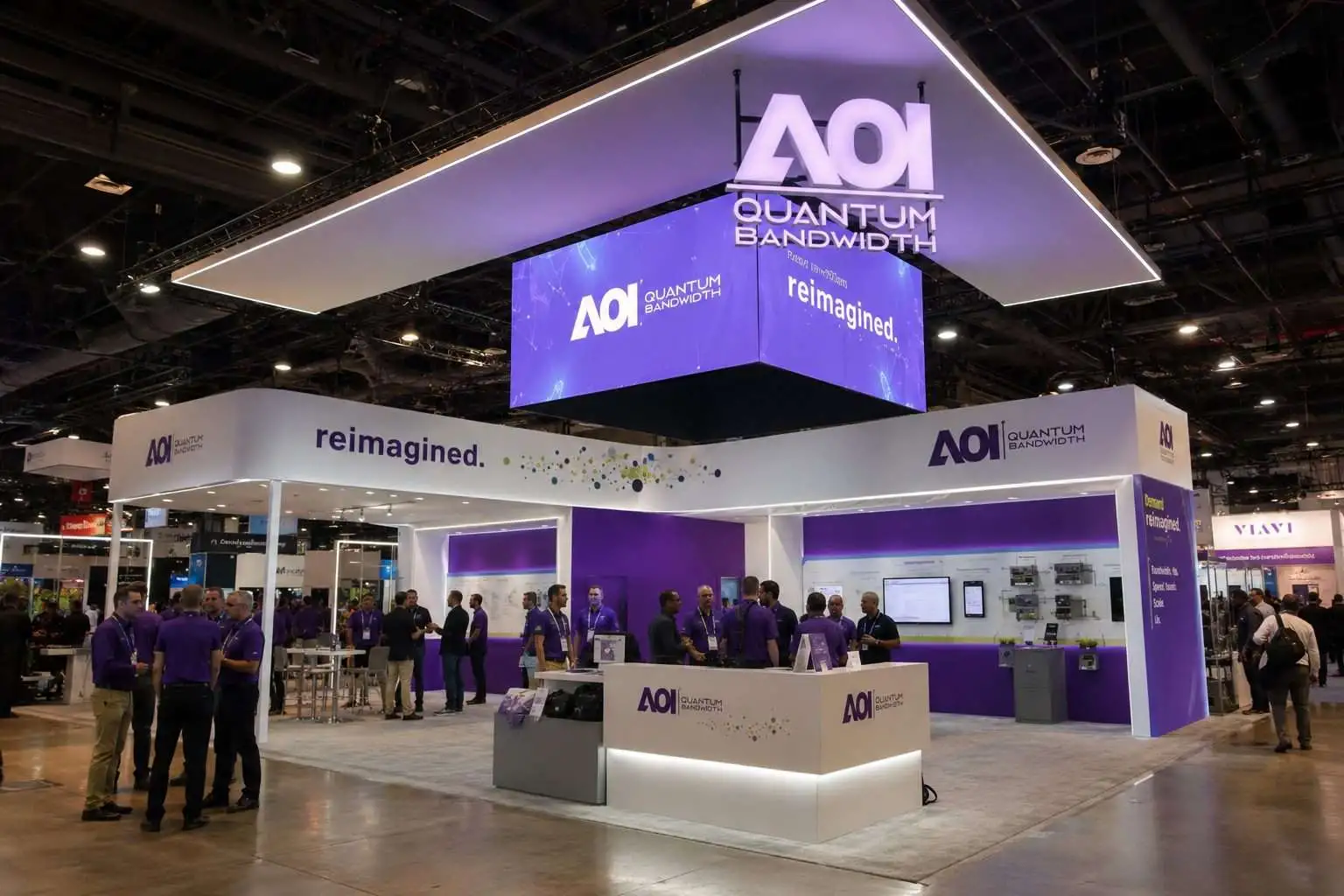
Applied Optoelectronics heads into the new week with its stock still up nearly 28% over five sessions, even after a sharp two-day pullback, as investors weigh a new $600 million stock-sale program against a fast-rising order and capacity story.
The Nasdaq-listed optical-networking supplier closed Friday at $190.36, down 6.49% on the day, but well above its $148.94 close on May 8. The stock hit $233.67 intraday on Wednesday before giving back ground Thursday and Friday.
That is why the next few sessions matter. AOI, as the company calls itself, is being priced less like a small telecom supplier and more like a leveraged bet on artificial-intelligence data centers, where optical transceivers — modules that move data at very high speeds using light — are becoming critical infrastructure.
The newest overhang is supply of another kind. Applied Optoelectronics said in a May 14 filing it entered an at-the-market offering, a program that lets a company sell new shares into the market over time, for up to $600 million through Raymond James and Needham. The filing also said AOI has no obligation to sell shares and can suspend sales.
The move gives AOI flexibility after a large rally, but it also raises a plain risk for holders: dilution. If the company sells stock, existing shareholders own a smaller piece of the business, though the proceeds could help fund manufacturing expansion.
The rally’s fuel is still the same. AOI reported first-quarter revenue of $151.1 million, up from $99.9 million a year earlier, and guided second-quarter revenue to $180 million to $198 million. Chief Executive Dr. Thompson Lin said the company was seeing “strong customer engagement” around 800G and 1.6 Tb products, and CFO Stefan Murry called it the company’s “fourth consecutive quarter of record revenue.” Applied Optoelectronics, Inc.
Capacity is part of the trade now. A separate filing showed AOI signed leases for three Houston-area industrial buildings totaling more than 730,000 rentable square feet, intended for manufacturing, warehouse and office use, with an option to buy the buildings for an aggregate $102.25 million.
The company’s non-AI broadband business also had news last week. AOI said it is working with Mediacom on DOCSIS 4.0, a cable-network standard meant to deliver faster internet over existing coaxial lines, with Mediacom targeting faster service to about 1 million homes by the end of 2026. Mediacom CTO JR Walden said AOI’s smart amplifiers should help “increase capacity” and improve reliability. Applied Optoelectronics, Inc.
Peers remain part of the story. Lumentum and Coherent have also drawn investor demand as optical gear becomes more closely tied to AI infrastructure spending; Barron’s reported Wednesday that Applied Optoelectronics, Lumentum and Coherent all rose as the AI networking trade stayed hot.
There is an index angle in the week ahead. Nasdaq said Lumentum will join the Nasdaq-100 before the market open on Monday, replacing CoStar Group. The Nasdaq-100 tracks 100 of the largest non-financial companies listed on Nasdaq and is followed by more than $600 billion in assets under management, Nasdaq said.
But the downside case is not hard to find. AOI still posted a GAAP net loss of $14.3 million in the first quarter, and its gross margin narrowed from both the year-earlier quarter and the fourth quarter. Its own risk language flags order cuts, shipment delays, supply-chain disruption, pricing pressure, tariffs and reliance on a small number of customers.
The stock now has to absorb all of that at once: a big run, a possible share sale, rising peer attention and a production ramp that leaves little room for delay. Next week’s test is whether investors keep paying for the growth story before the company proves that the new capacity turns into profit, not just revenue.