
LONDON, June 17, 2026, 09:23 BST
- BP was last at 505p, off 1.6%. Brent crude stayed under $80 following two steep drops.
- Shell slipped again, leaving London energy stocks under pressure as the FTSE 100 traded down.
- BP’s newest drive to simplify operations is shifting more attention to oil and gas deliveries, with CEO Meg O’Neill leading the move.
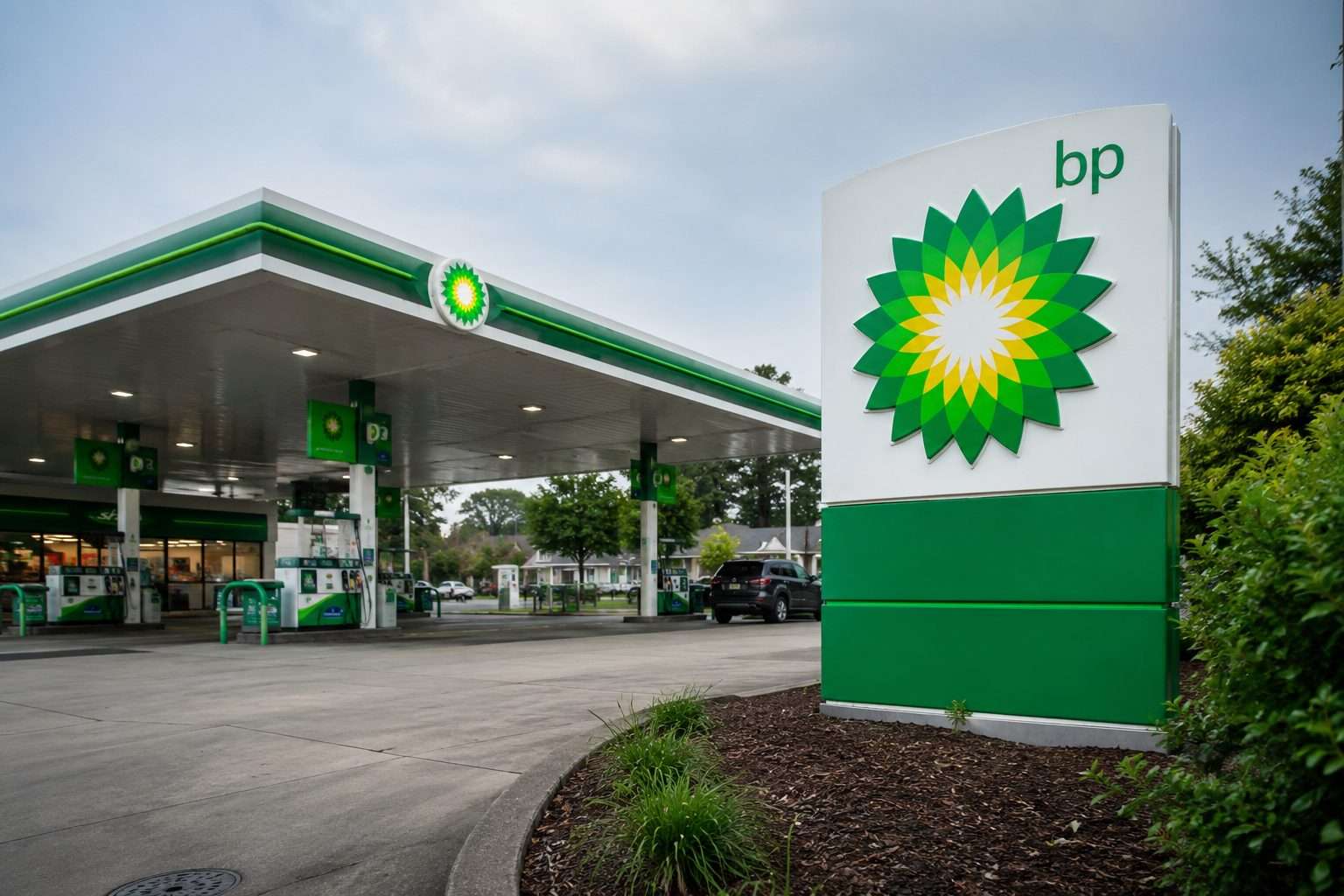
BP shares dropped at the open in London on Wednesday as oil prices slipped. Investors pulled back on Middle East supply risk after hints of a U.S.-Iran agreement. The London Stock Exchange traded its usual hours from 0800 to 1630 local time.
BP traded at 505.0p to sell and 505.2p to buy, down 8.3p, or 1.6%, in delayed AJ Bell data. The stock had opened at 510.6p. Shell, BP’s nearest London rival, lost 1.35% at 3,026p-3,027p. The drop looked broad across the sector, not limited to one name.
Oil prices weighed as Brent crude was last at $78.81 a barrel at 0630 GMT and U.S. West Texas Intermediate traded at $75.93, according to Reuters. Both fell about 5% on Tuesday, losing ground for a second day, as traders bet supply through the Strait of Hormuz could improve.
BP’s cash flow is still tied closely to oil prices. Integrated energy companies—those that produce, refine and sell fuel—see a drop in crude cut the value of expected upstream earnings. Investors tend to mark down profits from exploration and production when crude falls, though cheaper feedstock can sometimes help refining margins later on.
Priyanka Sachdeva, senior market analyst at Phillip Nova, told Reuters that “markets are broadly stripping out” the geopolitical “risk premium.” The risk premium is the extra traders pay when there’s a chance supply is at risk. Reuters
Hiroyuki Kikukawa, chief strategist at Nissan Securities Investment, told Reuters that traders “held off further selling pending details.” The Strait of Hormuz carried roughly a fifth of world crude oil and LNG supply before it closed. How fast it reopens is a main focus for BP, Shell and other producers. Reuters
BP shares are moving as the company looks to simplify its story for investors. BP said it will shift to a new structure with just two segments, Upstream and Downstream, starting July 1, replacing the current three-segment setup. A statement from the company said Downstream will include refining, fuels, mobility, convenience, aviation, hydrogen and Castrol.
BP’s Meg O’Neill said the changes should “reduce complexity and strengthen execution,” saying BP is pushing for a “simpler, stronger and more valuable bp.” The company named Gordon Birrell as executive vice president for Upstream. Richard Harding takes over as interim executive vice president for Downstream. Cyprus Shipping News
BP has kicked off a sale process for minority stakes in its Kaskida and Tiber Gulf of Mexico projects, Reuters said last week, citing four sources. Both fields rank high among BP’s Gulf prospects. Each is expected to be able to produce roughly 80,000 barrels of oil per day, with start-ups penciled in for 2029 and 2030.
Investors face a two-way risk. A stable U.S.-Iran deal and quicker Gulf supply could keep crude weak and put pressure on BP’s near-term earnings. If tanker flows stay slow or the deal breaks down, oil might bounce, helping BP’s cash flow but bringing back the geopolitical risk markets have been working to price out.