
London, May 13, 2026, 13:02 (BST)
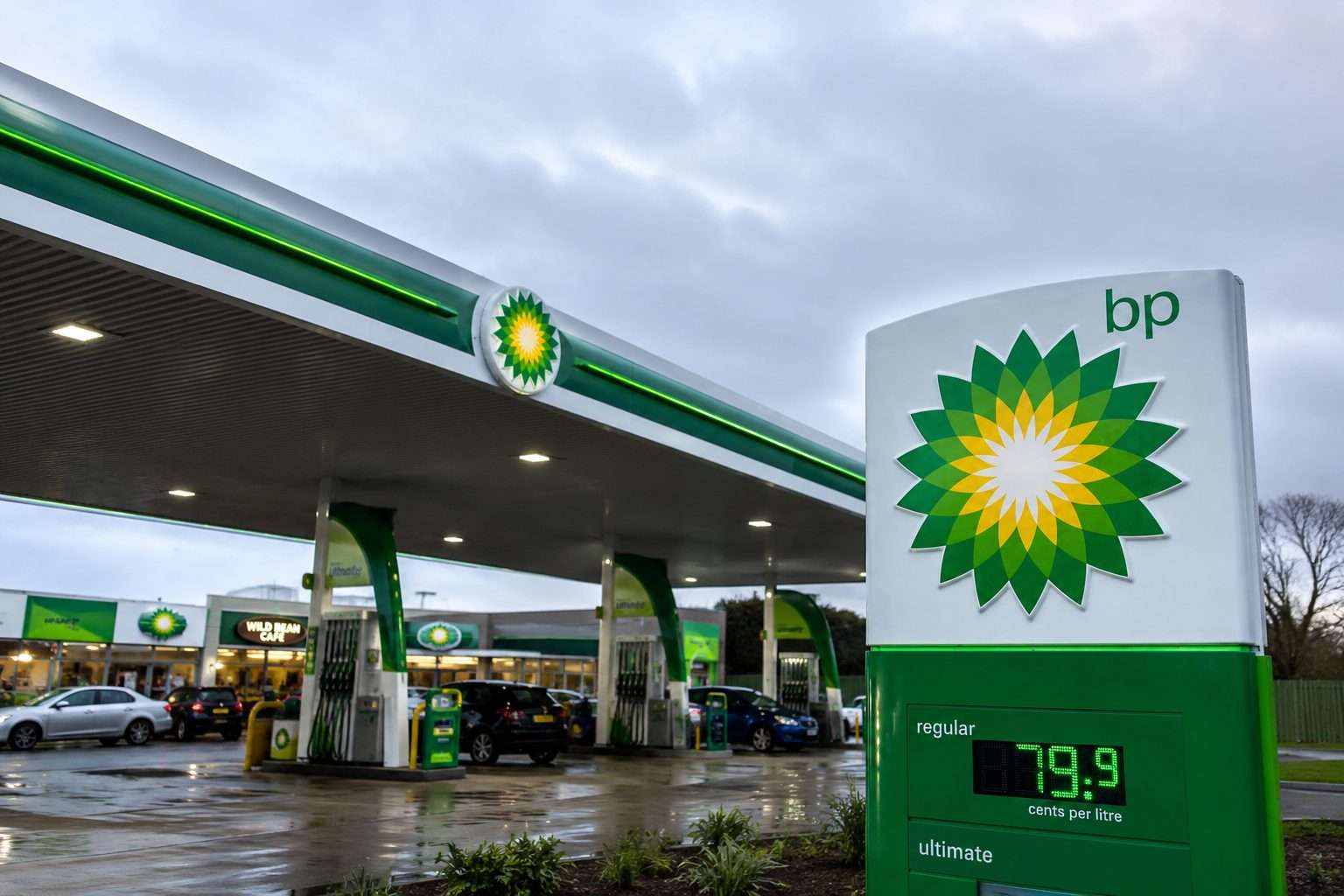
BP PLC has picked up a 40% stake in a production-sharing pact covering six exploration blocks in Uzbekistan’s North Ustyurt region, marking another step as the British oil major leans again into conventional energy. Under the PSA, investors like BP shoulder the exploration costs and split any resulting production with the government.
Timing is key. BP is under pressure to show that Meg O’Neill—its chief executive—can boost returns and reassure investors after a stretch of shifting strategies. O’Neill has informed employees that a shake-up dividing BP into upstream and downstream arms kicks off in June, a nod to the company’s pre-2020 structure, before the renewables pivot.
Oil’s giving the sector some support at the moment. Brent crude traded close to $108 a barrel on Wednesday, with investors eyeing a shaky Middle East ceasefire and uncertainty surrounding the Strait of Hormuz. The sector remains fixed on new supply, cash generation, and trimming debt.
BP acquired 20% stakes from both SOCAR, Azerbaijan’s state oil firm, and Uzbekneftegaz, Uzbekistan’s national oil company—taking its holding to 40%. SOCAR and Uzbekneftegaz now each keep 30%, with SOCAR staying on as operator. The assets include the Boyterak, Terengquduq, Birqori, Kharoy, Qoraqalpoq, and Qulboy blocks; seismic surveys are ongoing during the initial phase. BP shares edged up 0.5% to 550.50 pence during Wednesday morning trade in London.
BP’s Gio Cristofoli, who oversees the region covering Azerbaijan, Georgia, and Türkiye, pointed to “significant resource potential” in Uzbekistan. For Energy Minister Jurabek Mirzamahmudov, this was “not merely a commercial agreement.” SOCAR’s Rovshan Najaf, meanwhile, framed the move as a step toward deepening energy links between Azerbaijan and Uzbekistan. AJ Bell
BP is breaking into Uzbekistan’s upstream sector for the first time, securing a position in the Central Asian gas market where state officials in Tashkent are actively looking for foreign investment amid climbing domestic demand and aging production sites. The parties inked the agreement this day in Tashkent, lining it up with the Oil and Gas of Uzbekistan Conference 2026.
The stock’s been finding favor: BP has seen its bullish analyst calls double in the last year, Bloomberg said Monday. RBC Capital Markets just upgraded to outperform, joining the crowd as BP shares climbed 24% in 2026.
BP’s got another shot at trimming debt, thanks to stronger commodity prices, according to RBC’s Biraj Borkhataria and team, who left their 700p price target untouched. Still, they caution against jumping too quickly into capital returns before sorting out the balance sheet. “Best not to get FOMO,” Borkhataria wrote. Investing
BP posted $3.2 billion in first-quarter underlying replacement-cost profit—this strips out inventory volatility and various one-offs—but net debt climbed to $25.3 billion. Capital expenditure guidance for 2026 stays at $13 billion to $13.5 billion. The company is sticking with its goal to reduce net debt to $14 billion-$18 billion by the end of 2027.
Uzbekistan joins the portfolio just as BP backs away from certain lower-carbon holdings. Only last week, BP announced plans to divest from two UK carbon capture projects—these involve storing captured carbon emissions deep underground. Equinor and TotalEnergies are staying on board with the Northern Endurance project. Shell left that venture in 2023.
Prediction markets were leaning more toward broader oil-price pressure than any direct BP play. On Kalshi, the Brent contracts pegged the odds of Brent crude topping $106.99 on May 29 at roughly 51%, and at 53% for prices over $104.99. Over on Polymarket’s crude page, the probability for crude futures reaching $105 by the end of June sat at 86%, with a 37% shot that WTI hits $105 this week. These are quick-moving retail venues, not the official oil benchmarks.
It’s still early days—this is exploration territory, not anything close to production. There’s no word yet on resource size, no spending blueprint, and no timeline for development. Oil’s pullback could sap enthusiasm for these kinds of wildcat projects. The U.S. Energy Information Administration sees Brent averaging around $106 in May and June, dropping to $89 by the fourth quarter. But a longer shutdown at Hormuz could tack on another $20 a barrel, at least for now.
BP’s Uzbekistan transaction doesn’t move the needle financially, but it sends a signal. The oil major is lining up new upstream projects, trimming certain low-carbon bets, and making the case to investors that it’s able to streamline without losing momentum.