
New York, June 2, 2026, 17:07 EDT
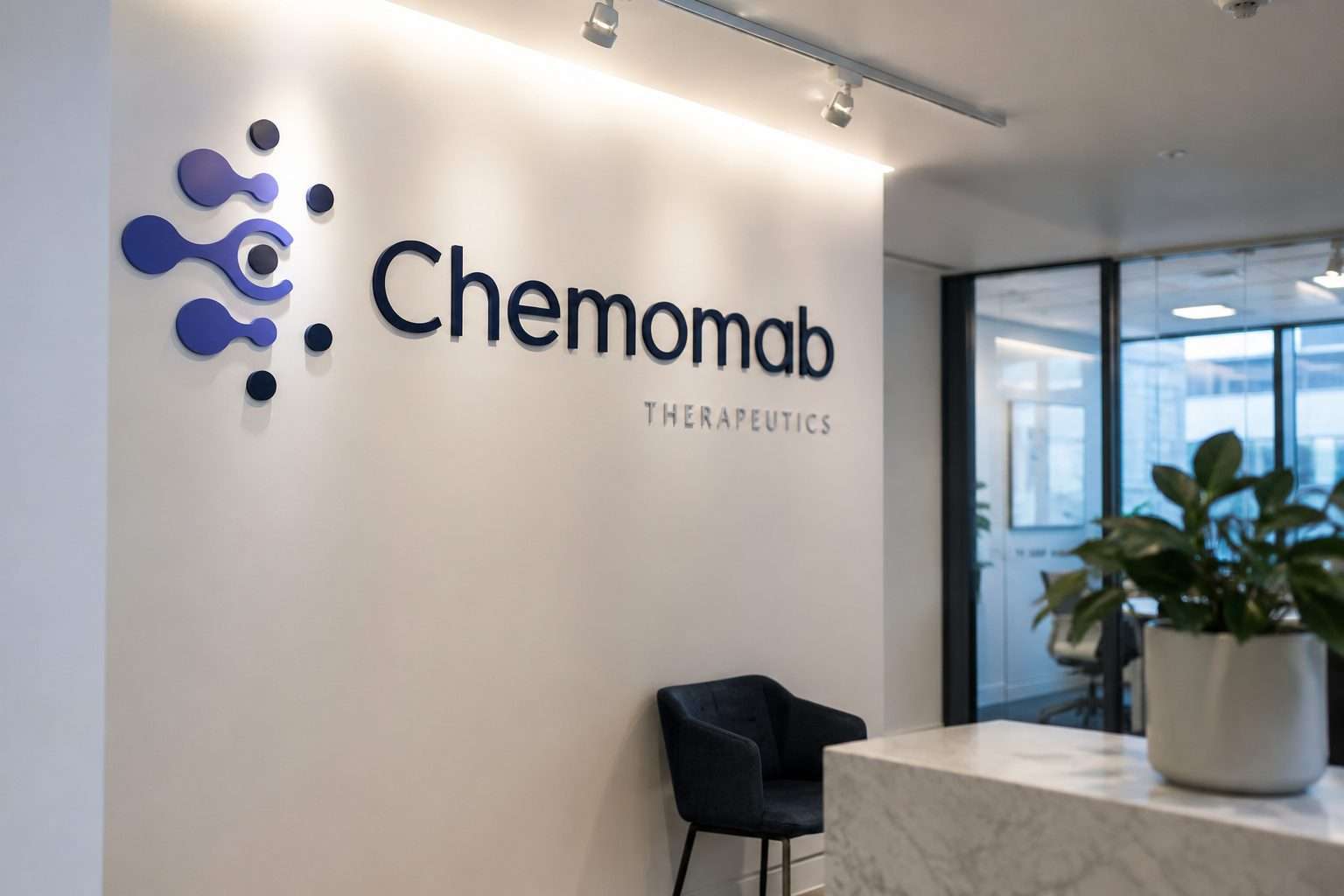
Chemomab Therapeutics’ American depositary shares on Nasdaq were last down 6.5% at $1.74 Tuesday. The move trailed a down biotech sector, after a June 2 regulatory filing showed board and committee changes at the Israeli drug developer. Shares opened at $1.95, hitting a low of $1.74. An ADS is a U.S. receipt for foreign shares.
Chemomab is working to push nebokitug, its top antibody, into possible late-stage testing for primary sclerosing cholangitis, or PSC. With the stock thin and cash limited, who’s on the board and the status of any partner talks can be nearly as important as what the shares do each day.
Chemomab has put Gwen Melincoff on the board as an independent Class I director and chair of its nominating and governance committee. That brings the board count to five. According to a filing, Claude Nicaise and Jill Quigley both resigned from the board and audit committee on May 29. The company said there were no disagreements involved. Neil Cohen and Nissim Darvish took their places on the audit committee, with Cohen named chair.
There was also insider buying. A Form 4 filed June 1 showed CEO Adi Mor George bought 9,804 ADSs at $2.05 to $2.08 each on May 29, spending about $20,246. Insider buying sometimes helps sentiment, but it doesn’t prove anything about clinical or financing risk.
Chemomab shares fell harder than peers as biotech stocks slumped. The SPDR S&P Biotech ETF gave up 4.4% and the iShares Nasdaq Biotechnology ETF was down 3.0%, weighing on the sector. Small biotech names like Chemomab often sell off more when investors step away from risk.
Chemomab’s last update on May 14 showed cash, cash equivalents and short-term bank deposits at $8.0 million as of March 31, down from $10.4 million at the end of last year. Management said this liquidity should keep funding operations through the first quarter of 2027. Net loss shrank to $1.8 million from $3.3 million a year ago, with research and development costs lower as Phase 2 work wound down. Mor said “productive discussions with potential strategic partners” had taken place. The company also put out new analyses from the nebokitug program. GlobeNewswire
Chemomab says Nebokitug works by targeting CCL24, a protein tied to inflammation and fibrosis. PSC, a chronic liver condition, scars and narrows bile ducts. Right now, the U.S. National Institute of Diabetes and Digestive and Kidney Diseases says doctors do not have a cure for PSC or a way to keep it from getting worse.
The space is getting crowded. Mirum Pharmaceuticals said May 30 that new Phase 2b VISTAS data for volixibat showed fast and lasting drops in pruritus in PSC. Mirum plans to file a U.S. New Drug Application in the second half of 2026. Pliant Therapeutics has tested bexotegrast, an oral integrin inhibitor, in PSC as well. It’s a different approach but gives investors another liver fibrosis comp to watch.
Chemomab’s bear case is unchanged. The company needs a partner or new funding to take the Phase 3 forward, but there’s no guarantee its earlier clinical results will carry over to a bigger study. If there’s a holdup in finding a partner, if regulators ask for extra data, or if biotech markets stay weak, CMMB holders could see more dilution and sharper swings.
The new board’s first challenge will be more than getting investors comfortable. Chemomab needs to turn nebokitug’s science into a funded late-stage plan. If that doesn’t happen, the cash situation will take over the story.