
Wuhu, China, May 8, 2026, 22:09 (CST)
Chery is sticking by its fast-paced multi-brand rollout in Australia, arguing that launching six Chery-operated SUV brands is about giving buyers more tailored options—not sowing confusion—as the Chinese carmaker steps up its export push.
Timing is everything. Chery moved 251,386 vehicles in April, a 25.2% jump from the same month last year. Exports more than doubled, hitting 177,573 units — the highest single-month tally ever recorded by a Chinese carmaker, according to Gasgoo. New energy vehicles, including battery-electric, plug-in hybrid, and fuel-cell models, surged 63.8% to 100,276 units.
That shifts the focus toward brand architecture over simply rolling out new products. Chery, aiming to build on its rapid export expansion, is now working to generate steady overseas demand. The move comes as Chinese carmakers are increasingly designing vehicles tailored for international markets, not just rebranding domestic models for export. This week, Reuters reported that companies including BYD, Chery, Changan, and SAIC’s MG are developing models with exports in mind as heightened competition and tighter margins squeeze the Chinese market.
Chery currently operates its Chery, Omoda, and Jaecoo brands in Australia, and plans to add Lepas before the year wraps up. Looking further out, iCaur and Freelander arrivals are slated for 2027. Jetour, another name under the global Chery umbrella, is tipped to launch here as a separate operation. Across all six Chery-run marques, the focus is on SUVs, each offering some version of hybrid or electric drive. Design differences and pricing carve out their individual identities.
Speaking to Australian and New Zealand reporters at Chery’s headquarters in China, Chery International President Zhang Guibing said the strategy is tailored for a market that’s moved past the days when Toyota or Volkswagen dominated with just a few best-sellers. “We are trying to use different sub-brands to cover specific customer groups,” Zhang said. He made it clear Chery isn’t interested in “mixing together” buyers with varying preferences. CarAdvice
Chery’s brand lineup breaks down pretty clearly. The main Chery badge stays at the affordable end, while Jaecoo targets outdoor types. Omoda goes for buyers after a sportier look, and Lepas will chase the “elegant” segment further upmarket. Then there’s Freelander, a name Chery brings back via its joint venture with Jaguar Land Rover. iCaur, for its part, sticks to boxy EVs and range-extender SUVs—the latter using a petrol engine mainly to juice up the battery. CarAdvice
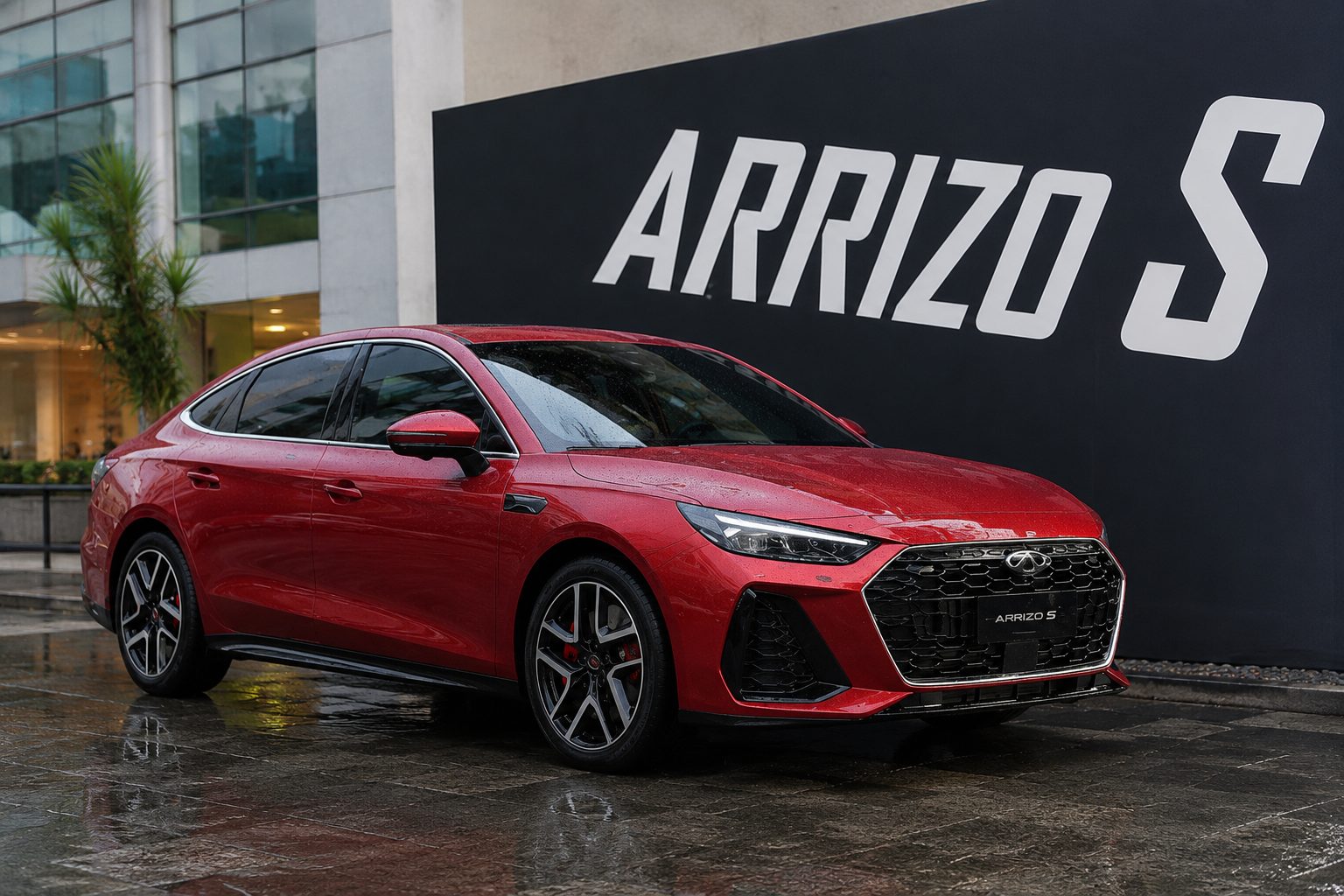
Forget SUVs for a moment—the freshest product signal from Chery is the Arrizo S, a fastback sedan concept that broke cover at the Beijing Auto Show. Slated to sit above the existing Arrizo lineup, it’s packing a 2.0-litre turbo engine good for 192 kW and 400 Nm. Launch isn’t expected until November 2026, according to CarNewsChina, and when it arrives, the model will roll out with Chery’s Falcon driver-assistance system onboard, handling city, highway, and parking duties.
The Arrizo S hasn’t escaped attention for styling that brings Audi immediately to mind. As Carscoops pointed out, the concept pulls from the RS6, A5, and A7—those influences aren’t subtle. The outlet also noted a production model should land later this year, packing a turbocharged 2.0-litre engine. It’s not the neatest comparison, but the reference underlines what Chery is still relying on: catch the eye fast, not just with price.
Paul Tan’s Automotive News flagged the sedan as a possible candidate for Malaysia, but not any time soon. If it happens, it would follow Chery’s Q compact electric hatch and the Himla pickup. It’s a detail, but telling—Chery’s strategy revolves around plugging lineup holes with sedans, pickups, EVs, and SUVs, then parsing out which vehicles fit which markets.
Chery is aiming even higher. During its 2026 international brand summit in Wuhu, the company committed to rolling out 13 significant new models over 2026 and 2027, spanning gasoline, mild hybrid, hybrid, and pure electric powertrains—SUVs, sedans, pickups all in the mix. “Numbers are cold, but trust is warm,” Chery brand CEO Jeff Zhang remarked at the summit. Chery International
Rivals aren’t all steering the same course. GAC, the Chinese automaker making moves in Australia, is sticking with just a single brand in the market. “More choice, [makes it] more difficult to choose. So we keep one brand, one GAC,” Kevin Shu, who heads the local operation, told CarExpert. That’s the opposite of Chery’s multi-badge approach. CarExpert
Manufacturing plays a part here, too. As Reuters noted on May 6, EBRO—Chery’s joint venture in Spain—plans to kick off Chery output at Barcelona’s old Nissan facility either at the end of this year or in the first months of 2027. Rafael Ruiz, EBRO’s chairman, made it clear: a Chery EV will “definitely” roll out from that site, giving the automaker a way around EU tariffs on China-built electric cars, which can reach 35.3%. Reuters
Risk of overlap is real here. Zhang admitted Chery can’t claim the brands are conflict-free, and the Arrizo S adds another wrinkle—its design similarity might help the car seem approachable, but it also leaves the door open to copycat claims well before pricing, launch markets, or specs are finalized. Chery’s challenge: differentiate each badge enough so buyers aren’t just seeing the same car in a different outfit.
Right now, the company is wagering that the traditional mass-market playbook doesn’t have the same punch. The real challenge starts after those launches, when dealers are faced with introducing Chery, Omoda, Jaecoo, Lepas, iCaur and Freelander—ideally, without making the showroom feel like a crash course in branding.