
Sydney, June 22, 2026, 07:04 AEST
- Coles closed Friday at A$23.66, up 1.2%, while the S&P/ASX 200 fell 0.9% to 8,828.70.
- Australia’s May inflation report is due Wednesday after the Reserve Bank held its cash rate at 4.35% last week.
- New supermarket excessive-pricing rules take effect on July 1, with substantial penalties possible for breaches.
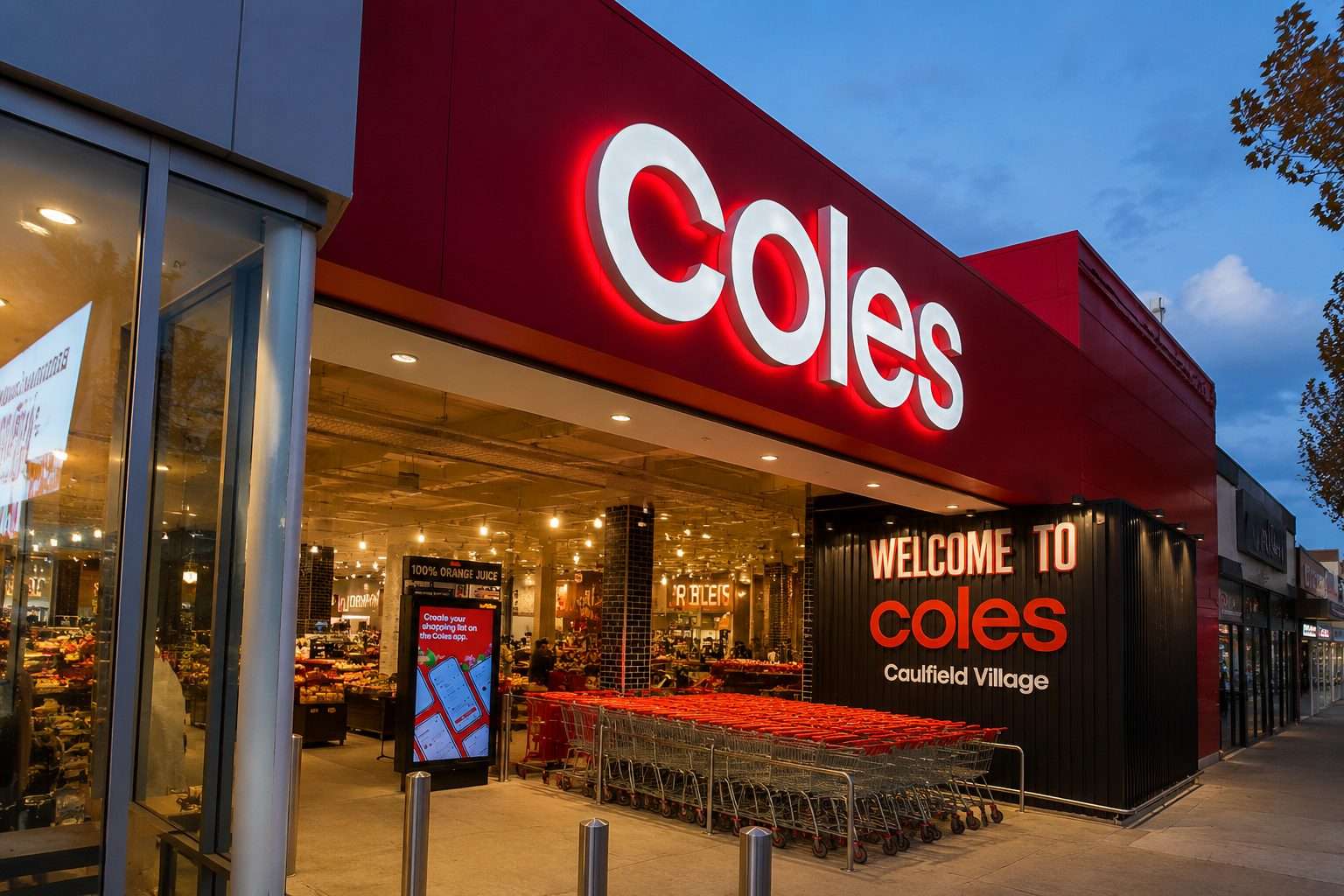
Coles Group shares enter Monday’s pre-open after a defensive late-week rebound. The stock finished Friday at A$23.66, near the top of its A$23.25–A$23.70 range, with normal ASX trading due to begin just before 10 a.m. Sydney time.
The gain was not driven by a fresh earnings release. Consumer staples rose 1.27% on Friday and rival Woolworths added 0.52%, suggesting investors shifted toward defensive shares — companies whose demand tends to hold up when economic growth slows.
The full week was less flattering. Coles lost 1.46% over five sessions, even as the ASX 200 gained 0.3%, so Friday’s advance repaired only part of an earlier retreat rather than establishing a fresh breakout.
Wednesday’s inflation release is the immediate test. Annual consumer-price growth eased to 4.2% in April, although trimmed-mean inflation — which removes unusually large price swings — rose to 3.4%. Reserve Bank Governor Michele Bullock said rates had already increased by 75 basis points, or 0.75 percentage point, this year before the board paused at 4.35% last week.
A stronger-than-expected May reading could revive expectations of another rate rise, putting more pressure on household budgets. Coles may still benefit from consumers eating at home rather than dining out, but persistent inflation also raises wages, freight and supplier costs.
The regulatory clock is also running. From July 1, supermarkets earning more than A$30 billion annually will face restrictions on excessive pricing. For Coles, the issue is not only enforcement risk; management must decide how much supplier inflation it can absorb while keeping promotions competitive and protecting margins.
The operating backdrop remains mixed. Coles’ third-quarter supermarket revenue rose 4.0% to A$9.78 billion and online sales jumped 24.8%, while liquor revenue fell 3.9%. The company also reported more supplier price-increase requests and higher fuel, freight and packaging costs. Chief Executive Leah Weckert said “value and availability will be important” in the months ahead.
The latest company-linked development was operational rather than financial. Victorian retail threats and harassment rose 10.1% in the year through March, while 4,823 assault-related offences were recorded at retail locations. Coles state general manager Chris McKellar said the chain had invested in security guards, safety technology and training, but “retailers cannot solve this issue alone.” Australian Retail Council
Risks remain. First-half Liquor earnings before interest and tax fell 37.3%, while wage, energy and technology inflation lifted supermarket operating costs. Hot inflation, weak liquor demand or difficulty passing through supplier increases could squeeze earnings; softer price growth and continued online momentum would provide the counterweight.
Coles’ investor calendar lists August 25 as its next scheduled reporting date. That leaves inflation, interest-rate expectations and preparations for the July pricing rules as the likely drivers this week. Friday’s gain looked more like defensive positioning than a new valuation reset.