NEW YORK, March 27, 2026, 16:37 EDT
U.S. stocks sank again on Friday, pushing the Dow Jones Industrial Average into correction and leaving all three main Wall Street indexes at their lowest closes in more than six months as investors braced for a longer, costlier Iran war. Preliminary data showed the S&P 500 fell 1.7% to 6,366.96, the Nasdaq dropped 2.1% to 20,949.24 and the Dow slid 1.75% to 45,156.51. 1
Why this matters now is that the selloff is no longer just a one-day reaction to war headlines. A correction means a drop of at least 10% from a recent high, and with the Nasdaq crossing that line on Thursday and the Dow following on Friday, traders have moved from expecting Fed rate cuts before the conflict to pricing no easing this year, even as U.S. consumer sentiment sinks. 2
President Donald Trump tried to calm markets by extending by 10 days his deadline for Iran to reopen the Strait of Hormuz and saying talks were going “very well.” He earlier said Iran had let 10 oil tankers pass through the waterway as a goodwill gesture, but investors were not persuaded. “Words alone aren’t cutting it right now,” Matt Britzman, senior equity analyst at Hargreaves Lansdown, said. 3
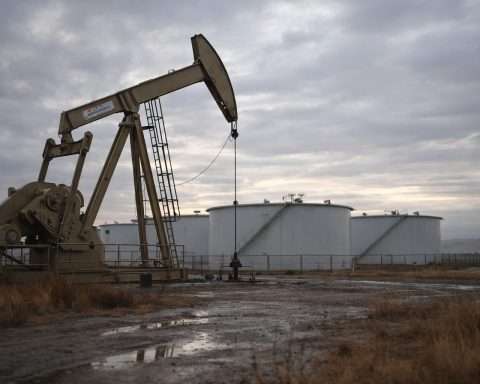
Oil kept driving the tape. Brent crude settled at $112.57 a barrel and U.S. West Texas Intermediate at $99.64, leaving Brent up 53% and WTI up 45% since the fighting began in late February. The Strait of Hormuz carries about a fifth of global oil and gas supply, and StoneX analyst Alex Hodes said investors were focused on “the war’s longevity rather than headlines.” 4
The damage was broad, but big tech and other growth names took the hardest blows. Nvidia fell about 2% and Amazon dropped roughly 4%, while Goldman Sachs was the heaviest drag on the Dow; a day earlier, energy had been one of the few S&P sectors to hold up as communications and tech led the retreat. 1
Traditional safe havens have offered patchy cover. Treasury prices fell as yields rose, the yen and Swiss franc did not provide the usual protection, and gold swung sharply across the week, leaving investors crowding back into the dollar instead. “There are very few risk-off assets,” Rajeev De Mello, chief investment officer at GAMA Asset Management, said. 5
Fed officials are now speaking more openly about the inflation risk. Governor Lisa Cook said the balance of risks had shifted “more toward inflation,” adding that the war was pushing the economy further from the central bank’s 2% target; markets are now pricing roughly a 25% chance of a Fed rate hike by October, according to CME’s FedWatch tool. 6
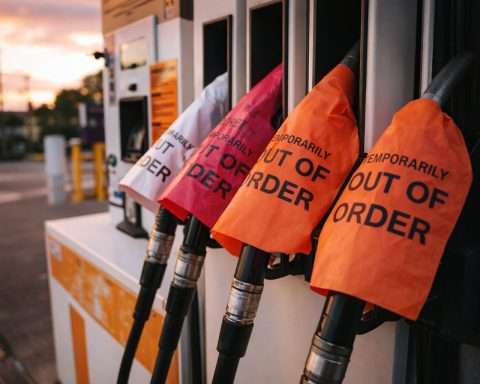
That pressure is starting to show up outside markets. The University of Michigan’s consumer sentiment index fell to 53.3 in March from 56.6 in February, while one-year inflation expectations climbed to 3.8% from 3.4% and average U.S. gasoline prices reached $3.98 a gallon. Gus Faucher, chief economist at PNC Financial, warned that if the conflict drags on and fuel costs climb further, consumers could start to pull back. 7
The broader backdrop has worsened fast. Reuters reported on Thursday that the OECD had warned the conflict had knocked the global economy off a stronger growth path, and by Friday economists and businesses were increasingly saying the disruption to oil flows was starting to feed into inflation and sap confidence. 3
The main risk now is simple: oil may still be underpricing a prolonged conflict. Reuters polling of analysts found prices could stay elevated under several scenarios and could climb to $200 a barrel if Iranian export facilities are hit or the war runs into late June; Macquarie said prices would fall quickly if the war winds down soon, but not back to pre-conflict levels. 4
For now, Wall Street is trading crude, not diplomacy. Peter Cardillo, chief market economist at Spartan Capital Securities, said the market was being driven by oil prices, and until there is visible progress in talks or a real reopening of Hormuz, that is unlikely to change. 2