
VALENCIA, Spain, May 7, 2026, 23:09 (CEST)
Geely, the Chinese carmaker, has struck a deal to acquire Ford Motor’s idle Body 3 assembly hall at the Almussafes facility near Valencia, according to La Tribuna de Automoción. The purchase hands Geely a European production foothold right inside one of Ford’s key Spanish locations. The Spanish trade outlet noted that the move allows Geely to operate vehicle manufacturing on its own, separate from Ford’s active lines.
Timing matters here. Ford’s Valencia plant, mostly pumping out the Kuga SUV, is running well below its design—just 98,500 vehicles rolled out last year, a plunge of almost 18%, and nowhere near its 400,000 annual capacity, Yicai reported. Chinese automakers, including Geely, would rather build in Europe than pay tariffs shipping cars over. Yicai also quoted Cui Dongshu, secretary-general at the China Passenger Car Association, who pointed to China’s overseas auto expansion as a sign of its manufacturing strength as the industry pivots to new-energy vehicles—China’s label for electric, plug-in hybrid and similar drivetrains.
The EU’s new countervailing duties are now out in the open — and they’re not small. Geely faces an 18.8% tariff, BYD lands at 17.0%, and SAIC is hit hardest with a 35.3% rate. These five-year levies target battery-electric vehicles shipped in from China, aiming squarely at what Brussels says are unfair subsidies.
Ford hasn’t come out with any public confirmation of the report. According to Reuters, Geely didn’t reply to a request for comment. A Ford spokesperson labeled the report as speculation and offered no further remarks.
Body 3 isn’t just extra office real estate. According to Ford Authority, the now-idle hall used to handle production for the Mondeo, S-Max, and Galaxy. These days, Kuga assembly has shifted to different sections in the plant.
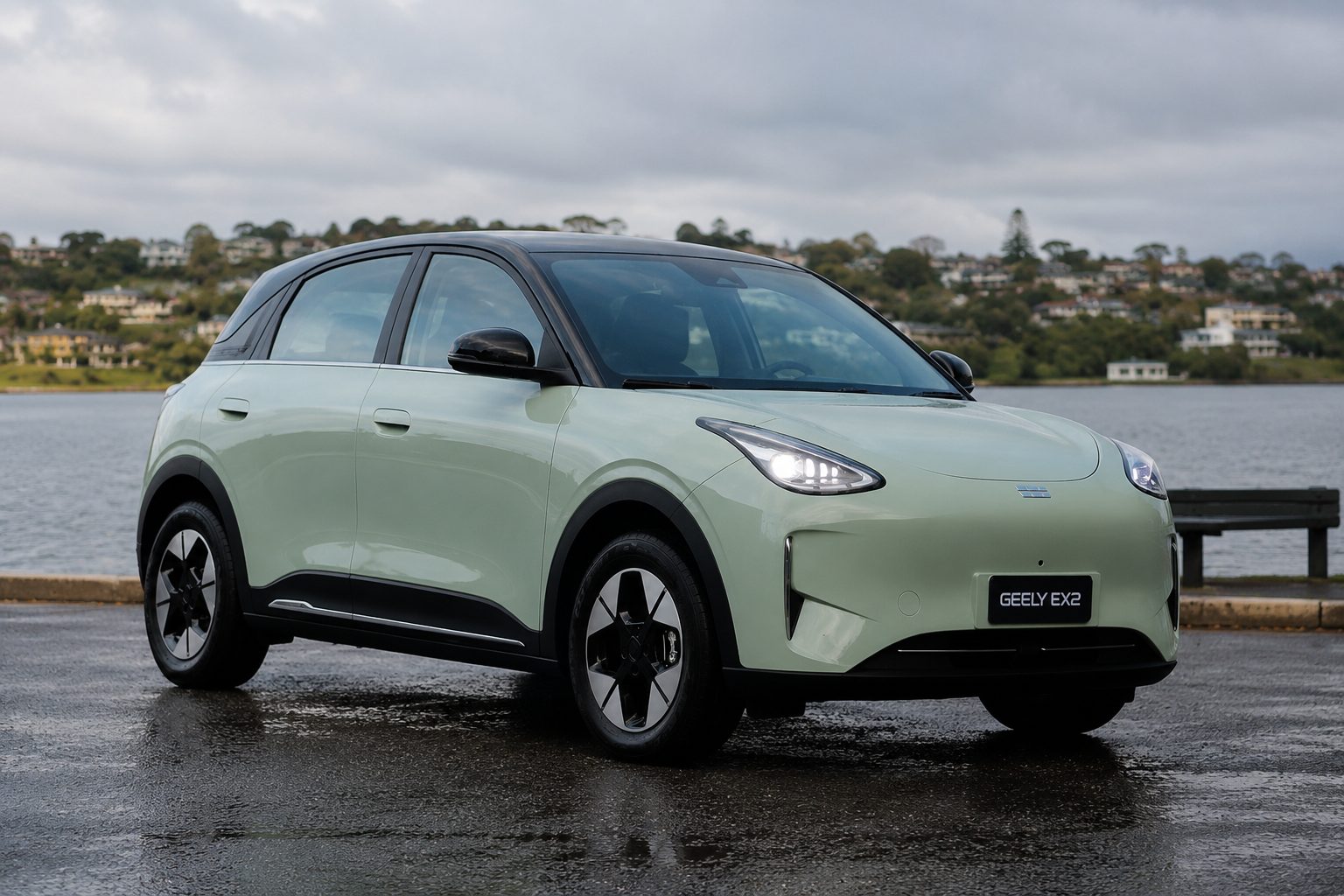
Geely is said to be working on a vehicle codenamed 135, using its Global Intelligent Electric Architecture platform—better known as GEA—which supports a range of powertrains and body types. According to CnEVPost, this model probably represents a locally adapted European take on the Geely EX2, also called Xingyuan. Ford, for its part, may end up with its own version, co-developed on the same tech.
Plug-in hybrids draw power from the grid and also run on an engine, whereas regular hybrids skip the plug entirely. That’s the reason you’ll hear the project labeled “multi-energy”—a single vehicle platform, but multiple powertrain options.
The discussions fall in line with Ford’s broader move to partner up across Europe. Back in February, Reuters said Ford and Geely were weighing options around factory space in Europe and possible tech collaboration, such as on automated driving. Ford CEO Jim Farley, for his part, described China’s advances in EV and connected-car tech as “the most humbling thing I have ever seen.” Reuters
Pressure has been mounting on Almussafes. According to La Tribuna, Ford’s timeline for its multi-energy model at the site has shifted, now aiming for early 2028 production instead of the original mid-2027 goal. Annual output projections have dropped as well—down to 183,000 units from the previously planned 300,000. The report also notes that more than 900 of the plant’s 4,000-plus workers are under the Spanish ERTE Red temporary-employment program each day.
The competition isn’t far off. According to Reuters, EBRO is looking to ramp up production at its Barcelona facility, targeting twice the current output. Chery—its Chinese JV partner—plans to kick off local manufacturing there either by the end of this year or early 2027.
SAIC, too, is being linked with Spain. According to Reuters, citing La Tribuna, the Chinese automaker has its eye on Ferrol in Galicia as a potential site for European manufacturing. Galician Premier Alfonso Rueda traveled to SAIC’s Zhengzhou offices back in April hoping to bring Chinese investment to the region.
The Ford-Geely venture still faces plenty of uncertainty. Ford’s spokesperson told Electrek the automaker has ongoing discussions with various companies and emphasized, “Nothing is finalized.” That leaves the timing, key details on ownership, supply contracts, and even the possibility of a Ford-branded vehicle based on a Geely platform all undecided. Electrek
Ford would be putting its unused capacity to work, plain and simple. Geely, on the other hand, gets to shortcut the European manufacturing learning curve—no need to break ground on a new plant. It’s also a marker: China’s EV ambitions are shifting, from just shipping cars out to locking in a more permanent industrial presence.