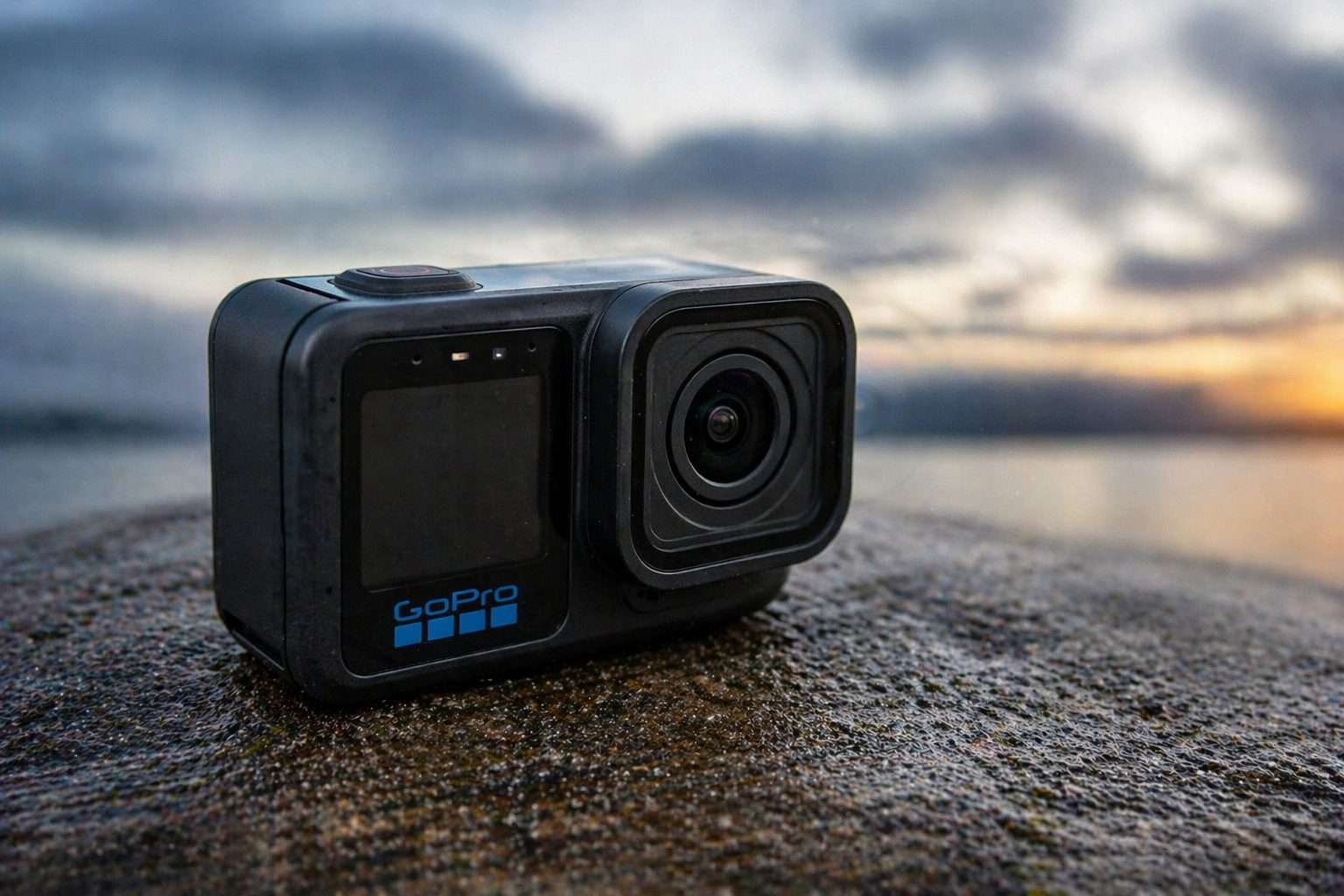

San Mateo, California, April 20, 2026, 10:34 PDT
GoPro set pricing for its Mission 1 camera lineup on Monday, starting at $599.99, or $499.99 for current annual GoPro subscribers. That move follows last week’s product debut, sharpening the focus on whether the company can extend its reach past the traditional consumer action camera market.
GoPro has set the Mission 1 Pro’s price tag at $699.99. The Mission 1 Pro ILS—this interchangeable-lens variant—is also slated for $699.99, with availability expected in the third quarter. According to GoPro, the Mission 1, Mission 1 Pro, and the Mission 1 Pro Grip Edition all debut on shelves May 28.
Timing is crucial here. GoPro is working to overhaul its lineup following a 19% slide in 2025 revenue, down to $652 million, and a 20% drop in camera sell-through, landing at roughly 2 million units. Investors had already heard that the company’s new GP3 image processor will start rolling out in cameras from the second quarter of 2026.
Trading was quiet out of the gate. GoPro traded at $1.28, barely budging, and about 4.8 million shares changed hands by midday.
GoPro’s Mission line features a 50-megapixel, 1-inch sensor and runs on the company’s GP3 processor—the chip responsible for image processing, battery management, and thermal control. The cameras are offered as Open Gate models, allowing users to take advantage of the entire 4:3 sensor area and later crop footage to wide, vertical, or square formats.
The base Mission 1 shoots 8K video at 30fps. Step up to the Mission 1 Pro and you get 8K at 60fps, plus upgraded slow-mo—think 4K up to 240fps. With the ILS version, GoPro ditches the fixed lens for a Micro Four Thirds mount, the standard for mirrorless camera glass, but you’ll have to supply your own lens.
GoPro founder and CEO Nicholas Woodman described the new line as “the pinnacle of performance” when it comes to affordable compact cinema cameras. The launch, according to Pablo Lema, GoPro’s senior vice president of product, shifts the brand squarely into the “premium end” of digital imaging. GoPro
That’s the sell. Actually choosing one? Not quite so clear-cut. Y.M.Cinema points out that under the hood, all three versions use the same sensor and processor. Really, it comes down to workflow: Mission 1 covers stills and general shoots, Pro is built for high frame rates, and ILS brings in lens control—suited for more controlled, cinema-style production.
At this price, GoPro is clearly targeting professional creators rather than hobbyists. The Verge pointed out that casual users have more affordable options: older Hero versions, DJI’s Osmo Action 6, or Insta360’s X5—all of which land well below GoPro’s sticker, even if they don’t deliver 8K or the same compact-cinema angle.
Demand’s the wildcard here. In its most recent annual filing, GoPro flagged a mix of hurdles: rolling out new products, keeping prices sharp, and fending off rivals, all while grappling with rising costs for memory, microprocessors, and semiconductors. Memory prices alone have soared up to 80%, the company said—that’s a margin squeeze, or maybe a price hike for customers.
Buyers looking at the $100 difference between Mission 1 and Mission 1 Pro are mostly paying for extra speed. But for GoPro, that price gap is more than just specs—it’s a measure of whether a company famous for tough, consumer-focused cameras can convince people to pay up for a pricier, pro-grade setup, and do it without alienating the core audience that built its reputation.