
SHENZHEN, China, April 14, 2026, 00:02 (China Standard Time).
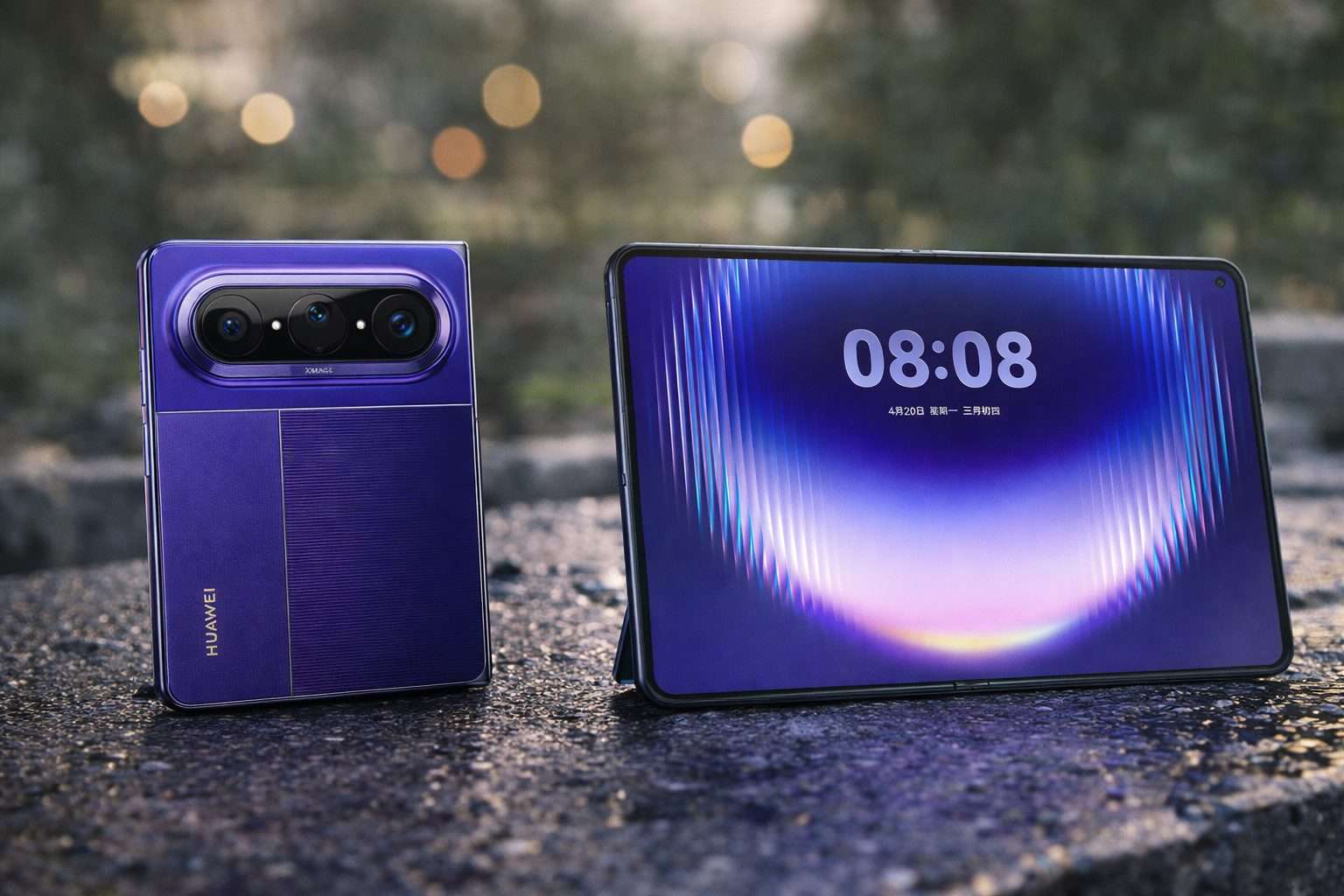
Huawei on Monday unveiled the Pura X Max, its latest wide-format foldable, set to launch in China on April 20—beating rival models anticipated from Apple and Samsung. Initial images from the company depict a compact, wide chassis and a rear housing three cameras.
The year 2026 is starting to look pivotal for foldables. Counterpoint, in a March note, projected 20% growth for the segment this year as Apple’s anticipated arrival heats up the race. Omdia, just last week, predicted that from 2026, foldables will shift mostly to a 14.2:10 aspect ratio — that’s the screen’s width compared to its height.
Huawei isn’t sharing the full figures yet. On VMall’s reservation page, buyers saw a 1,000 yuan deposit but no official price tag, and the initial product listing withheld complete specs.
Huawei is pushing further into larger-screen territory. The first Pura X, which launched in 2025, came as an extra-wide flip phone. Now, the Max looks more like a book-style foldable — a device that unfolds sideways, resembling a compact tablet. Company images show the Max being used both vertically and horizontally.
Huawei’s consumer business CTO Li Xiaolong told HuaweiCentral he’s spent three months with the handset and described it as “the best double fold I’ve ever used.” That’s according to remarks published Monday. Huawei Central
Apple is still the main benchmark here. Last week, The Verge pointed to dummy models of Apple’s unconfirmed foldable iPhone, which feature a wide body as well. Reuters, citing Nikkei on April 7, flagged engineering issues that could push back initial shipments by several months if things go wrong. But Bloomberg later indicated the launch was holding steady for September. Reuters hasn’t been able to independently verify any of these reports.
Samsung appears to be following suit, recent coverage suggests. Both 9to5Google and SamMobile report the company may introduce a Galaxy Z Fold Wide as soon as July 22, potentially letting Huawei gauge demand for a shorter, wider foldable before Samsung makes its move.
That design isn’t just aesthetic. Linda Sui at Smart Analytics Global argued on LinkedIn that broader formats fit “better aligned with human visual behavior” when it comes to multitasking, watching videos, or reading—compared to designs that squeeze people onto slimmer outer panels and stretched inner displays. LinkedIn
Still, Huawei’s early lead might not last. The company hasn’t revealed pricing yet, sales are currently limited to China, and rising memory prices are squeezing handset makers. Counterpoint analyst Shilpi Jain told Reuters that the latest drop in smartphone shipments was “primarily driven” by suppliers focusing on AI data centers instead of consumer electronics. VMall
Reuters noted in January that Samsung held close to two-thirds of the foldable smartphone market during the third quarter of 2025. That leaves Huawei making its push in a segment still dominated by a rival. Where things go from here will likely hinge more on price points, build quality, and the speed of any response from Apple or Samsung than on early promo shots.