
LONDON, July 4, 2026, 20:03 BST
- IAG closed at 477.50p on Friday, off 0.31%, with 5.48 million shares traded. That’s well under the usual 17.55 million average volume.
- The stock lost 1.1% last week. The FTSE 100 rose 1.6%. Global jet fuel dropped 2.1% to $116.63 a barrel.
- EasyJet’s takeover deadline hits on July 5, while IAG’s Q2 update is expected July 31. UK airline news may pick up then.
International Consolidated Airlines Group SA (LON:IAG) dipped Friday, leaving the market looking to next week for signs if lower jet-fuel prices will keep shares near their June top. Investors wait to see how much of this year’s fuel costs the British Airways parent can push through.
IAG ended Friday at 477.50p, dropping 1.50p, or 0.31%. The stock started at 476.50p. Google Finance reported volume of 5.48 million shares, well under a 17.55 million average. On-book turnover via the London Stock Exchange was about 19.8 million pounds.
The stock ended 3.1% under the 52-week high of 492.90p from June 25, but it’s still up about 44% from the 52-week low of 332.70p. The difference stands out because Friday’s drop was thin on both size and volume, yet the stock still fell behind the FTSE 100 this week.
| Last week snapshot | Friday close / latest | Close-to-close week move | What mattered |
|---|---|---|---|
| IAG | 477.50p | -1.1% | Friday was a quiet day, but shares are still trading close to the 52-week high. |
| FTSE 100 | 10,679.03 | +1.6% | The FTSE booked a weekly gain as financials and miners rallied. |
| EasyJet (LON:EZJ) | Friday saw a 545p low, Reuters said | Nearly -7% | Castlelake now faces a July 5 bid-or-walk deadline. |
Jet fuel costs are the clearer signal for IAG than the share price headline. The International Air Transport Association said average global jet fuel fell 2.1% last week to $116.63 a barrel, using Platts data. That brings some relief, though IAG’s warning from May is still in place.
IAG, in its Q1 report, said its 2026 fuel bill is set to be around 9.0 billion euros using the May 5 fuel curve. The company is 70% hedged for the rest of the year. IAG expects to offset about 60% of the extra fuel costs by raising revenue and cutting costs. The group also lowered its expected capacity growth to roughly 1% for Q2 and about 2% for Q3.
IAG’s fuel bill doesn’t move in real time. The company said around 60% of its fuel use is locked in earlier contracts, before the month starts. About 40% is priced in the same month. Spot price drops don’t show up right away—they filter through with a delay.
IAG CEO Luis Gallego said in May the company’s transatlantic business “remains in place,” according to Reuters. That’s still the main support for IAG shares: British Airways and Iberia have more premium long-haul customers than short-haul airlines, which run into more pushback on fares. Reuters
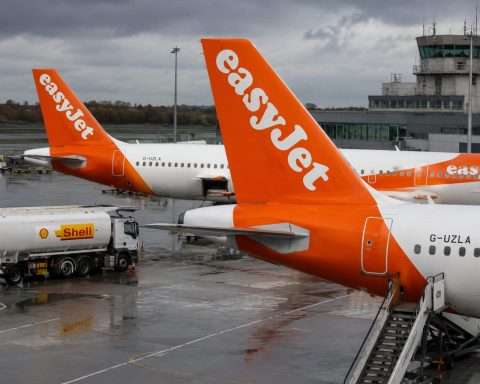
easyJet is facing near-term sector risk. Reuters said Friday that easyJet shares dropped almost 7% this week before Castlelake’s Sunday deadline. Barclays analyst Andrew Lobbenberg pointed to broker downgrades and some holders booking profits, calling it a “modest reduction” in the implied chance of a deal. Reuters
| Fuel and calendar checks | Latest stated figure | Investor question |
|---|---|---|
| Global jet fuel | $116.63/bbl, down 2.1% week on week | Will lower fuel stretch into autumn? |
| IAG 2026 fuel guide | About 9.0 billion euros | Should the July 31 update reduce the risk? |
| IAG hedge position | 70% hedged for rest of year | Does the hedge slow any gain from spot fuel dropping? |
| IAG cost recovery target | Around 60% of higher fuel cost | Are fares still sticking post summer? |
Looking at the week, all eyes in UK airlines are on Sunday’s easyJet deadline, which is the main sentiment driver for now. For IAG, the milestone to watch is further out. The company’s financial calendar puts its Q2 2026 event on July 31.