Sao Paulo, Feb 22, 2026, 03:49 (BRT) — The market has closed.
- Brazil’s Ibovespa closed out Friday at a record 190,534.42 points. Vale and the banks drove the late rally.
- The real ended the day at 5.1766 per dollar—its firmest close since May 2024—with traders reacting to changing U.S. tariff plans.
- Brazil watchers have current account figures due Feb 24, then IGP-M inflation lands Feb 26. B3’s earnings webcast rounds things out Feb 27.
Ibovespa kicks off the week perched above 190,000, notching its first-ever close past that mark at 190,534.42 on Friday, a 1.06% gain. According to B3, this marks the 12th time the index has set a nominal record close in 2026.
The timing dropped squarely into the ongoing shakeup around global trade. U.S. President Donald Trump announced Saturday he’ll bump the broad import tariff up to 15%, just one day after the Supreme Court invalidated his earlier tariff scheme.
The whipsaw is hitting Brazil right now, with the rally pressing on both the real and foreign investors chasing yield. The dollar settled Friday at 5.1766 reais, off 0.99%, marking its lowest close since May 28, 2024. The Ibovespa’s range was wide—moving from 186,700.34 up to a record 190,726.78, according to CNN Brasil. Traders eyeing Washington’s next step should watch for “higher FX volatility,” said André Valério, senior economist at Inter. CNN Brasil
Blue chips led the way, with Vale up 3.23%. The heavyweight banks followed suit: Itaú Unibanco advanced 1.40%, preferred shares of Bradesco jumped 2.02%, and Banco do Brasil tacked on around 2%, according to market data.
Trade policy isn’t just making headlines—there’s real movement. Brazil’s Vice President Geraldo Alckmin said the Supreme Court’s decision scrapped tariffs that specifically targeted Brazil, including the 40% surcharge slapped on in August. That, he argued, “restored competitiveness” for Brazilian goods in the U.S. market. “Brazil had an additional 40% tariff that no one else had,” Alckmin said. Reuters
Domestic rates remain a drag in the backdrop. Brazil’s central bank reported its IBC-Br activity index, a GDP stand-in, climbed 2.5% in 2025—slower than the previous year, as agriculture helped mask a wider economic loss of steam. December numbers slipped a bit. “Activity ended 2025 on a soft note, reinforcing the case for easing ahead,” Pantheon Macroeconomics’ Andres Abadia said, with policymakers eyeing a possible start to rate cuts from March after keeping the Selic benchmark at 15%. Reuters
This week brings a slew of key data that could jolt Brazilian rates and the real. Tuesday kicks off with January current account and foreign direct investment numbers. Wednesday follows with bank lending stats, while Thursday delivers the IGP-M inflation print—a wholesale-price index that frequently sets the pace for rent and contract revisions. Rounding out the string, investors will get gross debt-to-GDP and nominal budget balance figures on Friday.
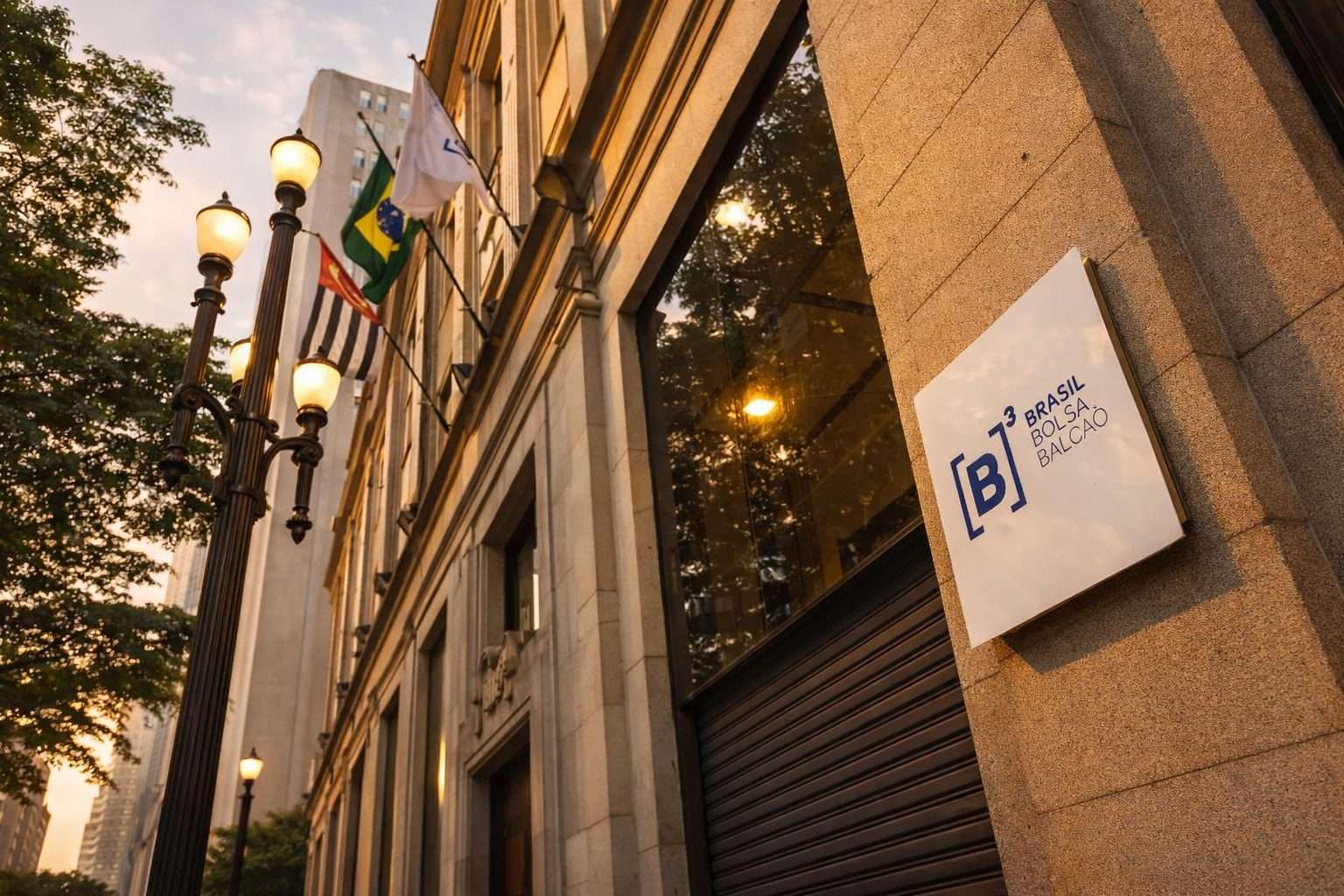
Investors aren’t ignoring the exchange, either. According to B3’s investor relations site, the company plans its fourth-quarter English conference call for Feb. 27 at 10:00 a.m. BRT.
Commodities have a way of jolting the index in a hurry. Brent crude finished Friday at $71.76 a barrel, chalking up a weekly rise north of 5% as markets weighed U.S.-Iran tensions and supply jitters near the Strait of Hormuz, according to Reuters.
That trickles into Petrobras, a major Ibovespa player that tends to shadow oil moves, even on slow news days for the company. Investors are also keeping an eye on Petrobras after exploration chief Sylvia Anjos described Venezuela as a market with “great potential” but didn’t shy away from highlighting the risks. She pointed to possible reputational fallout linked to pollution at Lake Maracaibo. Reuters
But there’s a catch for bulls: clarity on policy beyond Brazil is shaky. Should Washington secure a lasting legal route to wider tariffs — or if markets begin factoring in a rockier outcome than the current 150-day window — exporters and the real could lose their gains in a hurry. That kind of sharper currency shift would put pressure on the trade that’s recently favored domestic stocks.