
Shenzhen, China — April 10, 2026, 02:10 CST.
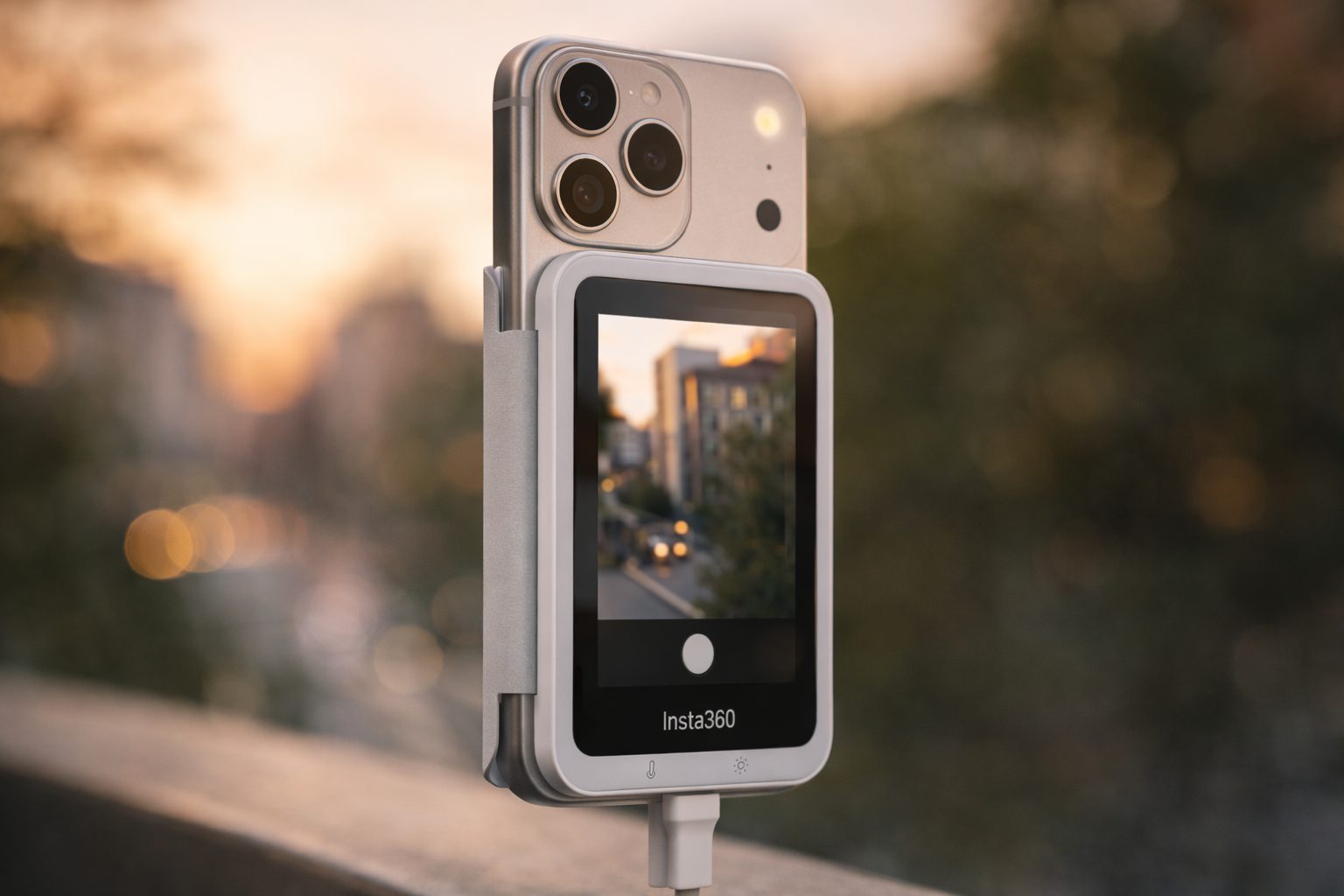
Insta360 kicked off worldwide sales for its Snap Selfie Screen, a magnetic phone accessory meant to help users take selfies and quick video clips using their phone’s rear camera rather than the front. The Shenzhen tech company is selling the gadget now on Amazon and through its own website, offering two models at $79.99 and $89.99.
Insta360’s latest launch signals a bigger bet on phone accessories, aiming at creators hungry for sharper visuals but reluctant to spring for a standalone camera. Rear-facing cameras usually have the edge in sensors and optics compared to selfie cams, though they sacrifice live preview—Snap is Insta360’s answer, filling that hole and expanding its creator-focused lineup.
JK Liu, the founder, put it plainly: “your phone’s best camera is on the back, but you can’t see yourself while using it.” Snap, he said, goes after creators and vloggers hungry for sharper, more flattering self-shot videos—no need to change up their routines. Insta360
The device features a 3.5-inch touchscreen that attaches directly to a phone’s back, mirroring the main display through a wired USB-C link—no need for Bluetooth or Wi-Fi pairing here. Go for the higher-end model and you’re getting a built-in light, made in collaboration with AMIRO, offering three color modes and five brightness settings. Both units support native as well as third-party camera apps.
Insta360 says the accessory is compatible with iPhone 15 and newer, along with Android devices that have USB-C video output—specifically, DisplayPort Alt Mode, which enables video output to external screens. After launching exclusively in Asia last week, the product is now rolling out more broadly, with PetaPixel noting support for major brands including Apple, Samsung, and Google.
That also lands Insta360 in the mix with a handful of smaller players tackling the same shortcoming in phone cameras. PetaPixel and The Verge both flagged Dockcase’s Selfix—a case for the iPhone 17 Pro with its own display built in. The Verge, though, noted Snap’s case-free approach, which lets users pair with more devices and see the entire screen instead of just a portion.
Still, there are compromises. Testing the iPhone 16 Pro for a week, The Verge pointed out that users have to switch on touch input in accessibility settings. Snap doesn’t have its own battery—it draws power straight from the phone, Insta360 told the outlet, and that can slice battery life by 15% to 20% for nonstop use. PetaPixel mentioned the accessory blocks the USB-C port and covers the wireless-charging spot. The Verge also ran into stray taps on the screen, even with the folding cover shut.
Insta360, a name usually tied to action cams and 360-degree gear, is gambling on Snap to carve out more phone-centric hardware. The device’s easy plug-and-play approach and price tag under $100 could attract some buyers, though there’s still the hurdle—convincing people to lug around extra kit just for sharper selfies.