DUBAI, April 8, 2026, 17:03 (GST)
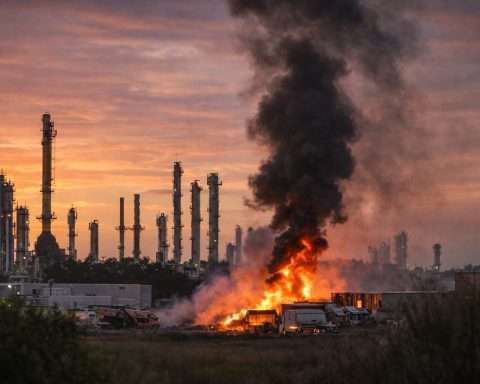
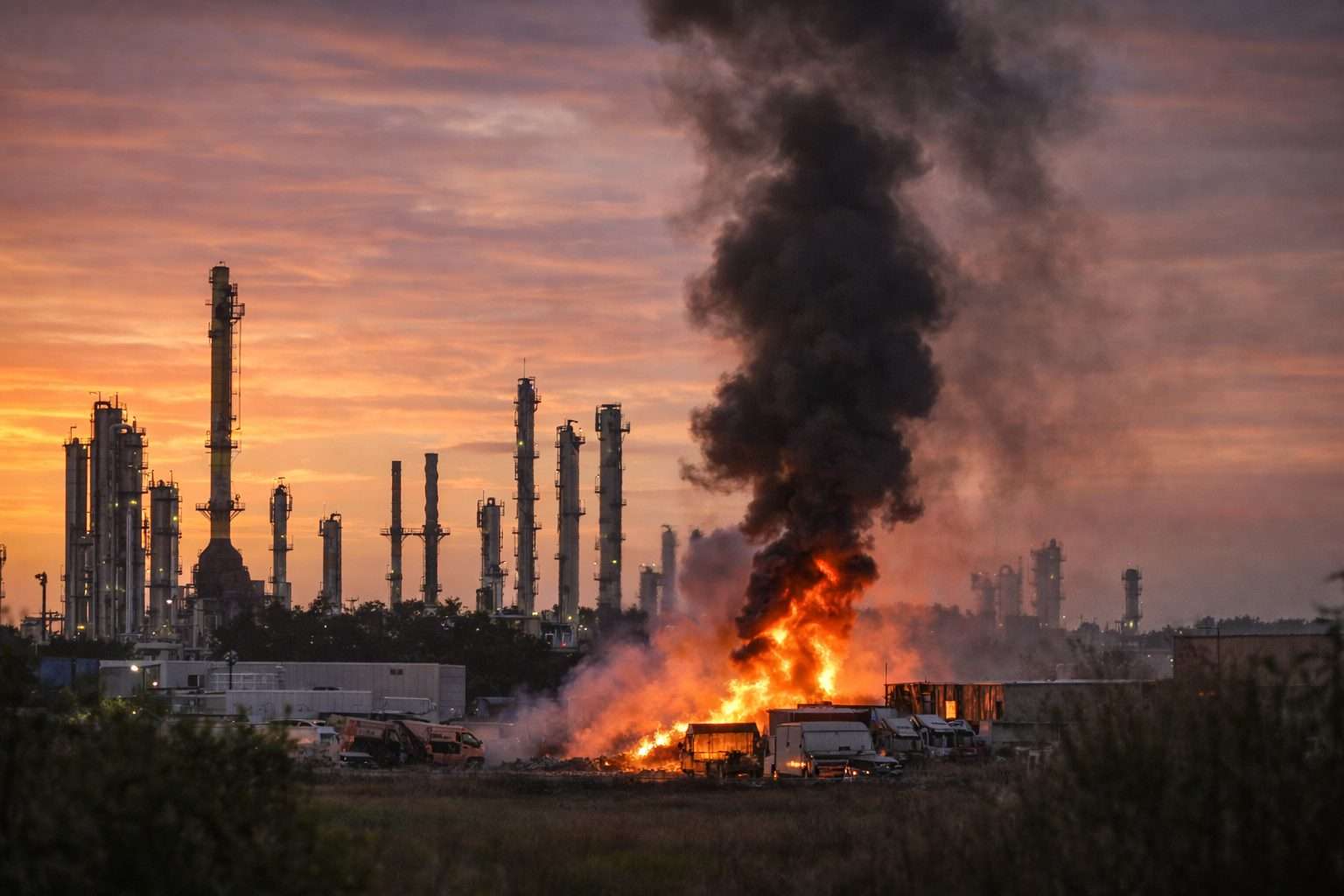
Iran reported that an oil refinery on Lavan Island was hit by what it called an “enemy attack” just after 10 a.m. local time on Wednesday, sparking a fire but leaving no casualties. This incident comes shortly after Washington and Tehran agreed to a two-week ceasefire, marking one of the first strikes on key energy infrastructure since the announcement. Tehran didn’t name any suspects, and Reuters said it couldn’t confirm who was responsible. The Times of Israel later noted that the Israeli military denied any connection to the alleged strike. 1
The truce was expected to calm the Strait of Hormuz—vital for about 20% of global oil flows—and begin reversing the supply jolt that left tankers stuck and sent crude soaring. But instead, shippers and refiners remained in limbo, still lacking technical guidance on when transit could restart, with U.S.-Iran talks in Islamabad set for Friday. 2
The scope of the ceasefire remains up in the air. Israel has thrown its support behind the U.S. pause on strikes targeting Iran, but insists Lebanon isn’t part of the deal. Pakistani mediators, however, claim the arrangement is wider, saying it includes Lebanon. 3
The region’s turmoil showed no sign of easing. Kuwait reported its air defences were taking down Iranian drones targeting oil sites, power plants, and desalination facilities. Iran’s Revolutionary Guards claimed strikes on energy installations and oil pipelines tied to the U.S. and Israel, naming Saudi Arabia’s Yanbu among the hit sites. Separately, Reuters, quoting an industry source, said Saudi Arabia’s East-West pipeline had also come under attack, with crews now gauging the extent of the damage. 4
Oil kept sliding. Brent crude tumbled 16% to $91.80 a barrel midday in London as bets grew that the truce might clear Hormuz and unlock stuck barrels—despite the Lavan fire and fresh attacks elsewhere. “A return to pre-March conditions hinges on whether the ceasefire actually becomes ‘a permanent peace’ in Pakistan,” said PVM Oil’s Tamas Varga. 5
The ripple hit stocks across sectors. Exxon and Chevron each dropped over 5% ahead of the U.S. open. In Riyadh, Saudi Aramco edged down; Dubai’s main index, though, spiked up to 8.5%. “The initial market reaction has been significant, but sentiment will remain driven by headline risk,” XM’s Achilleas Georgolopoulos noted. Over in the UAE, FH Capital’s Tariq Qaqish pointed to lingering investor caution, with U.S. policy still tough to read. 6
Shipping lines struck a cautious note. Maersk warned the ceasefire falls short of delivering “full maritime certainty.” Over at Hapag-Lloyd, management estimated a six-to-eight week window just to get normal operations back up—assuming the deal sticks. Roughly 1,000 vessels remain stranded in the area. 7
The physical fuel market remains squeezed. Willie Walsh, director general at the International Air Transport Association, warned that reopening Hormuz—even if it holds—won’t quickly fix jet fuel supply, as Middle East refining capacity is still hampered. Recovery could drag on for “a period of months.” In Asia, both physical crude and products face a similar outlook: months of stress, even with a stable reopening. 8
The risk is clear enough: the ceasefire might turn out to be nothing but a brief pause. Attacks resumed quickly after the announcement, highlighting the fragility. Saul Kavonic at MST Marquee cautioned that unless a stronger deal comes together, oil supply could stay 3 million to 5 million barrels a day below pre-war forecasts for years to come. 9