
Nagoya, May 12, 2026, 20:02 JST
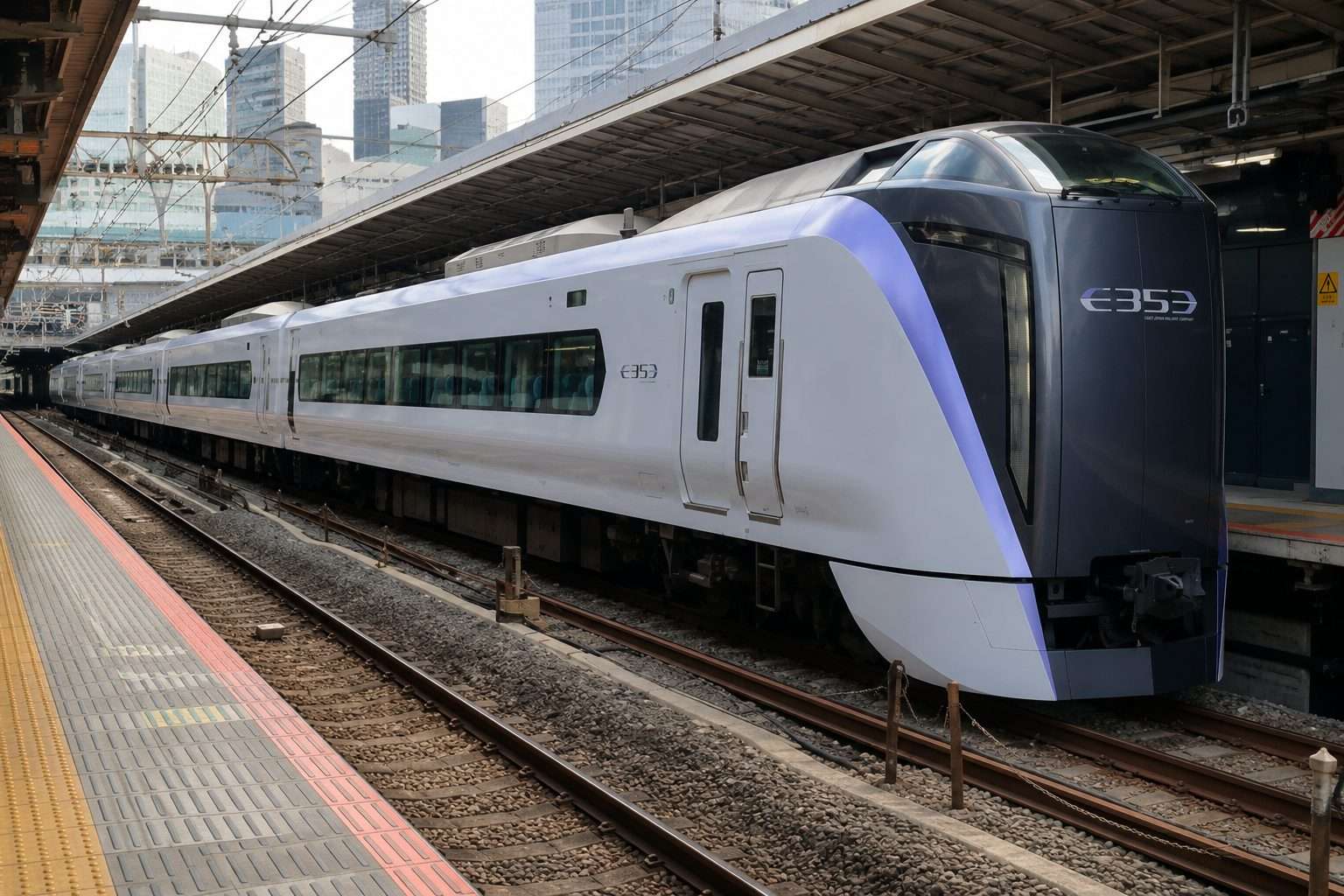
Central Japan Railway Co. on Tuesday unveiled its pilot 385-series train for the Limited Express Shinano, with test runs scheduled to start May 13 and commercial service targeted for around fiscal 2029. This model is set to take over from the 383-series currently running between Nagoya and Nagano—Shinano’s first fleet update since 1995.
Why now? The project’s shifted from planning to actual testing. The Shinano operates along the winding Chuo Main Line and other twisty mountain routes—tough places to manage both speed and a smooth ride. Their answer: a tilting mechanism. It lets the train lean into turns, helping maintain speed and cutting side-to-side jolts for people onboard.
JR Central wants to keep the 383-series edge on speed, but also update the feel of its conventional-line trains. The 385 prototype—a set of eight cars—will go through roughly a year of testing, according to railway sources, before any step toward full production.
For Goro Shimizu, who leads JR Central’s rolling stock division, the project centers on more than just looks. “A big concept” here, he said, is boosting ride quality without compromising on the trains’ powerful performance. This isn’t a surface-level update. 名古屋テレビ〖メ~テレ〗
Sensors mounted beneath the 385 monitor curve positions, letting the train fine-tune its tilting response. According to SBC, this updated pendulum system is designed to smooth out travel through the Shinano’s challenging mountain routes.
Green Car seating gets an upgrade: now three seats across. For JR Central’s regular line trains, this marks the first use of a back-shell seat—one that reclines inside a fixed shell, so passengers behind won’t feel a thing.
Security cameras and remote vehicle condition monitoring are now part of the train, marking an upgrade in maintenance and safety that goes further than just the new cabin design. Inside, you’ll find wood-grain finishes and vertical accents referencing forests from the Kiso region, complete with the Kiso Five Trees motif.
JR Central’s design announcement highlights power outlets at every seat, expanded luggage racks, and in the Green Car, electric leg rests plus reading lights. Standard cars stick with a 2+2 configuration, while the Green Car seating draws on the look of the Kiso forest.
JR West’s 273-series Yakumo comes closest—a pendulum-style limited express geared for winding local tracks. Unlike a direct competitor, JR West describes the Yakumo as technically classified as a 273-series train while operating the Okayama–Izumoshi run.
But key details remain undecided. JR Central hasn’t settled on how many production sets to build, the train formations, or a firm completion date, according to Traicy. Those calls will depend on demand patterns once testing wraps up.