
London, June 19, 2026, 09:20 BST
- Lloyds dropped 1.5% to 104.45 pence after the open in London. Barclays and NatWest shares were down too.
- The Bank of England left Bank Rate unchanged at 3.75%. The decision came in a 7–2 split, with two officials voting to raise the rate to 4%.
- Lloyds repurchased 5 million shares on Thursday at an average price of 105.4485 pence per share.
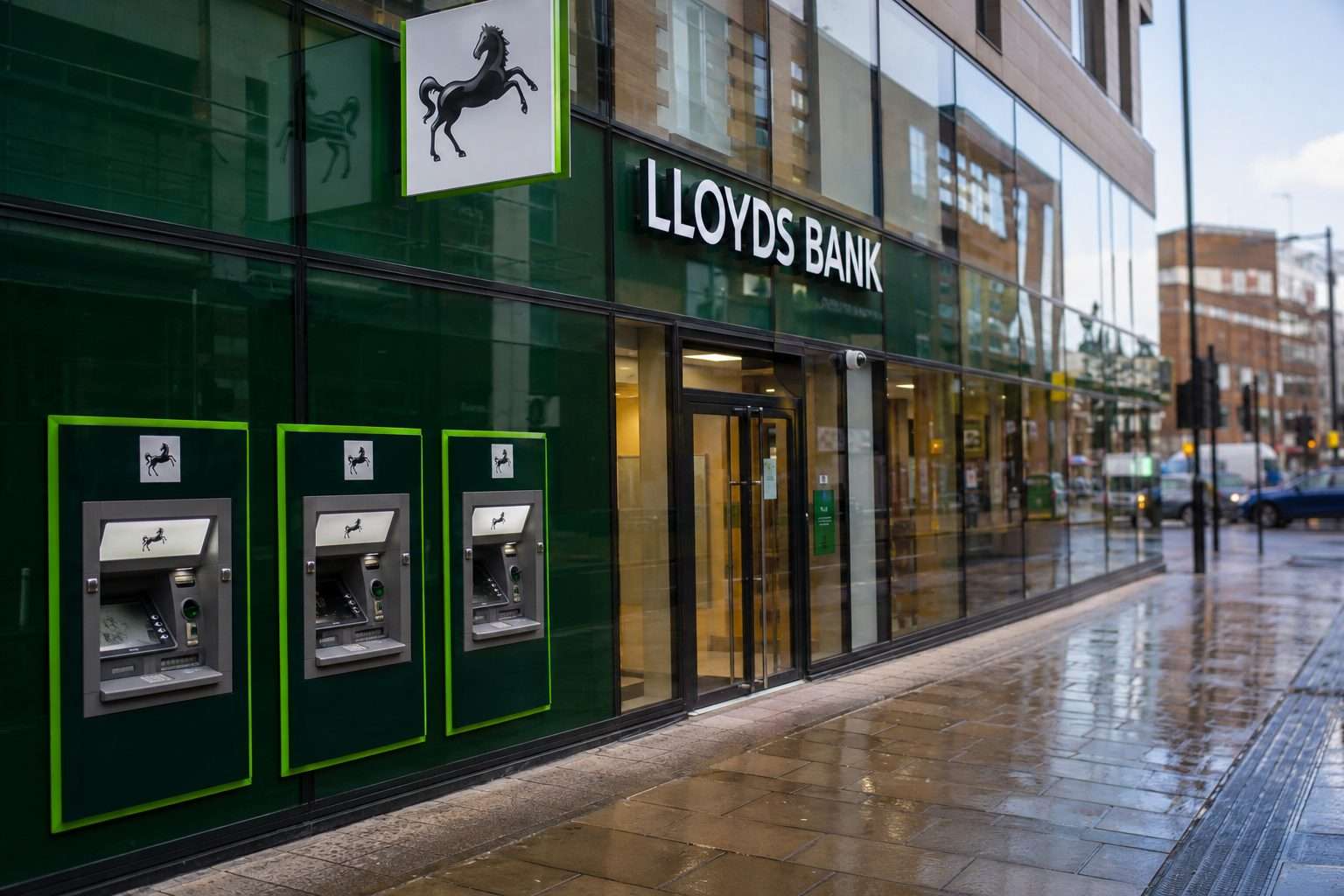
Lloyds Banking Group shares dropped Friday, with the market rethinking earnings prospects for UK-focused banks after the Bank of England kept rates steady. Lloyds was trading at 104.30 pence on the sell side and 104.35 pence to buy at 0848 BST, off 1.6% from the previous close at 106.05 pence.
Lloyds depends on the rate outlook more than other big European banks. The group focuses on UK retail and commercial banking, so shifts in mortgage prices, savings rates and loan demand in Britain show up fast in its results. Net interest margin, the spread between what Lloyds earns on loans and pays on deposits, is a key profit metric.
The Bank of England held rates steady, giving no fresh support from higher rates. Governor Andrew Bailey said there is “already some inflationary pressure in the pipeline” from earlier energy-price increases. “The bar for hikes remains high,” said George Brown, senior economist at Schroders. JPMorgan economist Allan Monks said the central bank could act “only after clear signs of second-round effects have emerged.” Reuters
Risk appetite faded. European shares slipped as planned U.S.-Iran talks got canceled, bringing back concerns about how long the truce and key energy routes will last. Investors pulled back from sensitive names such as local banks.
Lloyds’ latest filing pointed to more support. The bank bought back 5 million shares on June 18, paying between 104.55p and 106p, and will cancel them. The average buy was roughly 1% higher than the early Friday quote.
The buybacks are part of a programme capped at £1.75 billion, set to finish by December 31 at the latest. Cutting share count this way can raise earnings per share if profits stay flat. Lloyds is getting a bit more stock off the market for the money as prices dip.
Lloyds posted a £2 billion pretax profit for the first quarter, up 33% from last year, with net interest income up 8% to £3.6 billion. Chief Executive Charlie Nunn called the quarterly numbers “sustained strength in financial performance.” Lloyds says it now expects full-year net interest income above £14.9 billion and return on tangible equity above 16%. Underlying trading is still firm. Investegate
But there are risks on both sides. While higher rates help interest income, slower growth can hit borrowing and push up defaults. Lloyds has a £1.95 billion provision for old motor-finance commission issues; the regulator’s payback plan is still being fought in court. The bank also took a £151 million charge in the first quarter for expected economic fallout from the Iran conflict.
Friday’s drop doesn’t on its own break the Lloyds earnings story. The move points to a tougher call for UK bank investors—strong interest income and buybacks on one side, but weaker home demand, some geopolitical risk, and legacy conduct costs on the other. Lloyds’ next key moment comes July 30, with half-year numbers and a fresh strategy update.